Benzaldehyde → 4-(2-(Benzylamino)ethyl)phenol
Reaction equation

[NH2:1][CH2:2][CH2:3][C:4]1[CH:9]=[CH:8][C:7]([OH:10])=[CH:6][CH:5]=1.[CH:11](=O)[C:12]1[CH:17]=[CH:16][CH:15]=[CH:14][CH:13]=1.CO>[BH4-].[Na+]>[CH2:11]([NH:1][CH2:2][CH2:3][C:4]1[CH:9]=[CH:8][C:7]([OH:10])=[CH:6][CH:5]=1)[C:12]1[CH:17]=[CH:16][CH:15]=[CH:14][CH:13]=1Participants
5
Reactant 3


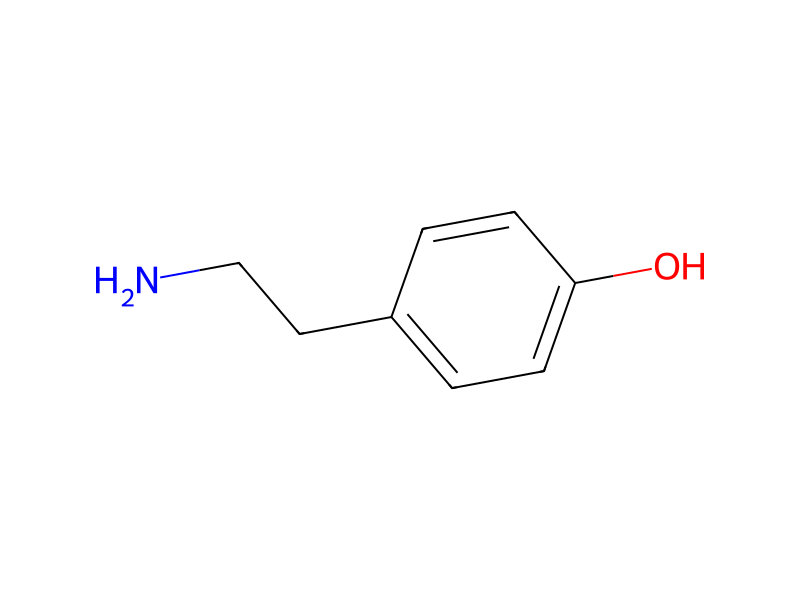
Product 1

Reagents, catalysts & solvents 1

Procedure
According to Scheme 2, tyramine is treated with benzaldehyde in sodium borohydride, molecular sieves, and methanol to produce the reductive amination product 4-(benzylamino-ethyl)-phenol (8). The phenol 8 is treated with cesium carbonate and 4-fluorobenzonitrile in DMF to yield the corresponding biarylether 9. The nitrile functionality of the biaryl ether may be converted to the actetate 10 with methyl lithium followed by hydrolysis in aqueous sulfuric acid. The acetate 10 is oxidized with MCPBA to yield acetic acid 4-[4-(2-benzylamino-ethyl)-phenoxy]-phenyl ester (11).
Sources & evidence
- ORD record
- ord-26096495cdba47b38a8f9ff50e3fe41d
- Source dataset
- uspto-grants-2011_03
- Patent number
- US07902372B2
Reaction notes
Loading…