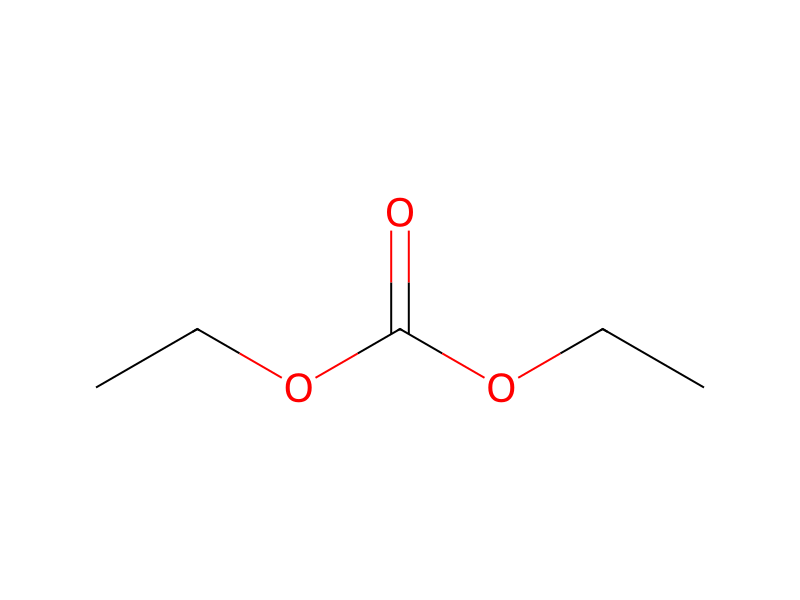
Diethyl Carbonate → Ethyl 2-(6-chloro-3-methylpyridin-2-YL)acetate
Reaction equation

[Cl:1][C:2]1[N:7]=[C:6]([CH2:8][C:9]([O:11][CH2:12][CH3:13])=[O:10])[CH:5]=[CH:4][CH:3]=1.Cl[C:15]1N=C(C)C(C)=CC=1.[Li+].CC([N-]C(C)C)C.C(=O)(OCC)OCC>C1COCC1>[Cl:1][C:2]1[N:7]=[C:6]([CH2:8][C:9]([O:11][CH2:12][CH3:13])=[O:10])[C:5]([CH3:15])=[CH:4][CH:3]=1Participants
6



Procedure
Following the same procedure described for the preparation of ethyl (6-chloro-2-pyridinyl)acetate (Example 469) and starting from 6-chloro-2,3-dimethylpyridine (0.35 g, 2.5 mmol), LDA (5.17 mmol), and diethyl carbonate (0.75 mL, 6.2 mmol) in THF (10 mL), the title compound was obtained (0.15 g, 29%) as a yellow oil. 1H NMR (400 MHz, CDCl3): δ 7.42 (d, 1H), 7.15 (d, 1H), 4.18 (q, 2H), 3.84 (s, 2H), 2.29 (s, 3H), 1.27 (t, 3H); LC-MS: RT=2.30 min, (M+H)+ 214.2.
Sources & evidence
- ORD record
- ord-e8f017abe2364e16bb607309a7d96cd7
- Source dataset
- uspto-grants-2011_03
- Patent number
- US07906653B2
Reaction notes
Loading…