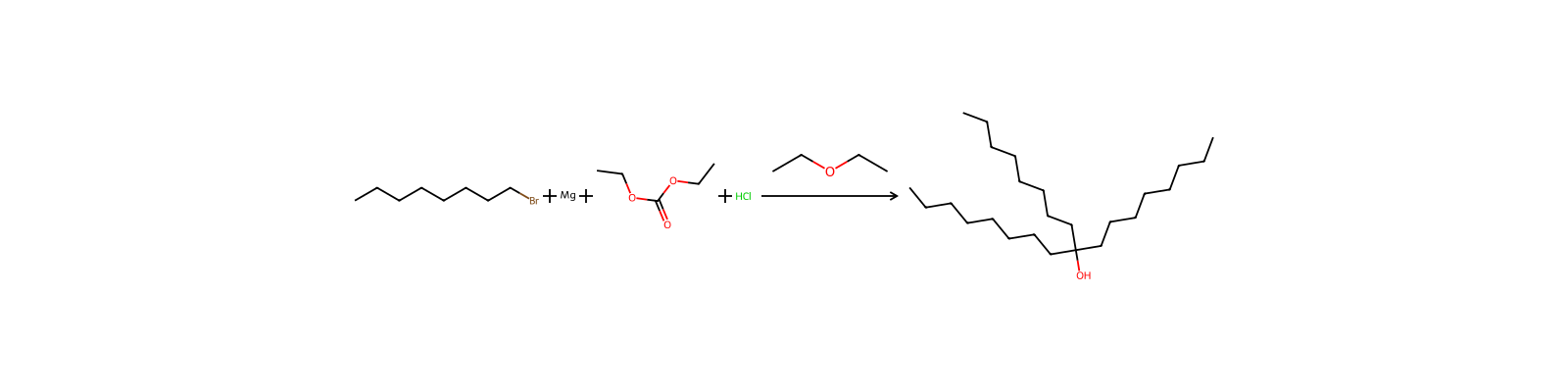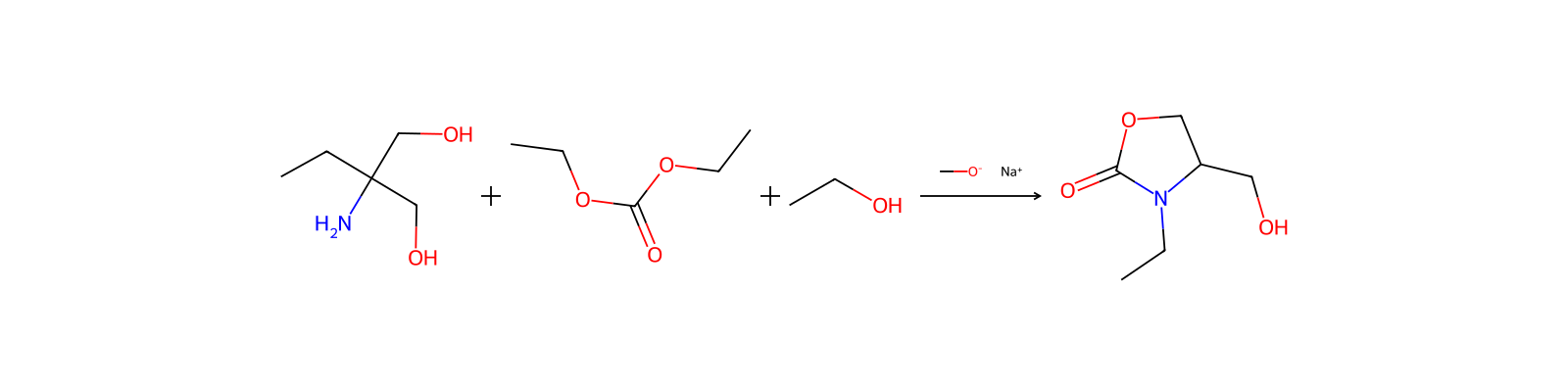
HRID 852반응물로
Diethyl Carbonate
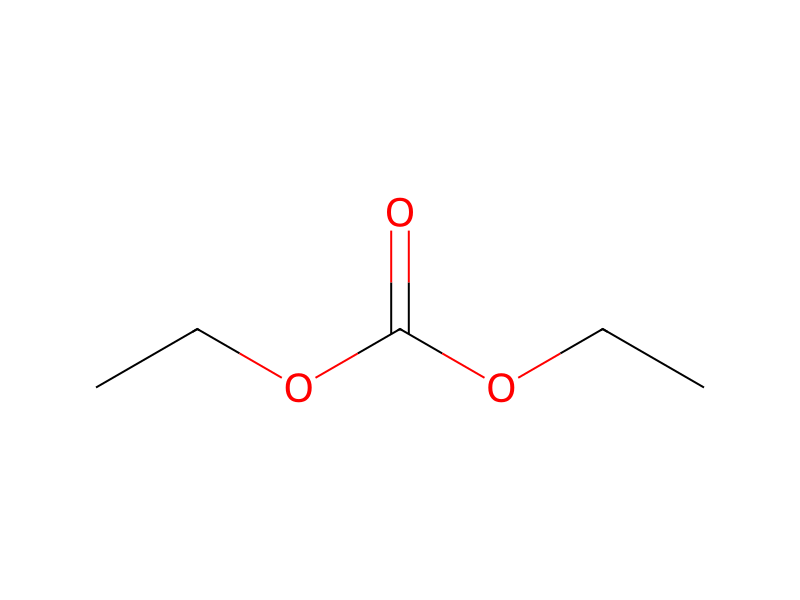
105-58-8CCOC(=O)OCCOIFBSDVPJOWBCH-UHFFFAOYSA-NDiethyl carbonate appears as a colorless liquid with a mild pleasant odor. It is slightly less dense than water and insoluble in water. Hence floats on water. Flash point 77 °F. Vapors are heavier than air. When heated to high temperatures it may emit acrid smoke. Used as a solvent.
105-58-8、440671-47-6DTXSID3025041CHEMBL1533495CHEBI:173463log Kow= 1.21
1.21
Pleasant ethereal odor
Mild odor
0.975 at 68 °F (USCG, 1999) - Less dense than water; will float
0.9752 @ 20 °C/4 °C
Relative density (water = 1): 0.98
0.9752 @ 20°C
Insoluble (NTP, 1992)
Soluble in ehtyl ether, ethanol, and chloroform
Miscible with ketones, esters, aromatic hydrocarbons, some aliphatic solvents
In water, 1.88X10+4 mg/l @ 20 °C
Solubility in water: none
안전 정보는 참고용이며, 공급업체의 물질안전보건자료(SDS), 관련 법규 및 전문가 평가를 대체하지 않습니다.
This chemical does not meet GHS hazard criteria for 2.9% (12 of 412) of reports.
Warning
H226 (97.1%): Flammable liquid and vapor [Warning Flammable liquids]
P210, P233, P240, P241, P242, P243, P261, P264, P264+P265, P271, P280, P302+P352, P303+P361+P353, P304+P340, P305+P351+P338, P319, P321, P332+P317, P337+P317, P362+P364, P370+P378, P403+P233, P403+P235, P405, and P501 (click each P-code to see the statement)
Aggregated GHS information provided per 412 reports by companies from 13 notifications to the ECHA C&L Inventory. Each notification may be associated with multiple companies.
Warning
Chemical: Carbonic acid, diethyl ester
Carbonic acid, diethyl ester is listed on the EPA's Chemical Data Reporting (CDR) system. Manufacturers and importers of Carbonic acid, diethyl ester are required to report information about their production and use of this chemical to the EPA under the Toxic Substances Control Act (TSCA). (40 eCFR Part 711)
REACH registered substance: Diethyl carbonate (EC: 203-311-1)
Carbonic acid, diethyl ester: HSNO Approval: HSR001081 Approved with controls
The New Jersey Worker and Community Right to Know Act requires public and private employers to provide information about hazardous substances at their workplaces. (N.J.S.A. 34:5A-1 et. seq.)
Excerpt from ERG Guide 128 [Flammable Liquids (Water-Immiscible)]:
· HIGHLY FLAMMABLE: Will be easily ignited by heat, sparks or flames.
Flammable. Above 25 °C explosive vapour/air mixtures may be formed. Risk of fire and explosion on contact with strong oxidizing agents.
Used as a solvent (nitrocellulose, cellulose ethers, and resins) and for organic synthesis; [HSDB]
Solvent for nitrocellulose; mfr radio tubes; fixing rare earths to cathode elements
Solvent for cellulose ethers, many synthetic and natural resins
CHEM INT FOR PHARMACEUTICALS (EG PHENOBARBITAL); CHEM INT FOR ORG COMPD
2023: 1,000,000 - <5,000,000 lb
(1972) PROBABLY GREATER THAN 9.08X10+5 GRAMS
(1975) PROBABLY GREATER THAN 9.08X10+5 GRAMS
REACTION OF PHOSGENE AND ETHYL ALCOHOL TO PRODUCE ETHYL CHLOROCARBONATE FOLLOWED BY REACTION WITH ANHYDROUS ETHYLALCOHOL AT ELEVATED TEMPERATURES
Prepn: Palomaa et al, Ber 72, 313 (1939). Mfr: Mador, Blackham, US patent 3,114,762 (1963 to Natl Distillers and Chem).
Steps in its mfr are: (a) reacting chlorine and carbon monoxide to produce (COCl2); (b) reacting phosgene with ethyl alc to make ethyl chlorocarbonate (ClCO2C2H5); (c) reacting ethyl chlorocarbonate with anhyd ethyl alc to produce diethyl carbonate.
All Other Basic Organic Chemical Manufacturing
Carbonic acid, diethyl ester: ACTIVE
개요에스테르가없는 무색 투명한 액체. -43 ° C의 융점 및 126.8 ° C의 비등점. 알콜, 케톤, 에스테르 등과 같은 유기 용제와 어떤 비율로도 혼합 될 수 있으나 물에 약간 용해됩니다.
77 °F (NTP, 1992)
25 °C (CLOSED CUP)
25 °C c.c.
259 °F at 760 mmHg (NTP, 1992)
126 °C
126 °C
126 °C @760 [mm Hg]
Diethyl carbonate is esters, beta-enamino esters, carbamates and unsymmetrical alkyl carbonates. It is a colourless liquid with a mild odour. Insoluble in water, soluble in alcohol, ether and other organic solvents.
High vapor concentrations can cause headache, irritation of eyes and respiratory tract, dizziness, nausea, weakness, loss of consciousness. (USCG, 1999)
CAUTION: Petroleum crude oil (UN1267) may contain TOXIC hydrogen sulphide gas.
DIETHYL CARBONATE reacts with acids to liberate heat along with ethanol and carbon dioxide. Strong oxidizing acids may cause a vigorous reaction that is sufficiently exothermic to ignite the reaction products. Heat is also generated by the interaction with caustic solutions. Flammable hydrogen is generated by mixing with alkali metals and hydrides.
Excerpt from ERG Guide 128 [Flammable Liquids (Water-Immiscible)]:
Use AFFF, alcohol-resistant foam, powder, carbon dioxide. In case of fire: keep drums, etc., cool by spraying with water.
Fresh air, rest.
Rinse and then wash skin with water and soap.
First rinse with plenty of water for several minutes (remove contact lenses if easily possible), then refer for medical attention.
Rinse mouth. Rest.
· CALL 911. Then call emergency response telephone number on shipping paper. If shipping paper not available or no answer, refer to appropriate telephone number listed on the inside back cover.
· ELIMINATE all ignition sources (no smoking, flares, sparks or flames) from immediate area.
EYES: First check the victim for contact lenses and remove if present. Flush victim's eyes with water or normal saline solution for 20 to 30 minutes while simultaneously calling a hospital or poison control center. Do not put any ointments, oils, or medication in the victim's eyes without specific instructions from a physician. IMMEDIATELY transport the victim after flushing eyes to a hospital even if no symptoms (such as redness or irritation) develop.
General First Aid:
... FOAM, CARBON DIOXIDE, DRY CHEMICAL
If material on fire or involved in fire: Do not extinguish fire unless flow can be stopped or safely confined. Use water in flooding quantities as fog. Solid streams of water may spread fire. Cool all affected containers with flooding quantities of water. Apply water from as far a distance as possible. Use foam, dry chemical, or carbon dioxide.
SRP: At the time of review, criteria for land treatment or burial (sanitary landfill) disposal practices are subject to significant revision. Prior to implementing land disposal of waste residue (including waste sludge), consult with environmental regulatory agencies for guidance on acceptable disposal practices.
Personal protection: filter respirator for organic gases and vapours adapted to the airborne concentration of the substance. Collect leaking and spilled liquid in sealable containers as far as possible. Absorb remaining liquid in sand or inert absorbent. Then store and dispose of according to local regulations.
If material not on fire and not involved in fire: Keep sparks, flames, and other sources of ignition away. Keep material out of water sources and sewers. Build dikes to contain flow as necessary. Attempt to stop leak if without undue personnel hazard. Use water spray to knock-down vapors.
Personnel protection: Avoid breathing vapors. Keep upwind. ... Do not handle broken packages unless wearing appropriate personal protective equipment. Wash away any material which may have contacted the body with copious amounts of water or soap and water.
Excerpt from ERG Guide 128 [Flammable Liquids (Water-Immiscible)]:
Immediate precautionary measure
TERRESTRIAL FATE: Based on a classification scheme(1), an estimated Koc value of 100(SRC), determined from a log Kow of 1.21(2) and a regression-derived equation(3), indicates that diethyl carbonate is expected to have high mobility in soil(SRC). Volatilization of diethyl carbonate from moist soil surfaces is expected to be an important fate process(SRC) given an estimated Henry's Law constant of 8.9X10⁻⁵ atm-cu m/mole(SRC), calculated from a vapor pressure of 10.8 mm Hg(4) and water solubility of 18,800 mg/l(5). Diethyl carbonate may volatilize from dry soil surfaces(SRC) based upon its vapor pressure(4). Although no biodegradation data for diethyl carbonate was located, chemically similar short alkyl chain esters have been shown to biodegrade(6).
AQUATIC FATE: Based on a classification scheme(1), an estimated Koc value of 100(SRC), determined from a log Kow of 1.21(2) and a regression-derived equation(3), indicates that diethyl carbonate is not expected to adsorb to suspended solids and sediment in water(SRC). Volatilization from water surfaces is expected to be an important fate process(3) based upon an estimated Henry's Law constant of 8.9X10⁻⁵ atm-cu m/mole(SRC), calculated from a vapor pressure of 10.8 mm Hg(4) and water solubility of 18,800 mg/l(5). Using this Henry's Law constant and an estimation method(3), volatilization half-lives for a model river and model lake are 8 hours and 8 days, respectively(SRC). Diethyl carbonate may undergo hydrolysis in water since esters are susceptible to hydrolysis(3). Although no biodegradation data for diethyl carbonate was located, chemically similar short alkyl chain esters have been shown to biodegrade(6). According to a classification scheme(7), an estimated BCF of 2(SRC), from its log Kow(2) and a regression-derived equation(8), suggests the potential for bioconcentration in aquatic organisms is low(SRC).
ATMOSPHERIC FATE: According to a model of gas/particle partitioning of semivolatile organic compounds in the atmosphere(1), diethyl carbonate, which has a vapor pressure of 10.8 mm Hg at 25 °C(2), is expected to exist solely as a vapor in the ambient atmosphere. Vapor-phase diethyl carbonate is degraded in the atmosphere by reaction with photochemically-produced hydroxyl radicals(SRC); the half-life for this reaction in air is estimated to be 5 days(SRC), calculated from its estimated rate constant of 3.3X10⁻¹² cu cm/molecule-sec at 25 °C(SRC) determined using a structure estimation method(3). Diethyl carbonate may also undergo direct photolysis in the environment since this compound contains a functional group that can absorb light greater than 290 nm(4).
Cough. Nausea. Sore throat.
Redness. Pain.
The Koc of diethyl carbonate is estimated as 100(SRC), using a log Kow of 1.21(1) and a regression-derived equation(2). According to a classification scheme(3), this estimated Koc value suggests that diethyl carbonate is expected to have high mobility in soil(SRC).
MODERATELY TOXIC BY INGESTION & INHALATION; STRONG IRRITANT.
Mildly toxic by subcutaneous route. Questionable carcinogen with experimental tumorigenic and teratogenic data.
An estimated BCF of 2 was calculated for diethyl carbonate(SRC), using a log Kow of 1.21(1) and a regression-derived equation(2). According to a classification scheme(3), this BCF suggests the potential for bioconcentration in aquatic organisms is low(SRC).
용도섬유 인쇄 및 염색 산업에서 디 에틸 카보네이트는 염색 균일 성을 높이고 일광에 대한 변색 방지를 증가시킬 수 있으며 수지의 용제로서 폴리 아미드.
용도섬유 인쇄 및 염색 산업에서 디 에틸 카보네이트는 염색 균일 성을 높이고 일광에 대한 변색 방지를 증가시킬 수 있으며 수지의 용제로서 폴리 아미드.그리고 제약 산업에서 디 에틸 카보네이트는 나드의 기본 성분이며 중간체 인 페 노바비탈 내선을 합성하는 데 사용되므로 광범위한 시장 개발 전망을 가지고 있습니다.
용도섬유 인쇄 및 염색 산업에서 디 에틸 카보네이트는 염색 균일 성을 높이고 일광에 대한 변색 방지를 증가시킬 수 있으며 수지의 용제로서 폴리 아미드.그리고 제약 산업에서 디 에틸 카보네이트는 나드의 기본 성분이며 중간체 인 페 노바비탈 내선을 합성하는 데 사용되므로 광범위한 시장 개발 전망을 가지고 있습니다.
용도섬유 인쇄 및 염색 산업에서 디 에틸 카보네이트는 염색 균일 성을 높이고 일광에 대한 변색 방지를 증가시킬 수 있으며 수지의 용제로서 폴리 아미드.그리고 제약 산업에서 디 에틸 카보네이트는 나드의 기본 성분이며 중간체 인 페 노바비탈 내선을 합성하는 데 사용되므로 광범위한 시장 개발 전망을 가지고 있습니다.
일반 설명Diethyl carbonate appears as a colorless liquid with a mild pleasant odor. It is slightly less dense than water and insoluble in water.
생산 방법Diethyl carbonate (DEC), one of the most frequently used aliphatic carbonates, is produced by passing gaseous phosgene in boiling ethanol, in a molar ratio of 1 part of phosgene to 2.5 – 4 parts of ethanol, into a glass or enamel apparatus consisting of a heatable reaction vessel with a reflux condenser and a distillation setup. The reaction gives essentially quantitative yields (≥ 99 %) and also forms hydrogen chloride. Excess ethanol is removed from the reaction mixture by distillation, and DEC is obtained as the residue.Manufacturing steps: (a) reacting chlorine and carbon monoxide to produce (COCl2); (b) reacting phosgene with ethyl alcohol to make ethyl chlorocarbonate (ClCO2C2H5); (c) reacting ethyl chlorocarbonate with anhydrous ethyl alcohol to produce diethyl carbonate.
Diethyl carbonate is prepared by reaction of phosgene and ethyl alcohol to produce ethyl chlorocarbonate followed by reaction with anhydrous ethylalcohol at elevated temperatures. direct synthesis of diethyl carbonate (dec) by carboxylation of ethanol with co2 was investigated over ceria catalysts.
정의ChEBI: Diethyl carbonate is a carbonate ester.