Benzenesulfonyl chloride, 4-chloro-3-nitro- → HCID 5016179, compound
Reaction equation

[Cl:1][C:2]1[CH:7]=[CH:6][C:5]([S:8](Cl)(=[O:10])=[O:9])=[CH:4][C:3]=1[N+:12]([O-:14])=[O:13].[Br:15][C:16]1[CH:22]=[CH:21][C:19]([NH2:20])=[CH:18][CH:17]=1.C([O-])(=O)C.[Na+]>C(O)(=O)C>[Br:15][C:16]1[CH:22]=[CH:21][C:19]([NH:20][S:8]([C:5]2[CH:6]=[CH:7][C:2]([Cl:1])=[C:3]([N+:12]([O-:14])=[O:13])[CH:4]=2)(=[O:10])=[O:9])=[CH:18][CH:17]=1Participants
Reactant 3

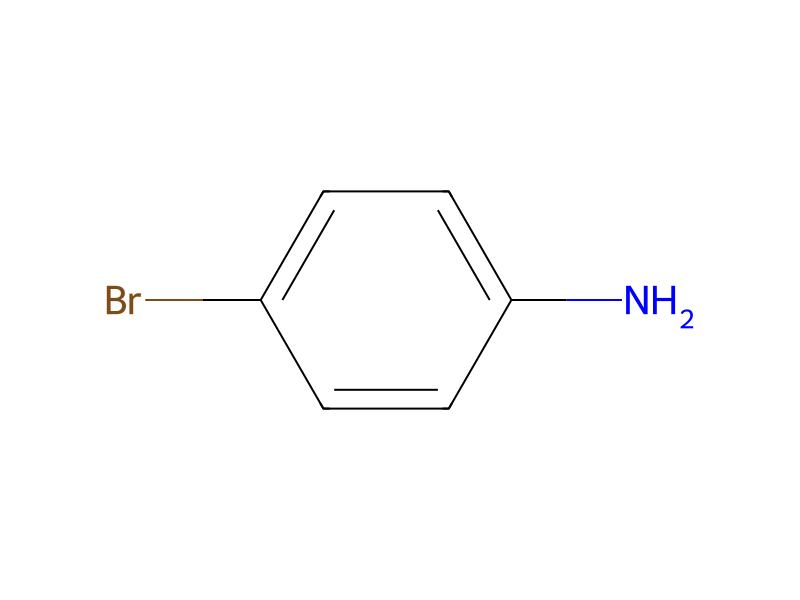

Product 1

Reagents, catalysts & solvents 1

Procedure
A solution of 4-chloro-3-nitrobenzenesulfonyl chloride (2.561 g, 10 mmol) in acetic acid (20 mL) was treated with 4-bromoaniline (1.72 g, 10 mmol) and anhydrous sodium acetate (1.23 g, 15 mmol), then heated at 100° for 30 minutes. The reaction was cooled to room temperature and the acetic acid removed by rotary evaporation under vacuum. The residue was taken up in ethyl acetate (100 mL) and washed with water (2×25 mL) and brine (25 mL). The organic phase was dried over anhydrous sodium sulfate, filtered, and concentrated under vacuum, co-evaporating the oil with methylene chloride/hexanes. Purification by silica gel chromatography using methylene chloride followed by 5% ethyl acetate/methylene chloride as eluent provided the title compound as a yellow solid (2.038 g, 52%).
Workup
- temperatureheated at 100° for 30 minutes
- customthe acetic acid removed by rotary evaporation under vacuum
- washwashed with water (2×25 mL) and brine (25 mL)
- dry with materialThe organic phase was dried over anhydrous sodium sulfate
- filtrationfiltered
- concentrationconcentrated under vacuum
- customPurification by silica gel chromatography
Sources & evidence
- ORD record
- ord-12f0b37fc3244b058dd384cb112d8fc0
- Source dataset
- uspto-grants-2011_03
- Patent number
- US07915411B2
Reaction notes
Loading…