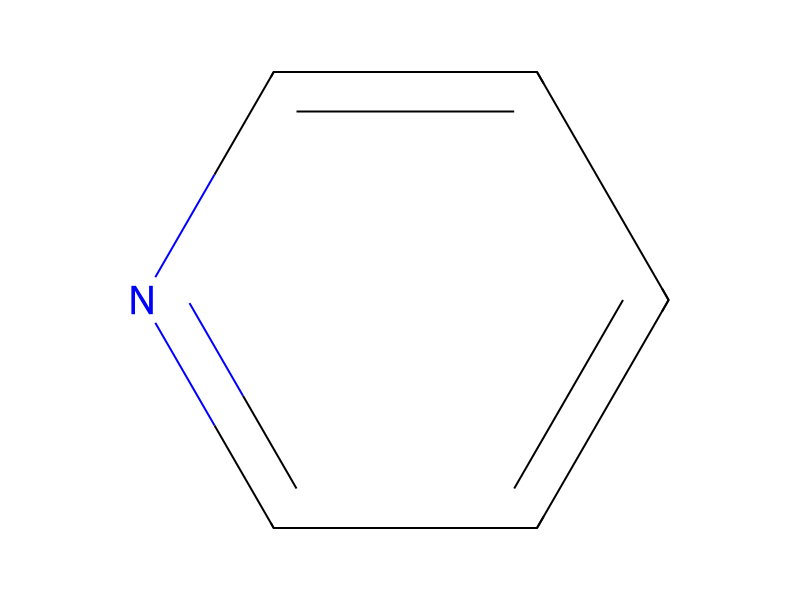
Pyridine → HCID 70605068, compound
Reaction equation

[C:1]1([C:7]([NH:20][CH:21]2[C:38](=[O:39])[N:23]3[CH:24]([C:29](=O)[NH:30][CH2:31][C:32]4[O:36][CH:35]=[CH:34][CH:33]=4)[C:25]([CH3:28])([CH3:27])[S:26][C@H:22]23)([C:14]2[CH:19]=[CH:18][CH:17]=[CH:16][CH:15]=2)[C:8]2[CH:13]=[CH:12][CH:11]=[CH:10][CH:9]=2)[CH:6]=[CH:5][CH:4]=[CH:3][CH:2]=1.N1C=CC=CC=1.C(Cl)(Cl)=O.[N-:50]=[N+:51]=[N-:52].CN(C)C(=[NH2+])N(C)C>C(Cl)(Cl)Cl.O>[C:1]1([C:7]([NH:20][CH:21]2[C:38](=[O:39])[N:23]3[CH:24]([C:29]4[N:30]([CH2:31][C:32]5[O:36][CH:35]=[CH:34][CH:33]=5)[N:52]=[N:51][N:50]=4)[C:25]([CH3:28])([CH3:27])[S:26][C@H:22]23)([C:14]2[CH:15]=[CH:16][CH:17]=[CH:18][CH:19]=2)[C:8]2[CH:13]=[CH:12][CH:11]=[CH:10][CH:9]=2)[CH:6]=[CH:5][CH:4]=[CH:3][CH:2]=1Participants
Reactant 4


Product 1

Reagents, catalysts & solvents 2
Conditions
- Temperature
- 0 °C
Procedure
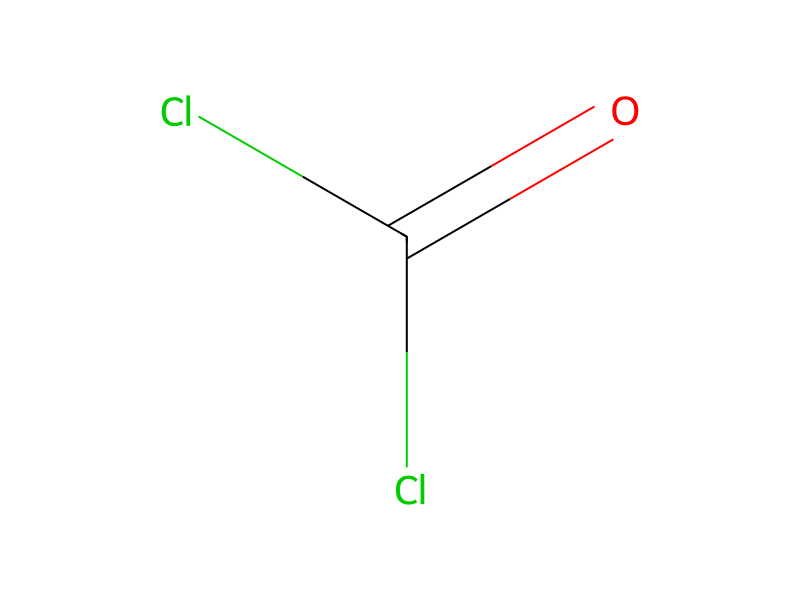
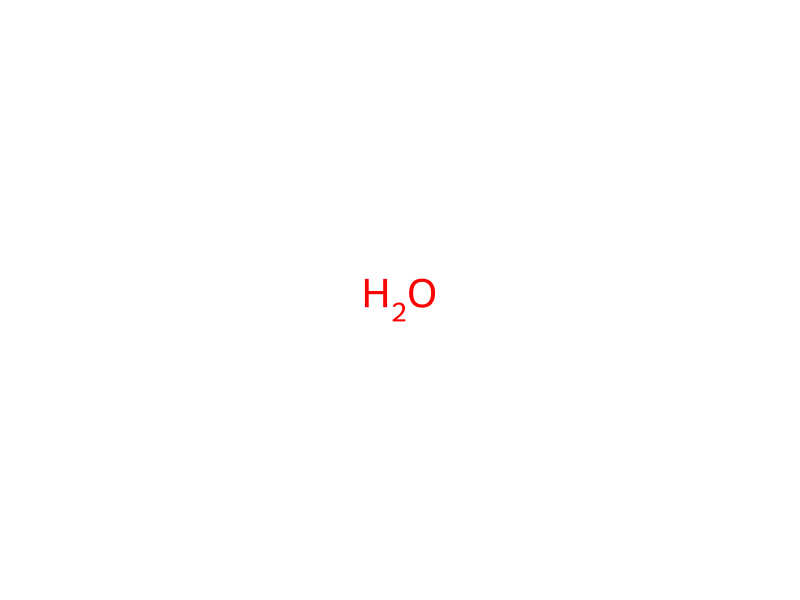
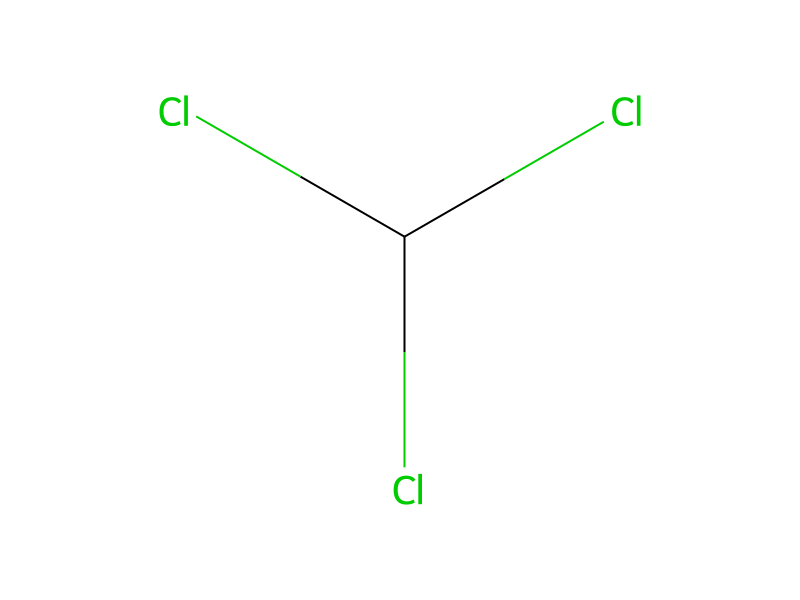
To a stirred solution of 3.05 g. (5.7 mmole) of 6-(triphenylmethylamino)-2,2-dimethyl-3-(N-furfurylcarbamoyl)penam, in 8 ml. of chloroform, at 0° C., is added 1.35 ml. (17 mmole) of pyridine, followed by 2.64 ml. of a 4.33 M solution of phosgene in chloroform. Stirring is then continued for 1 hour at 25° C. The chloroform, and excess phosgene and pyridine, are then removed by evaporation in vacuo, and the residue is redissolved in 5 ml. of chloroform. The solution is cooled to 0° C., and then 2.25 g. (14.4 mmole) of tetramethylguanidinium azide is added in several small portions. Stirring is continued for 15 minutes at ambient temperature, and then 20 ml. of chloroform, followed by 30 ml. of water, are added and the pH is adjusted to 6.5. The chloroform layer is separated off, washed with water, followed by brine, and then dried (MgSO4). Removal of the solvent by evaporation in vacuo leaves 3.37 g. of a dark-red foam. The foam is re-dissolved in a small volume of chloroform and absorbed onto a column of chromatographic silica gel. Elution of the column with chloroform, followed by evaporation of the appropriate fractions in vacuo, affords 6-(triphenylmethylamino)-2,2-dimethyl-3-(1-furfuryltetrazol-5-yl)penam. The NMR spectrum of the product (CDCl3) shows absorptions at 7.40 ppm (m, 16H), 6.40 ppm (m, 2H), 5.50 ppm (s, 2H), 5.20 ppm (s, 1H), 4.90 ppm (m, 2H), 1.60 ppm (s, 3H), and 0.80 ppm (s, 3H).
Workup
- customThe chloroform, and excess phosgene and pyridine, are then removed by evaporation in vacuo
- dissolutionthe residue is redissolved in 5 ml
- stirringStirring
- waitis continued for 15 minutes at ambient temperature
- customThe chloroform layer is separated off
- washwashed with water
- dry with materialdried (MgSO4)
- customRemoval of the solvent
- customby evaporation in vacuo
- customleaves 3.37 g
- customabsorbed onto a column of chromatographic silica gel
- washElution of the column with chloroform
- customfollowed by evaporation of the appropriate fractions in vacuo
Sources & evidence
- ORD record
- ord-76563ddbfac347beb89945c08c65b2c5
- Source dataset
- uspto-grants-1979_03
- Patent number
- US04143039
Reaction notes
Loading…