Sodium Carbonate → HCID 136399308, compound
Reaction equation

[Cl:1][C:2]1[CH:3]=[N:4][C:5]2[C:10]([CH:11]=1)=[CH:9][CH:8]=[C:7]([Cl:12])[C:6]=2C=O.C(=O)([O-])[O-].[Na+].[Na+].[Cl-].[OH:22][NH3+:23]>O>[Cl:1][C:2]1[CH:3]=[N:4][C:5]2[C:6](=[N:23][OH:22])[CH:7]([Cl:12])[CH:8]=[CH:9][C:10]=2[CH:11]=1Participants
5
Reactant 3

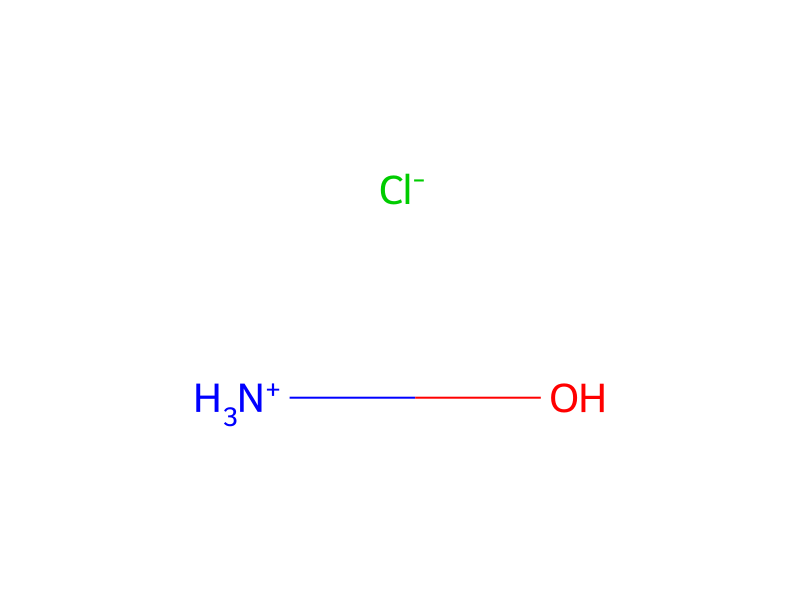

Product 1

Reagents, catalysts & solvents 1

Procedure
22.6 parts of 3,7-dichloroquinoline-8-carbaldehyde (Example 4) were dissolved in 300 parts of alcohol. 10.6 parts of sodium carbonate and 6.9 parts of hydroxylammonium chloride were added to this solution and the suspension was refluxed for 1 hour. 1,000 parts of water were then added and the precipitated solid was filtered off and dried. 23 parts of 3,7-dichloro-8-hydroxyiminoquinoline of melting point 202° C. were obtained. The yield corresponds to 96% of theory.
Workup
- temperaturethe suspension was refluxed for 1 hour
- filtrationthe precipitated solid was filtered off
- customdried
Sources & evidence
- ORD record
- ord-097e19d07ca24dce9dac8e85adeb1126
- Source dataset
- uspto-grants-1985_02
- Patent number
- US04497651
Reaction notes
Loading…