Ethanol → 3,4-xylenol CaBr2
Reaction equation

[C:1]1([OH:9])[CH:6]=[CH:5][C:4]([CH3:7])=[C:3]([CH3:8])[CH:2]=1.C(O)C.[Br-:13].[Ca+2:14].[Br-]>C1(C)C=CC=CC=1>[C:1]1([OH:9])[CH:6]=[CH:5][C:4]([CH3:7])=[C:3]([CH3:8])[CH:2]=1.[Br-:13].[Br-:13].[Ca+2:14]Participants
5
Reactant 3

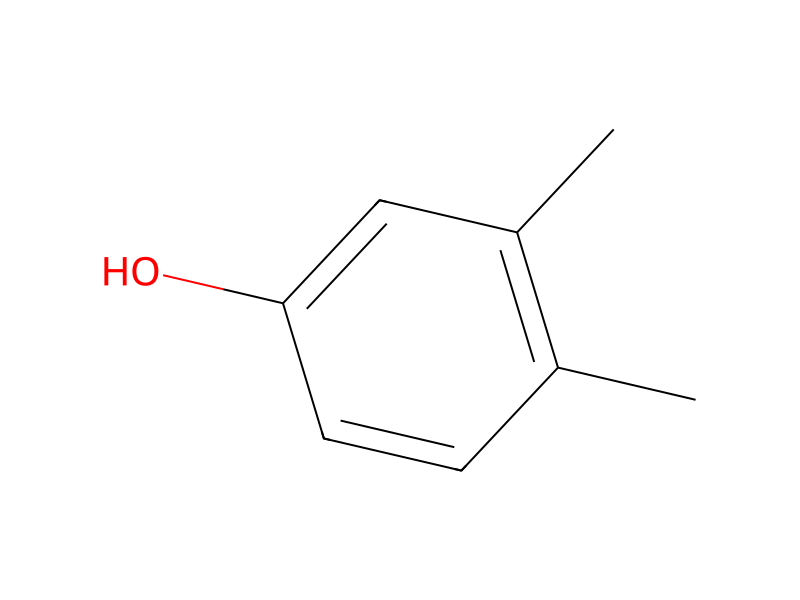

Product 1

Reagents, catalysts & solvents 1

Procedure
A complexation reaction was run as generally described in Example III with a starting mixture of 12.2 g 3,4-xylenol (100 mmole), 0.1 ml absolute ethanol, 5.0 g powdered anhydrous calcium bromide (25 mmole) and some of toluene. After the mixture was stirred for a total of 18 hours it was worked up. A washed-and-dried solid material was obtained in an amount of 10.7 g for a 3,4-xylenol/CaBr2 molar ratio of 1.9:1.0.
Workup
- customA complexation reaction
- washA washed-
- custom-dried solid material
Sources & evidence
- ORD record
- ord-cd9ea4dfc94a4f5bb0cb701e4e3549c2
- Source dataset
- uspto-grants-1985_02
- Patent number
- US04499312
Reaction notes
Loading…