Pyridine → HCID 20084618, compound
Reaction equation

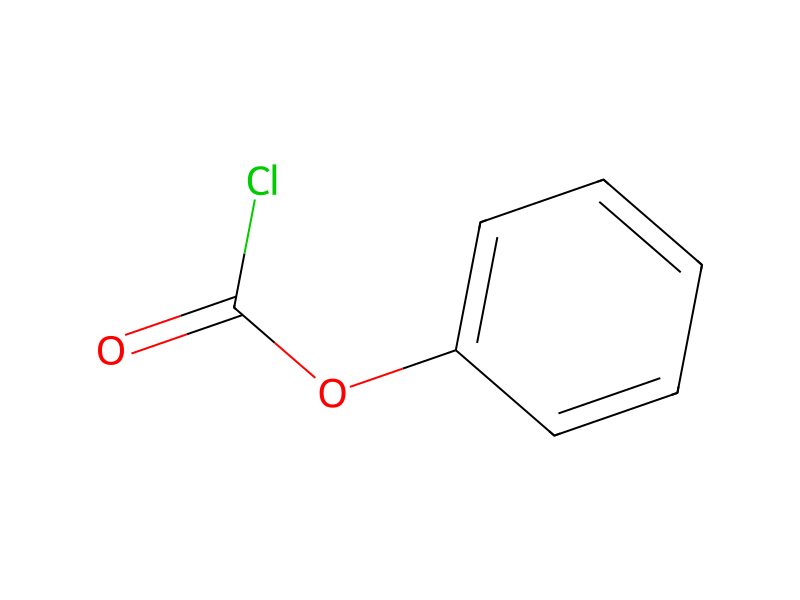
Cl[C:2]([O:4][C:5]1[CH:10]=[CH:9][CH:8]=[CH:7][CH:6]=1)=[O:3].[C:11]([O:15][CH2:16][CH3:17])(=[O:14])[NH:12][NH2:13].N1C=CC=CC=1>ClCCl>[NH:12]([C:11]([O:15][CH2:16][CH3:17])=[O:14])[NH:13][C:2]([O:4][C:5]1[CH:10]=[CH:9][CH:8]=[CH:7][CH:6]=1)=[O:3]Participants
Reactant 3


Product 1

Reagents, catalysts & solvents 1

Procedure
Phenyl chloroformate (32.34 g, 0.207M) in dichloromethane (100 ml) was reacted with ethyl carbazate (20.8 g, 0.2M) in dichloromethane (150 ml) and pyridine (16.63 g, 0.21M) to give ethyl phenyl hydrazine-1,2-dicarboxylate (40.5 g). After chromatography on silica gel using dichloromethane and ethyl acetate, recrystallization from toluene gave colourless solid m.p. 89.5-90.5. (Found C 53.8%, H 5.5%, N 12.7%; C10H12N2O4 requires C 53.6%, H 5.4%, N 12.5%). The infra-red spectrum (0.5% in dichloromethane) showed bands at 3360 cm-1 (NH), 1775 and 1745 cm-1 (>C=O), and 1600 cm-1 (aromatic ring). Oxidation of the diester (5 g) in dichloromethane (25 ml) with t-butyl hypochlorite and evaporation of the solvent gave a red oil which was extracted with petroleum spirit (b.p. 30°-40° C.) to isolate ethyl phenyl azodicarboxylate (4 g). (Found C 53.9%, H 4.6%, N 12.4%, C10H10N2O4 requires C 54.1%, H 4.5%, N 12.6%). The infra-red spectrum (0.4% in dichloromethane) showed bands at 1792 with a shoulder at circa 1780 cm-1 (>C=O) and 1600 cm-1 (aromatic ring) and no >NH band at 3360 cm-1.
Sources & evidence
- ORD record
- ord-e9f4213b677c4b2ab526ba4fd6f293ed
- Source dataset
- uspto-grants-1985_02
- Patent number
- US04501860
Reaction notes
Loading…