Phthalic Anhydride → 2-(2-Chloropyridin-3-yl)-1H-isoindole-1,3(2H)-dione
Reaction equation

[C:1]1(=[O:11])[O:6][C:4](=O)[C:3]2=[CH:7][CH:8]=[CH:9][CH:10]=[C:2]12.[NH2:12][C:13]1[C:14]([Cl:19])=[N:15][CH:16]=[CH:17][CH:18]=1.C1(C)C(S(O)(=O)=O)=CC=CC=1>ClC1C=CC=CC=1Cl>[Cl:19][C:14]1[C:13]([N:12]2[C:1](=[O:11])[C:2]3=[CH:10][CH:9]=[CH:8][CH:7]=[C:3]3[C:4]2=[O:6])=[CH:18][CH:17]=[CH:16][N:15]=1Participants
5
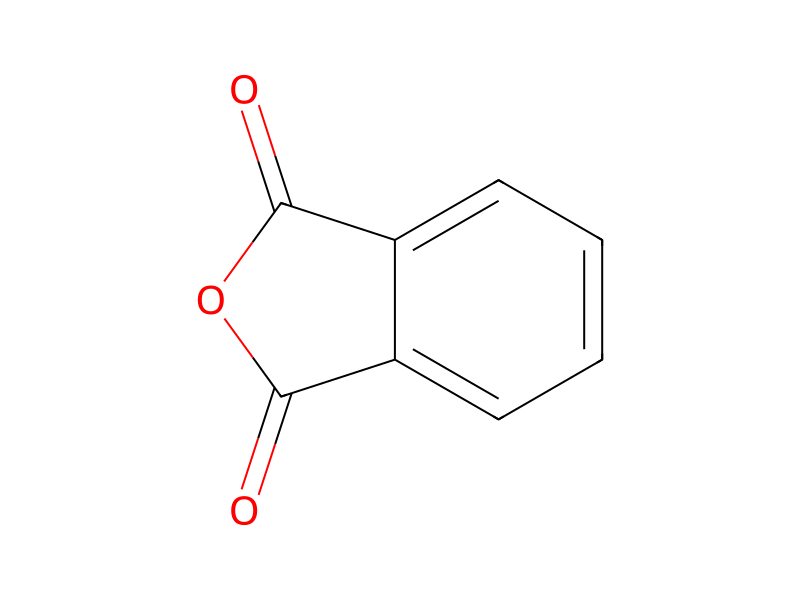


Conditions
- Temperature
- 30 °C
Procedure
A stirred slurry containing 15 grams of phthalic anhydride, 13 grams of 3-amino-2-chloropyridine, one gram of toluenesulfonic acid and 200 ml. of o-dichlorobenzene was heated at reflux for 6 hours. During this heating period 100 ml. of solvent and 1.8 ml. of water were removed. After cooling to 30° C., 50 ml. of heptane and 10 ml. of water were added and stirring was continued. The solid was collected by filtration and air dried. A 99 percent yield of N-(2-chloro-3-pyridyl) phthalimide, m.p. 156°-7° C., was obtained.
Workup
- temperatureat reflux for 6 hours
- waitDuring this heating period 100 ml
- customof water were removed
- additionof water were added
- filtrationThe solid was collected by filtration and air
- customdried
Sources & evidence
- ORD record
- ord-12c0904d149d451db2bbed467ef416e9
- Source dataset
- uspto-grants-1978_02
- Patent number
- US04072499
Reaction notes
Loading…