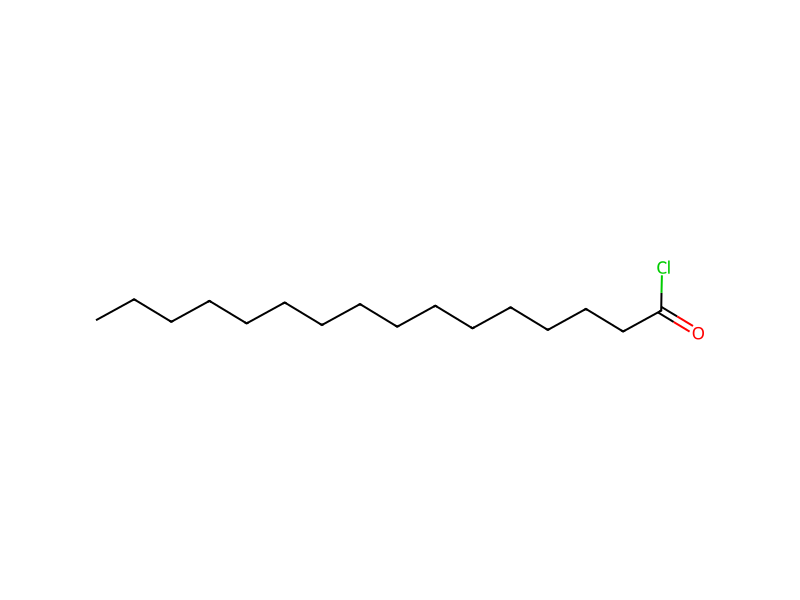
Palmitoyl chloride → 4-Benzoyloxy-2-butenyl palmitate
Reaction equation

[C:1]([O:9][CH2:10][CH:11]=[CH:12][CH2:13][OH:14])(=[O:8])[C:2]1[CH:7]=[CH:6][CH:5]=[CH:4][CH:3]=1.[C:15](Cl)(=[O:31])[CH2:16][CH2:17][CH2:18][CH2:19][CH2:20][CH2:21][CH2:22][CH2:23][CH2:24][CH2:25][CH2:26][CH2:27][CH2:28][CH2:29][CH3:30]>>[C:15]([O:14][CH2:13][CH:12]=[CH:11][CH2:10][O:9][C:1](=[O:8])[C:2]1[CH:7]=[CH:6][CH:5]=[CH:4][CH:3]=1)(=[O:31])[CH2:16][CH2:17][CH2:18][CH2:19][CH2:20][CH2:21][CH2:22][CH2:23][CH2:24][CH2:25][CH2:26][CH2:27][CH2:28][CH2:29][CH3:30]Participants
3


Procedure
4-Benzoyloxy-2-butenyl palmitate was prepared by the procedure of Example 1 from 19 gms (0.1 mole) of 4-hydroxy-2-butenyl benzoate and 26 gms (0.1 mole) of palmitoyl chloride. The structure of the final product was characterized on the basis of NMR and IR spectral analyses as described in Example 1.
Sources & evidence
- ORD record
- ord-9c1ca763cf624f9ab7eb33faf5090b67
- Source dataset
- uspto-grants-1978_02
- Patent number
- US04074058
Reaction notes
Loading…