Pyridinium chloride → HCID 20368343, compound
Reaction equation
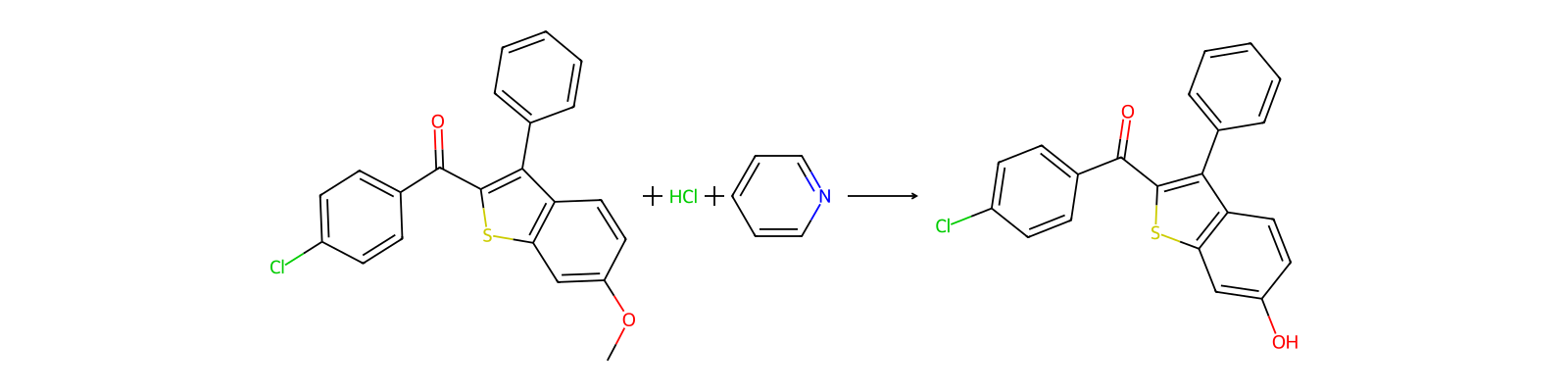
[Cl:1][C:2]1[CH:26]=[CH:25][C:5]([C:6]([C:8]2[S:9][C:10]3[CH:22]=[C:21]([O:23]C)[CH:20]=[CH:19][C:11]=3[C:12]=2[C:13]2[CH:18]=[CH:17][CH:16]=[CH:15][CH:14]=2)=[O:7])=[CH:4][CH:3]=1.Cl.N1C=CC=CC=1>>[Cl:1][C:2]1[CH:3]=[CH:4][C:5]([C:6]([C:8]2[S:9][C:10]3[CH:22]=[C:21]([OH:23])[CH:20]=[CH:19][C:11]=3[C:12]=2[C:13]2[CH:14]=[CH:15][CH:16]=[CH:17][CH:18]=2)=[O:7])=[CH:25][CH:26]=1Participants
3



Procedure
A mixture of 7 g. of the product from Example 18 and 27 g. of pyridine hydrochloride was refluxed in a 220° C. oil bath for 1.5 hours. The hot reaction mixture then was poured over an ice-water mixture. The resulting solid was collected and dissolved in ethyl acetate. The ethyl acetate solution was washed with saturated aqueous sodium chloride and dried over magnesium sulfate. The ethyl acetate solution was evaporated, and the residue was recrystallized from methanol to give 3.59 g. of the title compound, m.p. 222° C.
Workup
- additionA mixture of 7 g
- customThe resulting solid was collected
- dissolutiondissolved in ethyl acetate
- washThe ethyl acetate solution was washed with saturated aqueous sodium chloride
- dry with materialdried over magnesium sulfate
- customThe ethyl acetate solution was evaporated
- customthe residue was recrystallized from methanol
- customto give 3.59 g
Sources & evidence
- ORD record
- ord-693601115fe14545bd9069a29568b3e1
- Source dataset
- uspto-grants-1978_02
- Patent number
- US04075227
Reaction notes
Loading…