Sulfur Dioxide → Sulfur trioxide
Reaction equation

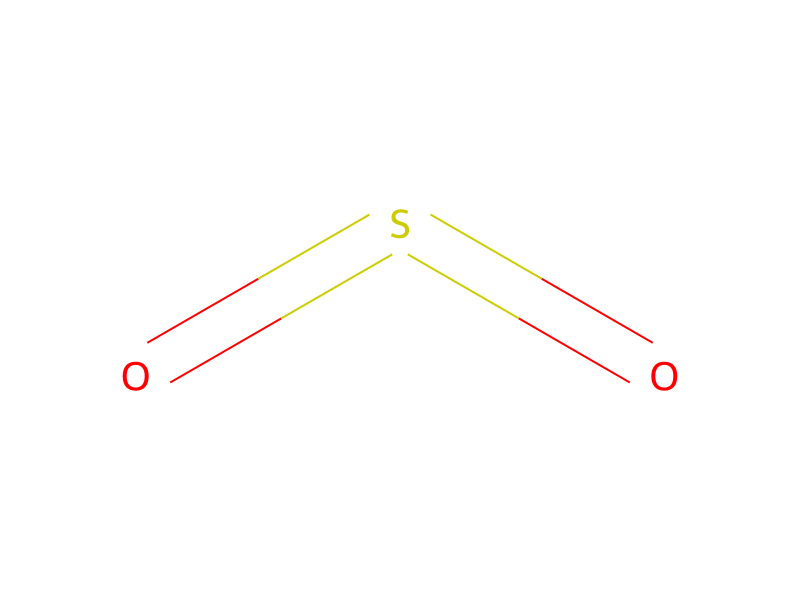
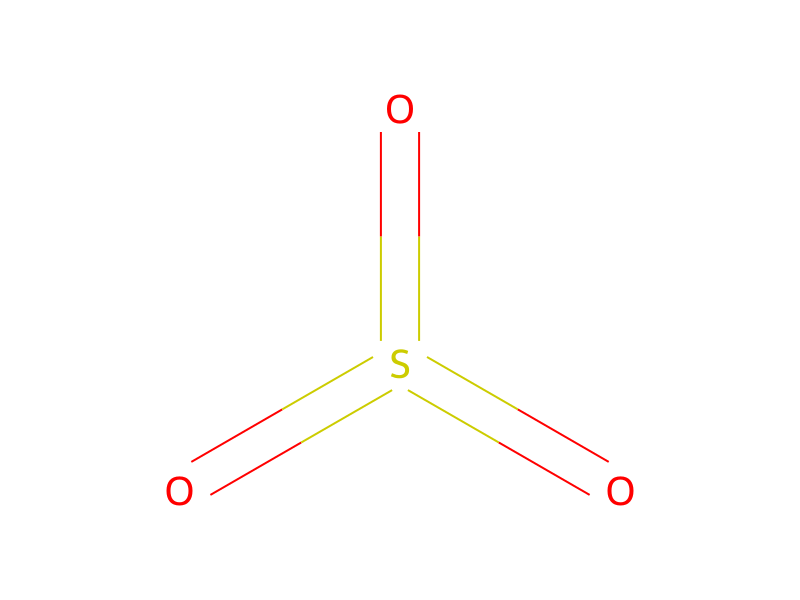
ClCC1C(CCl)=C(Cl)C(Cl)=C(Cl)C=1Cl.[S:15](=[O:17])=[O:16].[CH2:18]1[CH2:22][NH2+:21][CH2:20][CH2:19]1.[CH2:23]1[O:27][CH:26]2[O:28][CH:24]1[C:25]2([CH:40]([I:42])[I:41])[CH2:29][CH2:30][C:31]1([CH:37]([I:39])[I:38])[CH:35]2[O:36][CH:32]1[CH2:33][O:34]2>>[S:15](=[O:27])(=[O:17])=[O:16].[CH2:18]1[CH2:22][NH2+:21][CH2:20][CH2:19]1.[CH2:23]1[O:27][CH:26]2[O:28][CH:24]1[C:25]2([CH:40]([I:41])[I:42])[CH2:29][CH2:30][C:31]1([CH:37]([I:38])[I:39])[CH:35]2[O:36][CH:32]1[CH2:33][O:34]2Participants


Procedure
The procedure of Example 3, when applied to 31.3 g of α,α',3,4,5,6-hexachloro-o-xylene, mp 92°-92.5° C, yielded an intensely purple solution but essentially no sulfur dioxide eveolution even during a refluxing period of 3 hours. The intermediate biradical was identified by its nuclear magnetic resonance peak at 4.65 ppm (present in about 8-10% abundance in the reaction mixture), whereas the dioxonium compound (90-92% of the reaction mixture) had the chemical shift of its protons at 6.31-6.33 ppm. After the stripping of the excess of sulfur trioxide, the dioxonium compound was obtained as a dark amber colored viscous oil in quantitative yield (63.5 g) and was further identified by its hydrolysis to three mole equivalents of sulfuric acid, two mole equivalents of hydrochloric acid and one mole equivalent of the cyclic sulfate of 3,4,5,6-tetrachloro-o-xylene-1,2-diol (see Example 32).
Workup
- customyielded an intensely purple solution
Sources & evidence
- ORD record
- ord-9b3b514a9b8b45028b8e25832e04023f
- Source dataset
- uspto-grants-1978_02
- Patent number
- US04075238
Reaction notes
Loading…