Propyl isocyanate → HCID 21850059, compound
Reaction equation

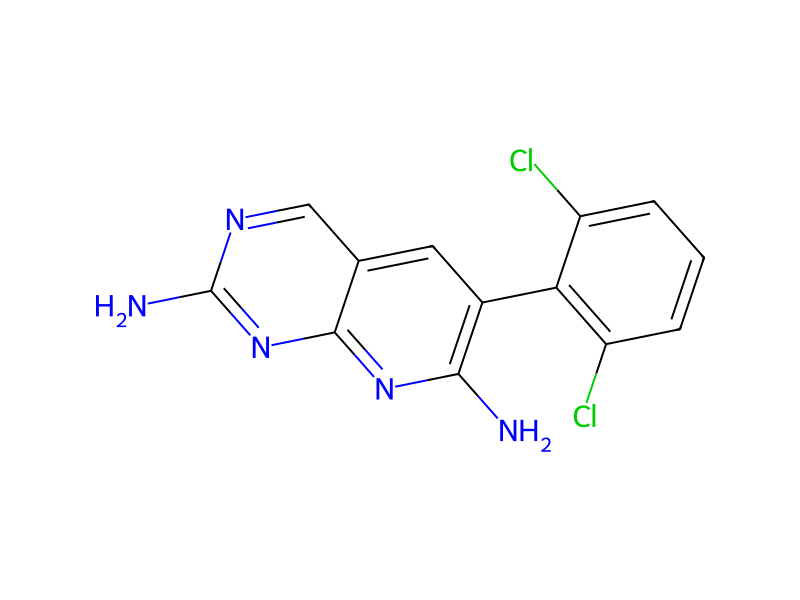
[NH2:1][C:2]1[N:3]=[CH:4][C:5]2[CH:11]=[C:10]([C:12]3[C:17]([Cl:18])=[CH:16][CH:15]=[CH:14][C:13]=3[Cl:19])[C:9]([NH2:20])=[N:8][C:6]=2[N:7]=1.[CH2:21]([N:24]=[C:25]=[O:26])[CH2:22][CH3:23]>>[NH2:1][C:2]1[N:3]=[CH:4][C:5]2[CH:11]=[C:10]([C:12]3[C:17]([Cl:18])=[CH:16][CH:15]=[CH:14][C:13]=3[Cl:19])[C:9]([NH:20][C:25]([NH:24][CH2:21][CH2:22][CH3:23])=[O:26])=[N:8][C:6]=2[N:7]=1Participants
3


Procedure
The title compound was prepared as described in Example 2 by reacting 1.0 g of 2,7-diamino-6-(2,6-dichlorophenyl)-pyrido[2,3-d]pyrimidine from Example 1 and 0.339 g of n-propyl isocyanate. The product was purified by radial chromatography eluting with a gradient of 10-100% ethyl acetate/Hexane. MS(CI).
Workup
- customThe product was purified by radial chromatography
- washeluting with a gradient of 10-100% ethyl acetate/Hexane
Sources & evidence
- ORD record
- ord-681bf79dfaa342abbb031a4323cfafd9
- Source dataset
- uspto-grants-1999_09
- Patent number
- US05952342
Reaction notes
Loading…