Oxalyl chloride → N-(5-bromopyridin-3-yl)-1-methylpiperidine-4-carboxamide
Reaction equation
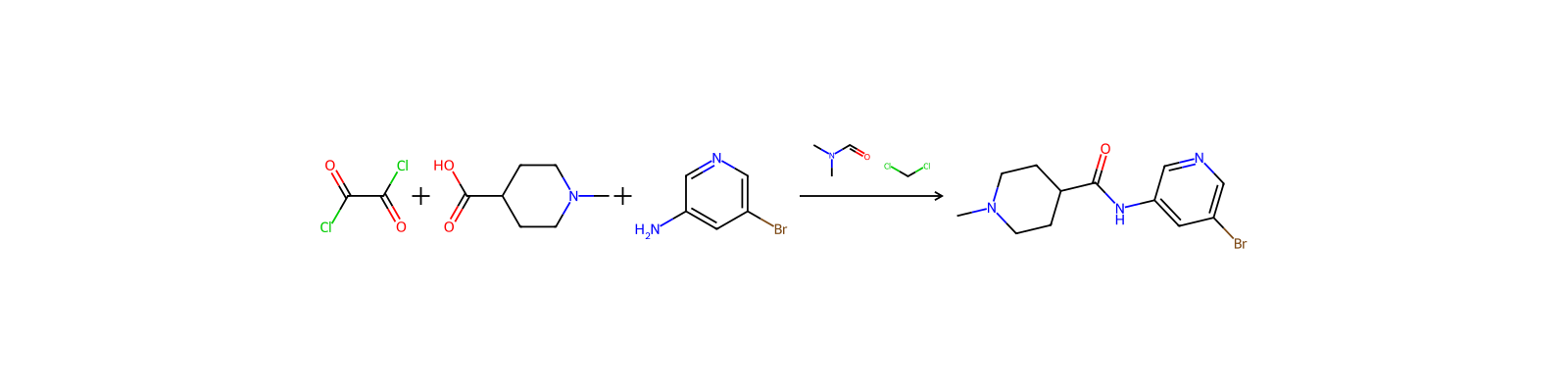
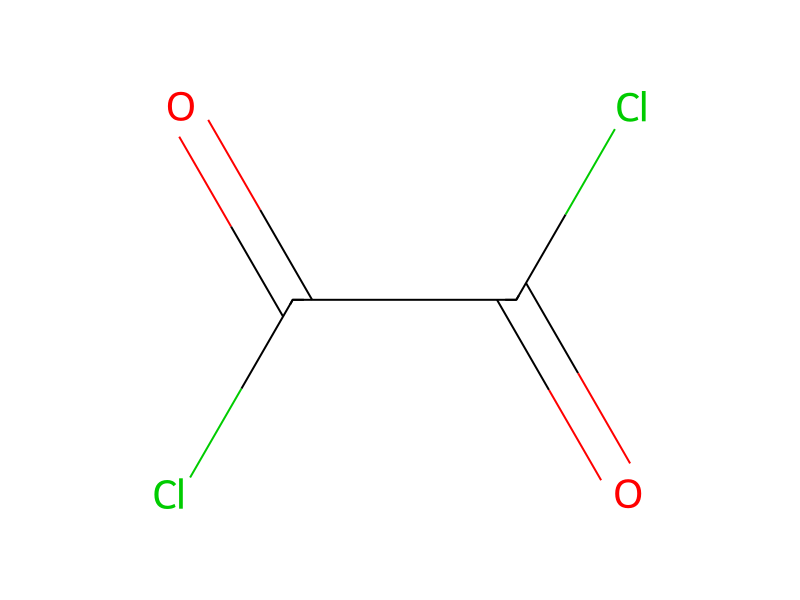
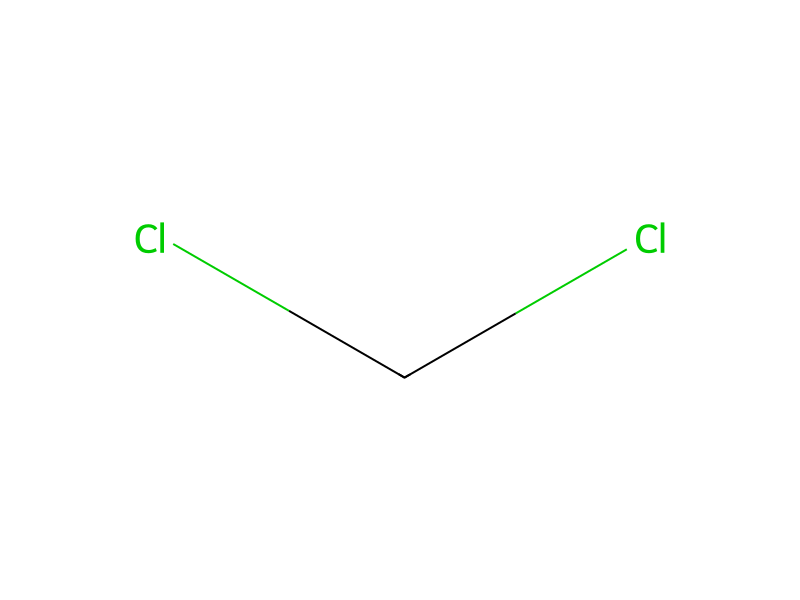
C(Cl)(=O)C(Cl)=O.[CH3:7][N:8]1[CH2:13][CH2:12][CH:11]([C:14]([OH:16])=O)[CH2:10][CH2:9]1.[NH2:17][C:18]1[CH:19]=[N:20][CH:21]=[C:22]([Br:24])[CH:23]=1>CN(C=O)C.C(Cl)Cl>[Br:24][C:22]1[CH:23]=[C:18]([NH:17][C:14]([CH:11]2[CH2:10][CH2:9][N:8]([CH3:7])[CH2:13][CH2:12]2)=[O:16])[CH:19]=[N:20][CH:21]=1Participants
Reactant 3

Product 1

Reagents, catalysts & solvents 2
Procedure
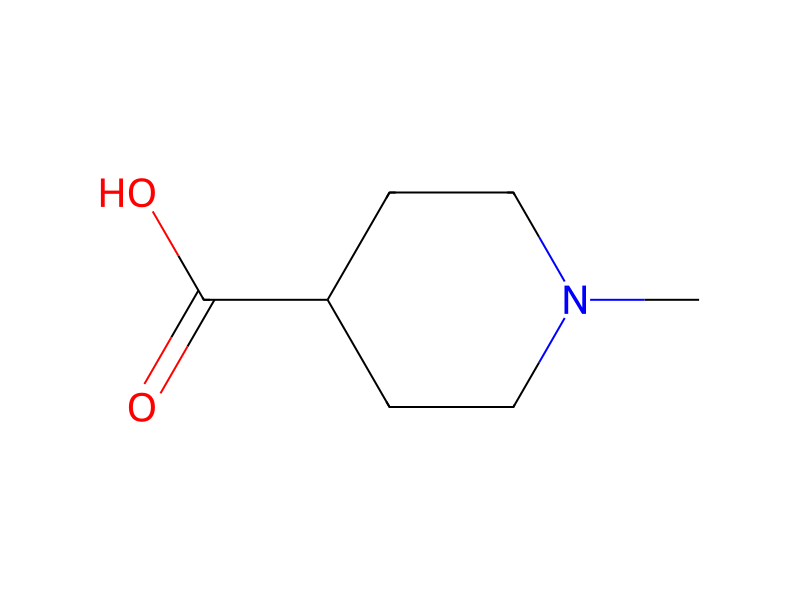
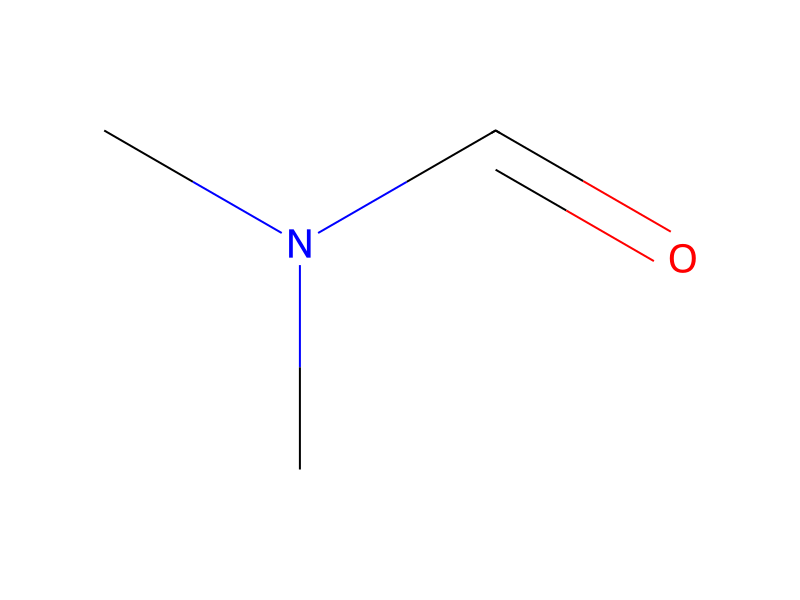
Oxalyl chloride (8.67 mmol) followed by DMF (2drops) was added to a solution of 1-methyl piperidine-4-carboxylic acid (XLIII) (5.78 mmol) in DCM and stirred 30 min at room temperature under argon. The volatiles were evaporated under vacuum by avoiding contact with air. Pyridine was added to the residue followed by addition of 3-amino-5-bromopyridine (XL) (5.20 mmol). The solution was further stirred at room temperature for 3 h under argon. The pyridine was evaporated under vacuum. The residue was treated with water, basified by saturated NaHCO3 solution and washed with DCM. The aqueous layer was extracted with n-butanol. The combined organic layer was evaporated. The residue was dissolved in DCM with the addition of few drops of MeOH. The insoluble inorganic solids were filtered off. The filtrate was concentrated under vacuum to get N-(5-bromopyridin-3-yl)-1-methylpiperidine-4-carboxamide (XLIV) as a brown viscous liquid (0.74 g, 43% yield). 1H NMR (DMSO-d6) 1.61-1.69 (m, 2H), 1.77-1.79 (m, 2H), 1.93-1.97 (m, 2H), 2.20 (s, 3H), 2.29-2.35 (m, 1H), 2.84-2.87 (m, 2H), 8.36 (d, J=1.6 Hz, 1H), 8.39 (m, 1H), 8.66 (d, J=1.6 Hz, 1H), 10.33 (s, 1H); ESIMS found C12H16BrN3O m/z 299 (M+H).
Workup
- customThe volatiles were evaporated under vacuum
- additionPyridine was added to the residue
- stirringThe solution was further stirred at room temperature for 3 h under argon
- customThe pyridine was evaporated under vacuum
- additionThe residue was treated with water
- washwashed with DCM
- extractionThe aqueous layer was extracted with n-butanol
- customThe combined organic layer was evaporated
- dissolutionThe residue was dissolved in DCM with the addition of few drops of MeOH
- filtrationThe insoluble inorganic solids were filtered off
- concentrationThe filtrate was concentrated under vacuum
Sources & evidence
- ORD record
- ord-4e1c9a2a84a3466592378f2189ead22f
- Source dataset
- uspto-grants-2016_09
- Patent number
- US09446035B2
Reaction notes
Loading…