Hydrochloric Acid → 2-Chloro-4-iodopyridine-3-carbaldehyde
Reaction equation

ClC1[C:7]([I:8])=CC=CN=1.[CH:9]([N-:12][CH:13]([CH3:15])C)([CH3:11])C.[Li+].C([O:19][CH2:20]C)=O.[ClH:22]>C1COCC1.O>[Cl:22][C:13]1[N:12]=[CH:9][CH:11]=[C:7]([I:8])[C:15]=1[CH:20]=[O:19]Participants





Procedure
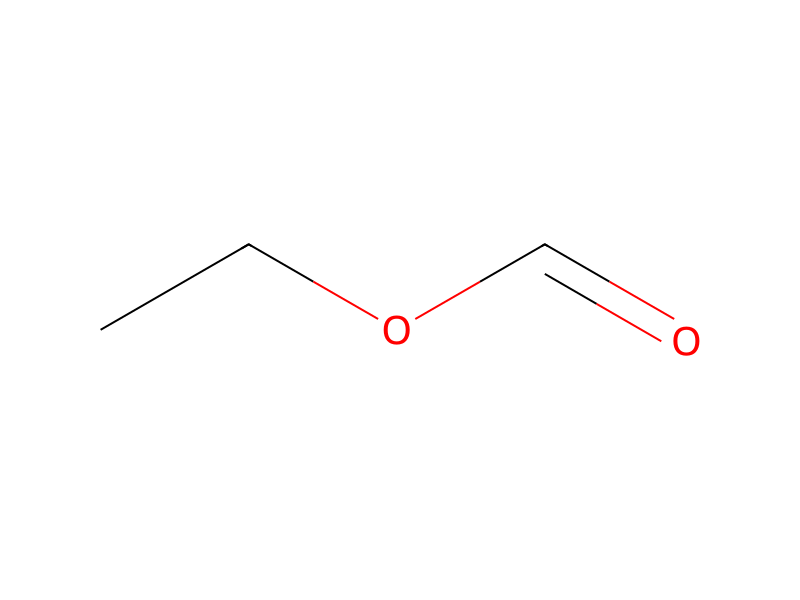
A mixture of 2-chloro-3-iodopyridine (5.0 g, 21 mmol) in dry THF (30 mL) was slowly added to a cold (−78° C.) solution of lithium diisopropylamide (15 mL, 30 mmol) in dry THF (50 mL). The resulting mixture was stirred for 3 h at this temperature. Ethyl formate (4.0 g, 54 mmol) was then added. Stirring was continued for 1.5 h at the same temperature. Water (10 mL) was added to quench the reaction, and then the resulting mixture was warmed to room temperature. 2M HCl (50 mL) was added and then the THF was removed under reduced pressure. The aqueous residue was extracted with ethyl acetate (2×50 mL). The combined organic extracts were washed with brine, dried over Na2SO4 and concentrated under reduced pressure. The residue was purified on silica gel (diethyl ether:petroleum ether=1:4) to give the desired product 2-chloro-4-iodonicotinaldehyde as a yellow solid (3.0 g, 54% yield). 1H NMR (500 MHz, CDCl3): δ 10.22 (s, 1H), 8.09 (d, J=5.0 Hz, 1H), 7.95 (d, J=5.0 Hz, 1H).
Workup
- stirringStirring
- waitwas continued for 1.5 h at the same temperature
- customto quench
- customthe reaction
- customthe THF was removed under reduced pressure
- extractionThe aqueous residue was extracted with ethyl acetate (2×50 mL)
- washThe combined organic extracts were washed with brine
- dry with materialdried over Na2SO4
- concentrationconcentrated under reduced pressure
- customThe residue was purified on silica gel (diethyl ether:petroleum ether=1:4)
Sources & evidence
- ORD record
- ord-1a360358e5484f5ba6c2c2e062da0912
- Source dataset
- uspto-grants-2016_04
- Patent number
- US09309240B2
Reaction notes
Loading…