Hydrochloric Acid → 1-(4-Methyl-3-pyridinyl)ethanone
Reaction equation

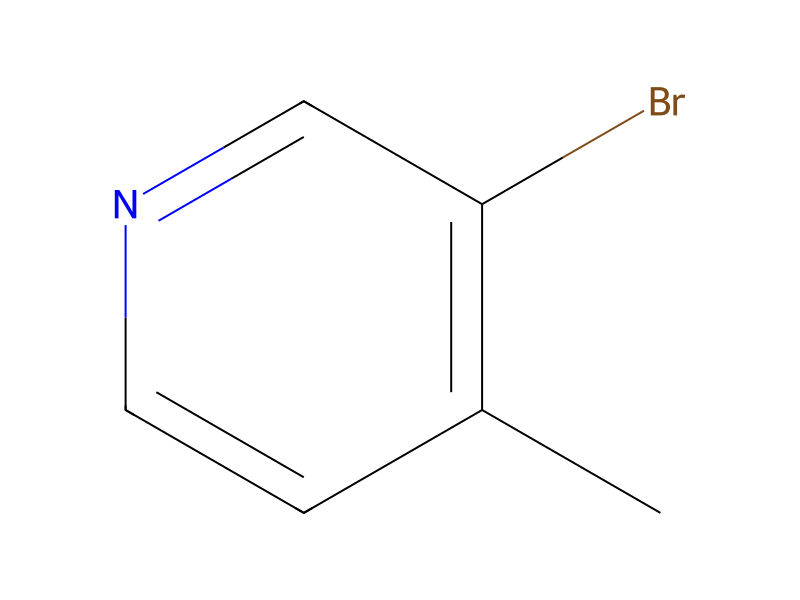
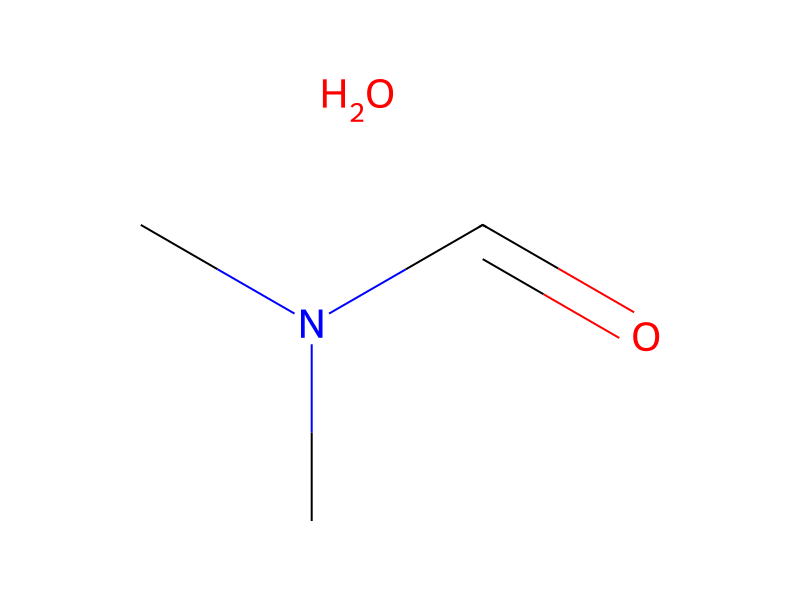
Br[C:2]1[CH:3]=[N:4][CH:5]=[CH:6][C:7]=1[CH3:8].CC[CH2:11][CH2:12][O:13]C=C.C1(P(C2C=CC=CC=2)CCCP(C2C=CC=CC=2)C2C=CC=CC=2)C=CC=CC=1.C(=O)([O-])[O-].[K+].[K+].Cl>O.CN(C=O)C.C([O-])(=O)C.[Pd+2].C([O-])(=O)C>[CH3:8][C:7]1[CH:6]=[CH:5][N:4]=[CH:3][C:2]=1[C:12](=[O:13])[CH3:11]Participants
Reactant 5




Product 1

Reagents, catalysts & solvents 2

Procedure
671 μl (5.81 mmol) of 3-bromo-4-methylpyridine in 15 mL of H2O/DMF (1/4: v/v), 1.93 mL (14.53 mmol) of N-butyl vinyl ether, 39.15 mg (0.17 mmol) of palladium(II) acetate, 163.14 mg (0.38 mmol) of 1,3-bis(diphenylphosphino)propane and 973.84 mg (6.98 mmol) of potassium carbonate are placed in a microwave tube. After irradiating with microwaves at 120° C. for 2 hours, 20 mL of 5% hydrochloric acid solution are added. The reaction mixture is stirred for 1 hour at room temperature and then basified with potassium carbonate and extracted with ethyl acetate. The organic phase is dried over magnesium sulfate and evaporated to dryness. The residue is purified by chromatography on silica gel (eluent: 50/50 EtOAc/heptane) to give 320 mg of 1-(4-methylpyrid-3-yl)ethanone, the characteristics of which are as follows:
Workup
- customAfter irradiating with microwaves at 120° C. for 2 hours
- extractionextracted with ethyl acetate
- dry with materialThe organic phase is dried over magnesium sulfate
- customevaporated to dryness
- customThe residue is purified by chromatography on silica gel (eluent: 50/50 EtOAc/heptane)
Sources & evidence
- ORD record
- ord-410cfb11182c46be9c9963fb1bcc3b2f
- Source dataset
- uspto-grants-2016_04
- Patent number
- US09321790B2
Reaction notes
Loading…