1,1-Dichloroethane → 1372804-17-5
Reaction equation

[Br:1][C:2]1[CH:8]=[CH:7][CH:6]=[C:5]([Br:9])[C:3]=1[NH2:4].ClC(Cl)C.CO[CH:16]1[CH2:20][CH2:19][CH:18](OC)O1>C(O)(=O)C>[Br:1][C:2]1[CH:8]=[CH:7][CH:6]=[C:5]([Br:9])[C:3]=1[N:4]1[CH:16]=[CH:20][CH:19]=[CH:18]1Participants
Reactant 3


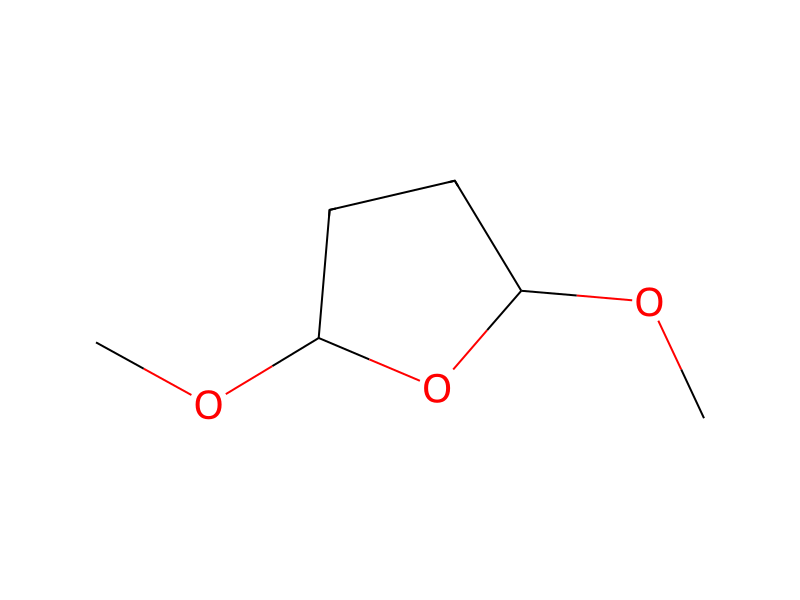
Product 1

Reagents, catalysts & solvents 1

Procedure
To a 200 mL round bottom flask was added 2,6-dibromoaniline (8.63 g, 34.7 mmol, 1.0 equiv.), dichloroethane (35.0 mL, 1.0 M), acetic acid (35.0 mL, 1.0 M), and 2,5-dimethoxytetrahydrofuran (10.5 mL, 3.3 M). A reflux condenser was fitted to the flask and the mixture was heated to reflux for 2 hours. During this time the solution slowly changes colors from clear to yellow. An aliquot was removed and the reaction was judged complete by NMR. The mixture was diluted with CH2Cl2, rinsed with H2O, and then rinsed with saturated aqueous K2CO3. The organic layer was dried over MgSO4 and filtered through a pad of SiO2 with CH2Cl2 as eluent. The oil was place under high vacuum overnight to remove the excess 2,5-dimethoxytetrahydrofuran. During this time 1-(2,6-dibromophenyl)-1H-pyrrole, 2, changes to a white solid (8.72 g, 29.1 mmol, 84%). 1H NMR (400 MHz, CDCl3) δ7.68 (d, J=8.0 Hz, 2H), 7.18 (t, J=8.4 Hz, 2H), 6.72 (t, J=2.0 Hz, 2H), 6.42 (t, J=2.0 Hz, 2H).
Workup
- customA reflux condenser was fitted to the flask
- temperaturethe mixture was heated
- temperatureto reflux for 2 hours
- customAn aliquot was removed
- additionThe mixture was diluted with CH2Cl2
- washrinsed with H2O
- washrinsed with saturated aqueous K2CO3
- dry with materialThe organic layer was dried over MgSO4
- filtrationfiltered through a pad of SiO2 with CH2Cl2 as eluent
- customunder high vacuum overnight
- customto remove the excess 2,5-dimethoxytetrahydrofuran
Sources & evidence
- ORD record
- ord-f891280ccd7d43d89b916d7e60c4ccc9
- Source dataset
- uspto-grants-2016_04
- Patent number
- US09324505B2
Reaction notes
Loading…