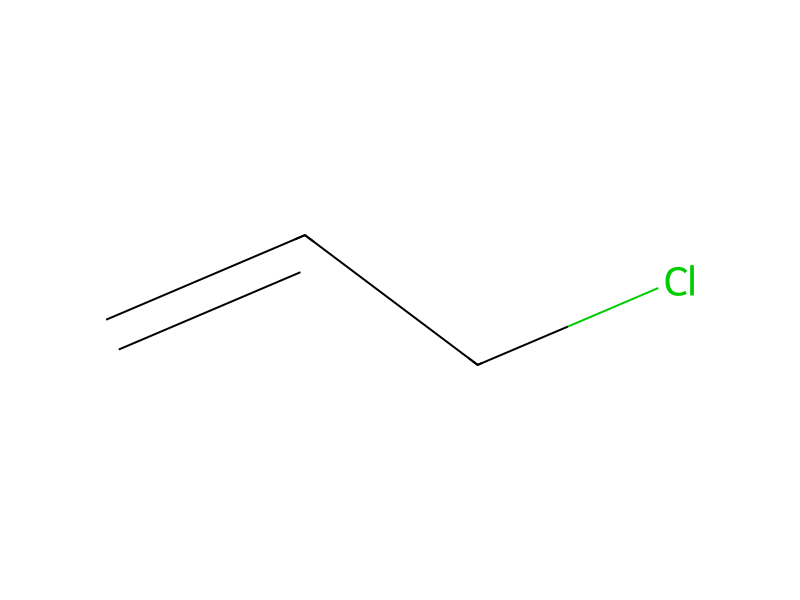
Allyl chloride → Silicon tetrachloride
Reaction equation

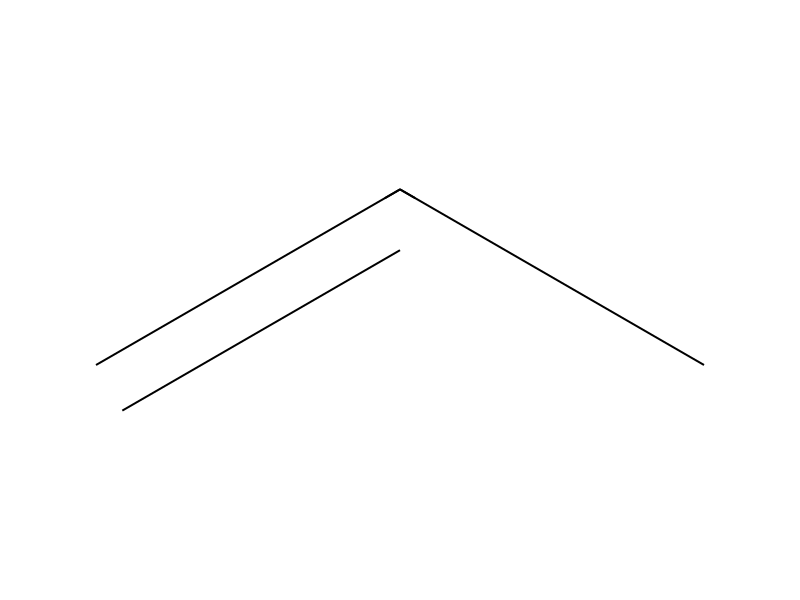
[CH2:1]([Cl:4])[CH:2]=[CH2:3].Cl[SiH:6](Cl)Cl.C=CC.[Si:12]([Cl:16])([Cl:15])([Cl:14])[Cl:13]>>[Cl:4][CH2:1][CH2:2][CH2:3][SiH3:6].[Si:12]([Cl:16])([Cl:15])([Cl:14])[Cl:13]Participants


Procedure
Thus, for example, in the reaction of allyl chloride with trichlorosilane, 25-30 mol. % of the allyl chloride entering into the reaction is converted by this side reaction into propylene, accompanied by the formation of equivalent quantities of silicon tetrachloride. The molar ratio of chloropropylsilane formed to silicon tetrachloride in the crude product is a measure of the selectivity of the reaction and typically attains values of between 2.33:1 (70% yield, based on allyl chloride) and 3:1 (75% yield). It is also known that the formation of propylene can be lessened by a special reaction procedure in pressurized apparatus. However, the result of this procedure is that the propylene obtained in the side reaction undergoes a further quantitative reaction with the hydrogen silane used, with the formation of propylsilanes. Even in the reactions carried out in the conventional manner under normal pressure, the propylene originating from the side reaction largely enters into a further side reaction with hydrogen silane to form the corresponding propylsilanes (cf. also DE 34 04 703 C) (see, for example, equation 3).
Sources & evidence
- ORD record
- ord-23df91ef682d4797bc47e0e4a0cd09c3
- Source dataset
- uspto-grants-2001_02
- Patent number
- US06191297B1
Reaction notes
Loading…