2,5-Dimethylpyrrole → N-[(4,6-dimethylpyrimidin-2-yl)aminocarbonyl]-2,5-dimethyl-1H-pyrrole-3-sulfonamide
Reaction equation

[NH2:1][C:2]1[N:7]=[C:6]([CH3:8])[CH:5]=[C:4]([CH3:9])[N:3]=1.Cl[S:11]([N:14]=[C:15]=[O:16])(=[O:13])=[O:12].[CH3:17][C:18]1[NH:19][C:20]([CH3:23])=[CH:21][CH:22]=1>ClCCl>[CH3:9][C:4]1[CH:5]=[C:6]([CH3:8])[N:7]=[C:2]([NH:1][C:15]([NH:14][S:11]([C:22]2[CH:21]=[C:20]([CH3:23])[NH:19][C:18]=2[CH3:17])(=[O:13])=[O:12])=[O:16])[N:3]=1Participants
5

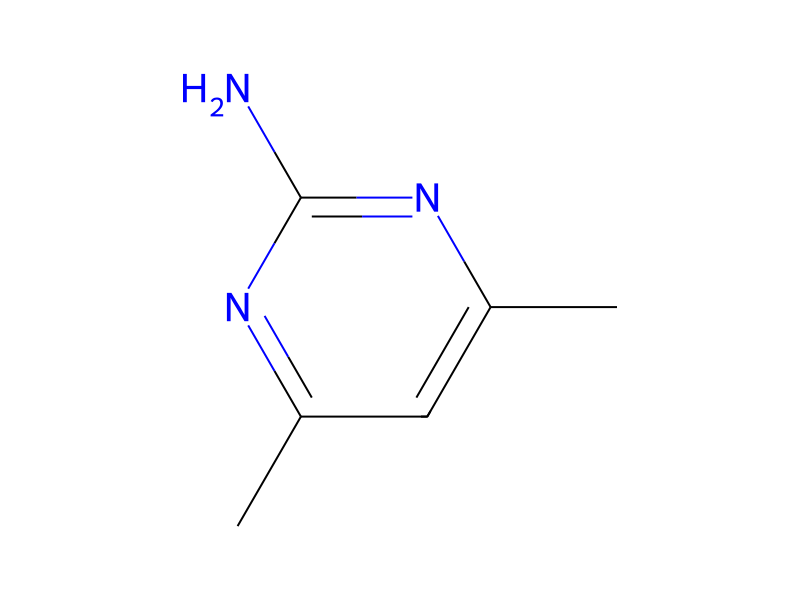



Procedure
To a mechanically stirred suspension of 12.3 g (0.1 mole) of 2-amino-4,6-dimethylpyrimidine in 200 ml of dry dichloromethane maintained at 0° to 5° C. under a nitrogen atmosphere was added dropwise over 30 minutes a solution of 9.2 ml (0.1 mole) of chlorosulfonyl isocyanate in 50 ml of ice-cold dichloromethane. After 30 minutes at 0° to 5° C. the resulting yellow solution was treated dropwise over 15 minutes with 20 ml (0.197 mole) of 2,5-dimethylpyrrole. This mixture was stirred 30 minutes at 0° to 5° C. and allowed to stand overnight at room temperature.
Workup
- temperaturemaintained at 0° to 5° C. under a nitrogen atmosphere
- waitto stand overnight at room temperature
Sources & evidence
- ORD record
- ord-d3cd10c2d5144ba090aa95ce680db615
- Source dataset
- uspto-grants-1985_12
- Patent number
- US04557752
Reaction notes
Loading…