Sodium methanethiolate → 2-(Methylthio)quinazolin-6-ol
Reaction equation

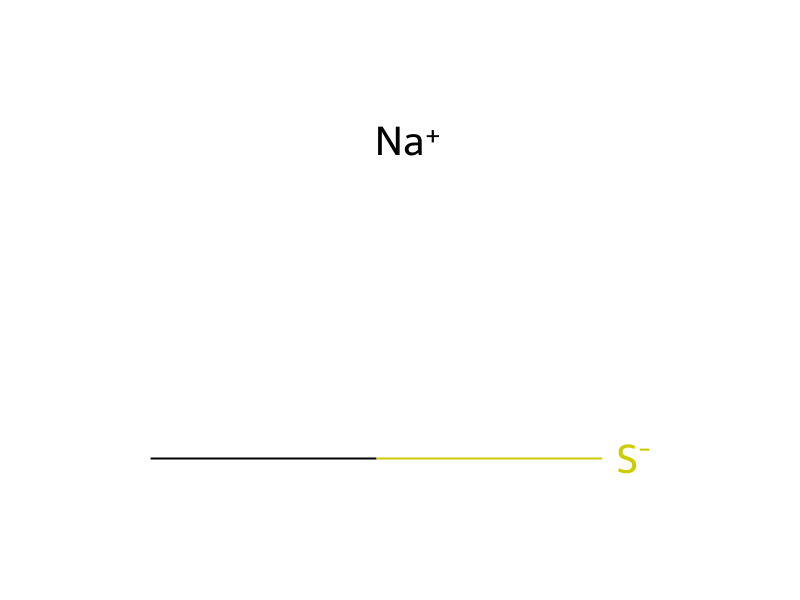
Cl[C:2]1[N:11]=[CH:10][C:9]2[C:4](=[CH:5][CH:6]=[C:7]([O:12]C)[CH:8]=2)[N:3]=1.[CH3:14][S-:15].[Na+]>C(O)C.C(Cl)Cl.C(S)C.[Cl-].[Al+3].[Cl-].[Cl-]>[CH3:14][S:15][C:2]1[N:11]=[CH:10][C:9]2[C:4](=[CH:5][CH:6]=[C:7]([OH:12])[CH:8]=2)[N:3]=1Participants
7






Procedure
In the alternate reaction Scheme B, above, the 2-chloro-6-methoxyquinazoline 8 is reacted with sodium thiomethoxide in ethanol, dry methylene chloride, ethane thiol and aluminum chloride to obtain the 2-methylthioquinazolin-6-ol 13. The desired substituent, in this case 4-chloro(2-pyridyl)-N-methylcarboxamide, is added to the alcohol group to obtain the corresponding substituted methylthioquinazoline 14. Treatment with 3-chloroperoxybenzoic acid in acetic acid results in the corresponding sulfonyl 15, which is replaced by a desired substituent, in this case 2-naphthylaniline, to obtain the desired compound of the invention, in this case N-methyl-4-{[2-(naphthalen-2-ylamino)-quinazolin-6-yl]oxy}pyridine-2-carboxamide.
Workup
- customIn the alternate reaction Scheme B
Sources & evidence
- ORD record
- ord-4a3d82cf02b743298c2494a2b79abc6a
- Source dataset
- uspto-grants-2010_04
- Patent number
- US07691866B2
Reaction notes
Loading…