1,4-Dichlorobenzene → α-Methylstyrene dimer
Reaction equation

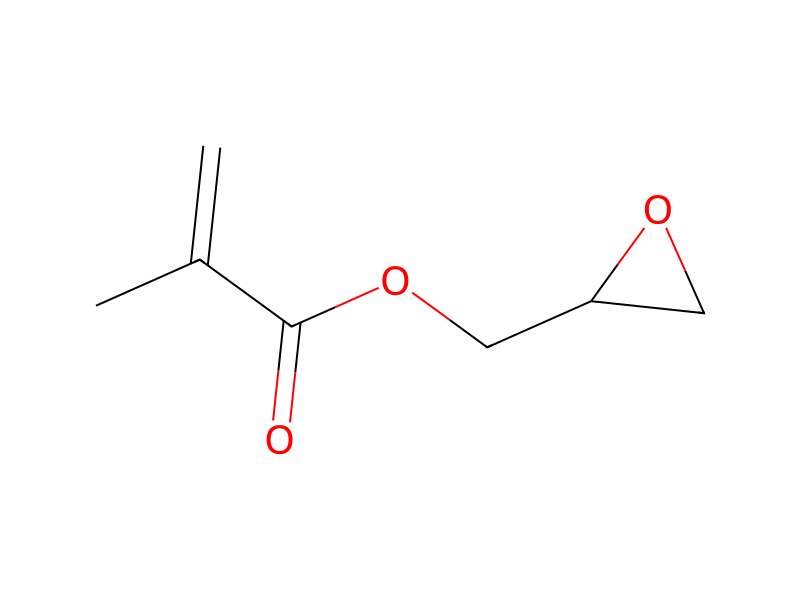
C1C(Cl)=CC=C(Cl)C=1.C(OCC1OC1)(=O)C(C)=C.[C:19]1([C:25]([CH2:27]C(C2C=CC=CC=2)(C)C)=[CH2:26])[CH:24]=[CH:23][CH:22]=[CH:21][CH:20]=1>>[CH3:27][C:25]([C:19]1[CH:24]=[CH:23][CH:22]=[CH:21][CH:20]=1)=[CH2:26].[CH3:27][C:25]([C:19]1[CH:24]=[CH:23][CH:22]=[CH:21][CH:20]=1)=[CH2:26]Participants



Conditions
- Temperature
- 190 °C
Procedure
Using the same procedure and equipment as in Example 1, the flask was charged with brominated styrene monomer (1004.2), dichlorobenzene (492 g), glycidyl methacrylate (5.11 g, 0.0359 mol), 2,4-diphenyl-4-methyl-1-pentene (20.13 g, 0.0851 mol) (α-methyl styrene dimer) and VAZO-52™ (1.03 g, 4.15 mmol). The solution was heated to about. 90° C. until exotherm. It then reached a peak temperature of 141° C. after which the mixture was heated to 190° C. over 5-10 min and held at 190° C. for 40-45 min. Heating was halted; the solution (1509.3 g) was transferred to a 2-liter bottle, and cooled to room temperature. The material was split into four parts. Each part was precipitated into a 5-liter flask of 3400 mL acetone and 400 mL methanol. The precipitate was filtered over frit, dried at ambient temperature for about 14 h and oven dried at 110° C. for 8 h. A white powder (881 g) was isolated.
Workup
- temperatureThe solution was heated to about
- custom90° C.
- customa peak temperature of 141° C.
- temperatureHeating
- temperaturecooled to room temperature
- customThe material was split into four parts
- customEach part was precipitated into a 5-liter flask of 3400 mL acetone and 400 mL methanol
- filtrationThe precipitate was filtered over frit
- customdried at ambient temperature for about 14 h
- customoven dried at 110° C. for 8 h
Sources & evidence
- ORD record
- ord-305fe872abfb4237b3d80c384e4db951
- Source dataset
- uspto-grants-2010_04
- Patent number
- US07691947B2
Reaction notes
Loading…