1,4-Dichlorobenzene → α-Methylstyrene dimer
Reaction equation

[O-]O.[C:3]1([CH:9]([CH3:11])[CH3:10])[CH:8]=[CH:7][CH:6]=[CH:5][CH:4]=1.C1C(Cl)=CC=C(Cl)C=1.C(OCC1OC1)(=O)C(C)=C>>[CH3:11][C:9]([C:3]1[CH:8]=[CH:7][CH:6]=[CH:5][CH:4]=1)=[CH2:10].[CH3:11][C:9]([C:3]1[CH:8]=[CH:7][CH:6]=[CH:5][CH:4]=1)=[CH2:10]Participants

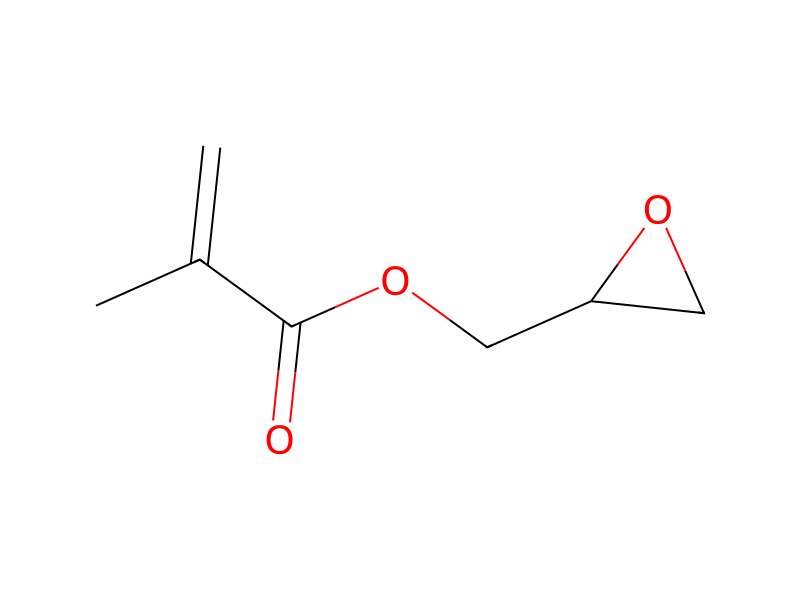
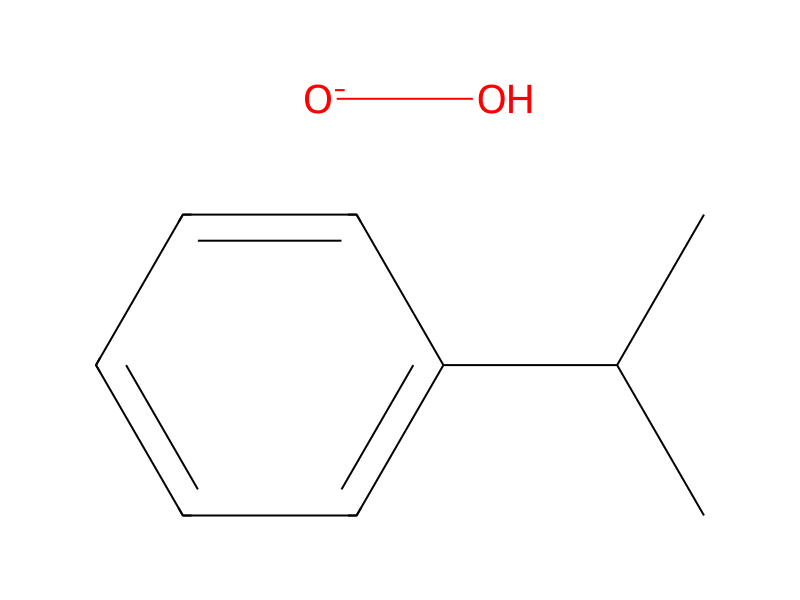

Conditions
- Temperature
- 900 °C
Procedure
A high temperature initiator, cumene hydroperoxide, was included in this run to drive the polymerization further towards completion and to reduce residual monomer. The flask was charged with brominated styrene monomer (10002.6), dichlorobenzene (497 g), glycidyl methacrylate (5.13 g, 0.0360 mol), 2,4-diphenyl-4-methyl-l-pentane (20.26 g, 0.08571 mol), VAZO-52™ azo type initiator (1.05 g, 4.22 mmol) and cumene hydroperoxide (1.06 g, 6.96 mmol). In one embodiment, the monomer/polymerization initiator blend may be reacted under conditions effective to polymerize at least about 80% of the monomers in a time of between about 1 minute and about 20 minutes. The solution was then heated to about 900° C. until exotherm. Peak temperature reached was 163° C. after which the mixture was heated the mixture was heated to 190° C. over 5-10 mm and held at 190° C. for 40-45 mm. Heating was halted; the solution (1513.7 g) was transferred to a 2-liter bottle, and cooled to room temperature. The material was split into four parts. Each part was precipitated into a 5-liter flask of 3400 mL acetone and 400 mL methanol. The precipitate was filtered over frit, dried at ambient temperature for about 14 h and oven dried at 110° C. for 8 h. A white powder (883 g) was isolated.
Workup
- customthe polymerization further towards completion
- customIn one embodiment, the monomer/polymerization initiator blend may be reacted under conditions effective
- customreached was 163° C.
- temperaturewas heated the mixture
- temperaturewas heated to 190° C. over 5-10 mm
- customheld at 190° C. for 40-45 mm
- temperatureHeating
- temperaturecooled to room temperature
- customThe material was split into four parts
- customEach part was precipitated into a 5-liter flask of 3400 mL acetone and 400 mL methanol
- filtrationThe precipitate was filtered over frit
- customdried at ambient temperature for about 14 h
- customoven dried at 110° C. for 8 h
Sources & evidence
- ORD record
- ord-ba32ac6c40284fb99ae842ba46899513
- Source dataset
- uspto-grants-2010_04
- Patent number
- US07691954B2
Reaction notes
Loading…