6-Bromo-1-chloronaphthalen-2-ol → 1-Chloro-6-(1-pentynyl)-2-naphthol
Reaction equation

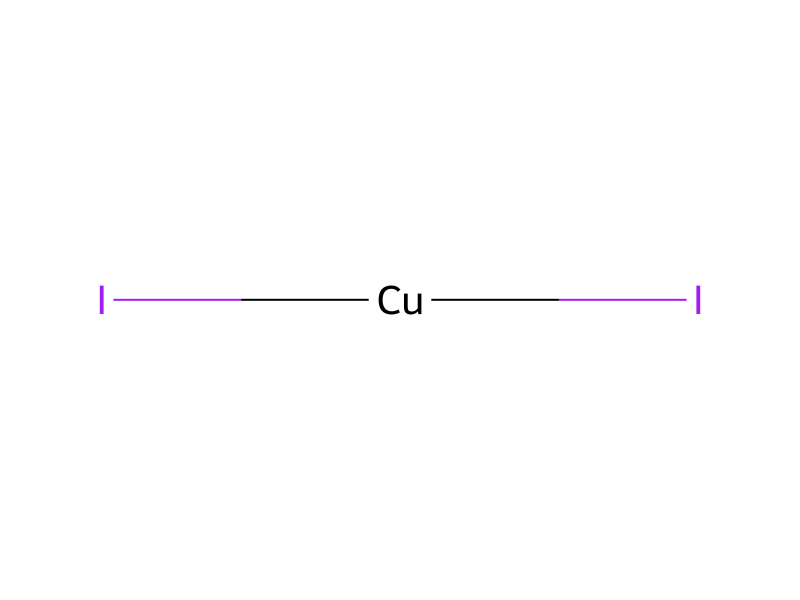
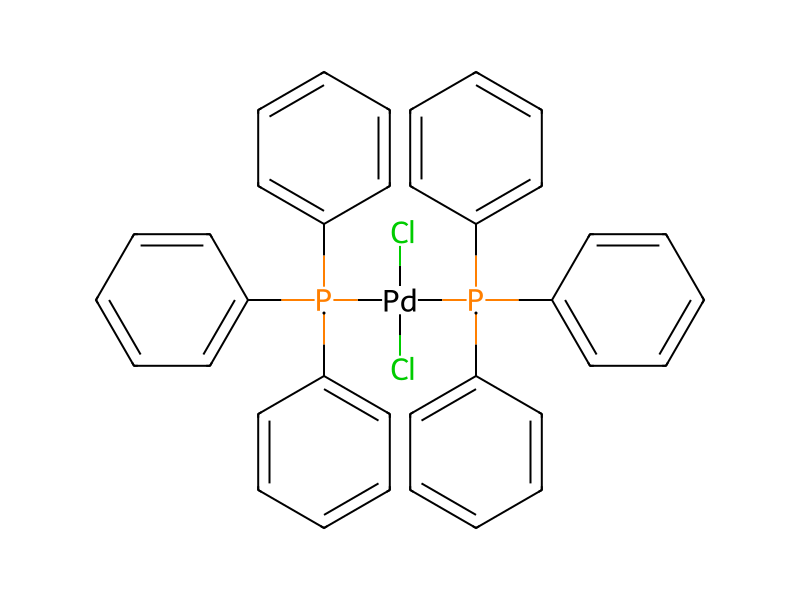
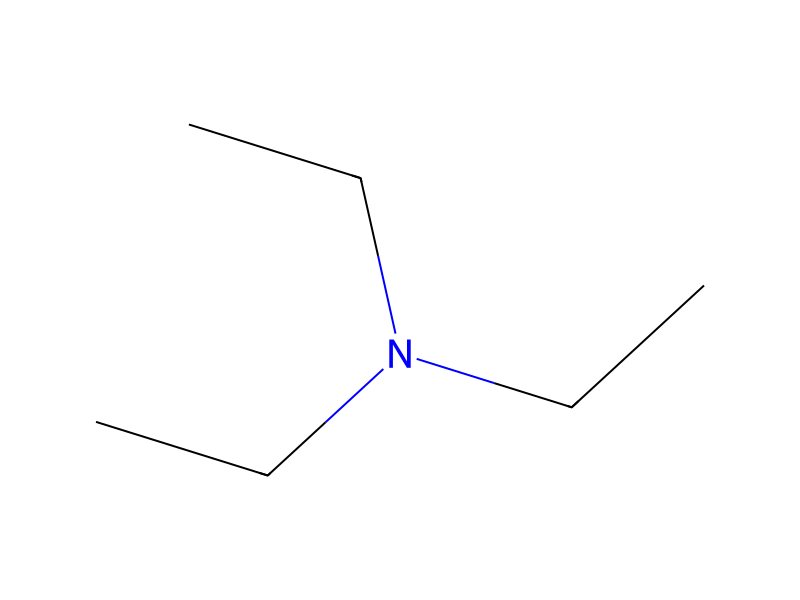
[Cl:1][C:2]1[C:11]2[C:6](=[CH:7][C:8](Br)=[CH:9][CH:10]=2)[CH:5]=[CH:4][C:3]=1[OH:13]>Cl[Pd](Cl)([P](C1C=CC=CC=1)(C1C=CC=CC=1)C1C=CC=CC=1)[P](C1C=CC=CC=1)(C1C=CC=CC=1)C1C=CC=CC=1.[Cu](I)I.C(N(CC)CC)C>[Cl:1][C:2]1[C:11]2[C:6](=[CH:7][C:8]([C:11]#[C:2][CH2:3][CH2:4][CH3:5])=[CH:9][CH:10]=2)[CH:5]=[CH:4][C:3]=1[OH:13]Participants


Procedure
The compound (S7-3) was synthesized according to the method disclosed in Synthesis, No. 9, 1439 (2004). 38.3 g of 1-chloro-6-bromo-2-naphthol (S1-2), 5.2 g of PdCl2(PPh3)2, 0.71 g of copper iodide and 400 mL of triethylamine were added to a reactor under a nitrogen atmosphere and stirred at room temperature, to which 35.8 g of 1-heptine (S7-2) was added, followed by refluxing for 6 hours. The reaction mixture was cooled to room temperature, and the solvent was distilled off under reduced pressure. Ethyl acetate was added to the resulting residue, and the mixture was filtered with Celite. The resulting solution was washed with 1N hydrochloric acid and water, and dried over anhydrous magnesium sulfate. The solvent was distilled off under reduced pressure, and the resulting residue was purified by silica gel column chromatography with a mixed solvent of heptane and ethyl acetate (3/1) as a developing solvent and dried under reduced pressure to provide 32.3 g of 1-chloro-6-(1-pentynyl)-2-naphthol (S7-3).
Workup
- customThe compound (S7-3) was synthesized
- customdisclosed in Synthesis
- additionwas added
- temperatureby refluxing for 6 hours
- temperatureThe reaction mixture was cooled to room temperature
- distillationthe solvent was distilled off under reduced pressure
- additionEthyl acetate was added to the resulting residue
- filtrationthe mixture was filtered with Celite
- washThe resulting solution was washed with 1N hydrochloric acid and water
- dry with materialdried over anhydrous magnesium sulfate
- distillationThe solvent was distilled off under reduced pressure
- customthe resulting residue was purified by silica gel column chromatography with a mixed solvent of heptane and ethyl acetate (3/1) as a developing solvent
- customdried under reduced pressure
Sources & evidence
- ORD record
- ord-b8ba5a0fb7724ce59500e650d8aff193
- Source dataset
- uspto-grants-2010_04
- Patent number
- US07704409B2
Reaction notes
Loading…