Propylene → Trityl chloride
Reaction equation

C=CC.[CH2:4]=[C:5]([CH3:7])[CH3:6].C[C:9]1([CH:16]=[CH:15][CH:14]=[CH:13][CH2:12]1)C=C.[CH2:17]1[C:25]2C(=CC=C[CH:24]=2)[CH2:19][CH2:18]1.[Cl:26][CH:27]([C:29]1[CH:34]=[CH:33][CH:32]=[CH:31][CH:30]=1)[CH3:28]>[Cl-].[Zn+2].[Cl-].ClCCl>[C:27]([Cl:26])([C:9]1[CH:12]=[CH:13][CH:14]=[CH:15][CH:16]=1)([C:28]1[CH:24]=[CH:25][CH:17]=[CH:18][CH:19]=1)[C:29]1[CH:34]=[CH:33][CH:32]=[CH:31][CH:30]=1.[CH2:4]=[C:5]([CH3:7])[CH3:6]Participants
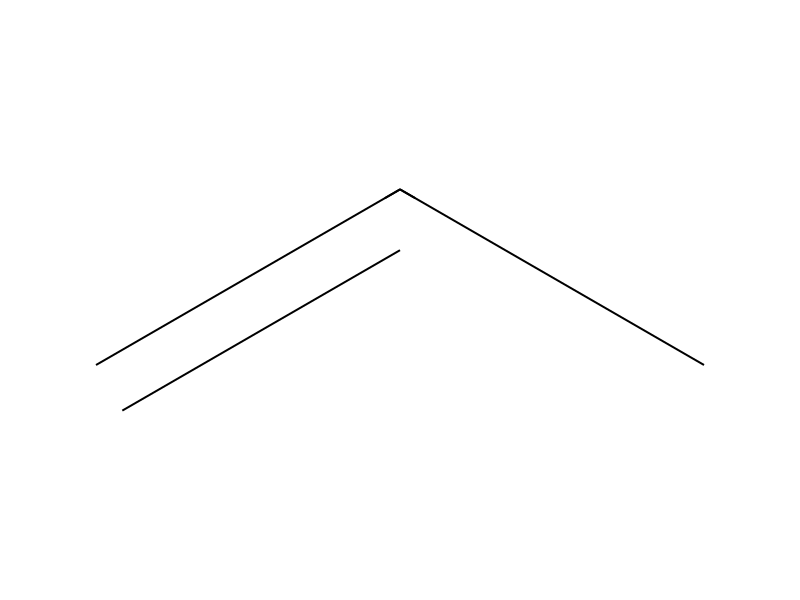


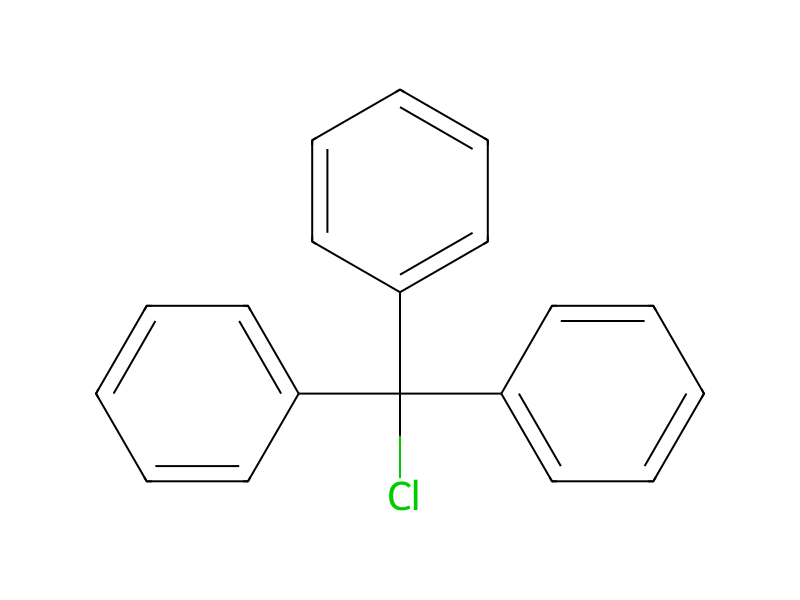


Procedure
The reaction of substituted benzyl halides with olefins such as propene, isobutene and 1-methylstyrene in the presence of zinc chloride or zinc chloride etherate in dichloromethane as solvent is described in J. Org. Chem., 48 (1983), 1159-65. In general the 1:1 addition. product is obtained not only at -78° C. but also at from 0° to +80° C. (see also J. Org. Chem. 29 (1964), 2685-7). The subsequent cyclization to the indane is only found when reacting 1-chloro-1-phenylethane with 1-methylstyrene at +50° C. and trityl chloride with isobutene at 0° C., in yields of 80 and 21% respectively. W. Striepe, Thesis, Erlangen University (1984), 28, 29 and 119, reveals that indanes can be obtained by first reacting p-methylcumyl chloride with an alkyl-substituted olefin at a low temperature in the presence of zinc chloride etherate and then warming the reaction mixture to room temperature in the course of 10 h. However, this method is industrially of little use because of the low temperature and a low space-time yield.
Workup
- additionIn general the 1:1 addition
- customproduct is obtained not only at -78° C. but also at from 0° to +80° C. (
- customat +50° C.
Sources & evidence
- ORD record
- ord-a8c515fcbbd84f97a4732673293ae060
- Source dataset
- uspto-grants-1988_04
- Patent number
- US04740646
Reaction notes
Loading…