Ethylene Oxide → 9-Anthraceneethanol
Reaction equation

Br[C:2]1[C:15]2[C:6](=[CH:7][C:8]3[C:13]([CH:14]=2)=[CH:12][CH:11]=[CH:10][CH:9]=3)[CH:5]=[CH:4][CH:3]=1.C([Li])CCC.[CH2:21]1[O:23][CH2:22]1>C(Cl)Cl>[CH:2]1[C:15]2[C:6](=[CH:7][C:8]3[C:13]([C:14]=2[CH2:21][CH2:22][OH:23])=[CH:12][CH:11]=[CH:10][CH:9]=3)[CH:5]=[CH:4][CH:3]=1Participants
Reactant 3
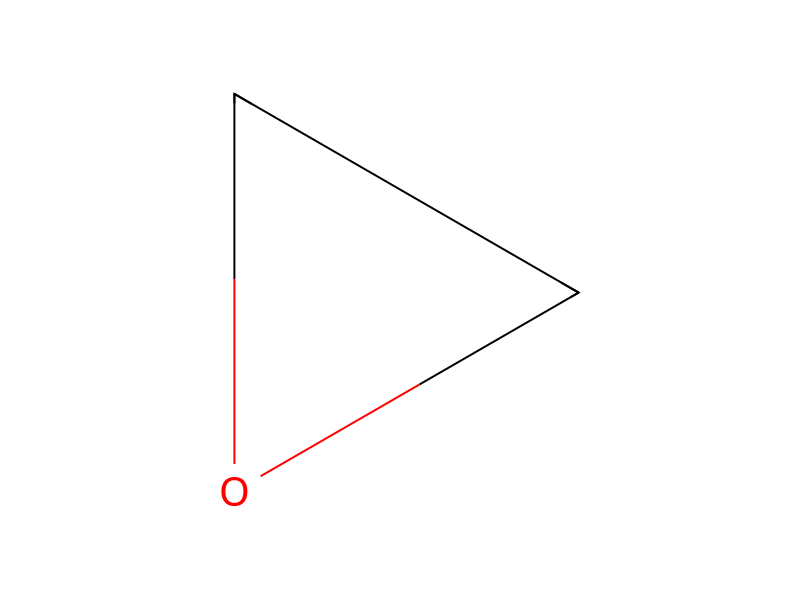


Product 1

Reagents, catalysts & solvents 1

Procedure
A solution in methylene chloride (20 ml) of 2-(9-anthryl)ethanol (3.5 g; 15.7 mmoles), which had been obtained by reaction between bromoanthracene and n-butyllithium and subsequent reaction with ethylene oxide was slowly added to an ice-cold solution of phosgene (20 ml; 38.4 mmoles; 20% in toluene). The reaction mixture was kept for 3 hours in an ice-bath and was then allowed to stand at room temperature during the night. Work up by vacuum evaporation of the solvent gave a crystalline residue, which was recrystallized from methylene chloride solution by precipitation with hexane to give 3.36 g (75%) of AEOC as practically colourless crystals, mp 85°-87° C. 270 MHz 1H-NMR in CDCl3 : 4.10 (t, J=8 Hz, 2 H); 4.66 (t, J=8 Hz, 2 H); 7.46-7.61 (m, 4 H); 8.03 (d, J=8 Hz, 2 H); 8.27 (d, J=8.6 Hz, 2 H); 8.43 (s, 1 H, H-10).
Sources & evidence
- ORD record
- ord-5214cb512aa34001a351edd4328398d7
- Source dataset
- uspto-grants-1992_07
- Patent number
- US05128120
Reaction notes
Loading…