Acrylic Acid → Pentadecyl 2-propenoate
Reaction equation

[C:1]([OH:5])(=[O:4])[CH:2]=[CH2:3].[CH2:6](O)[CH2:7][CH2:8][CH2:9][CH2:10][CH2:11][CH2:12][CH2:13][CH2:14][CH2:15][CH2:16][CH2:17][CH2:18][CH2:19][CH3:20]>>[C:1]([O:5][CH2:20][CH2:19][CH2:18][CH2:17][CH2:16][CH2:15][CH2:14][CH2:13][CH2:12][CH2:11][CH2:10][CH2:9][CH2:8][CH2:7][CH3:6])(=[O:4])[CH:2]=[CH2:3]Participants
3
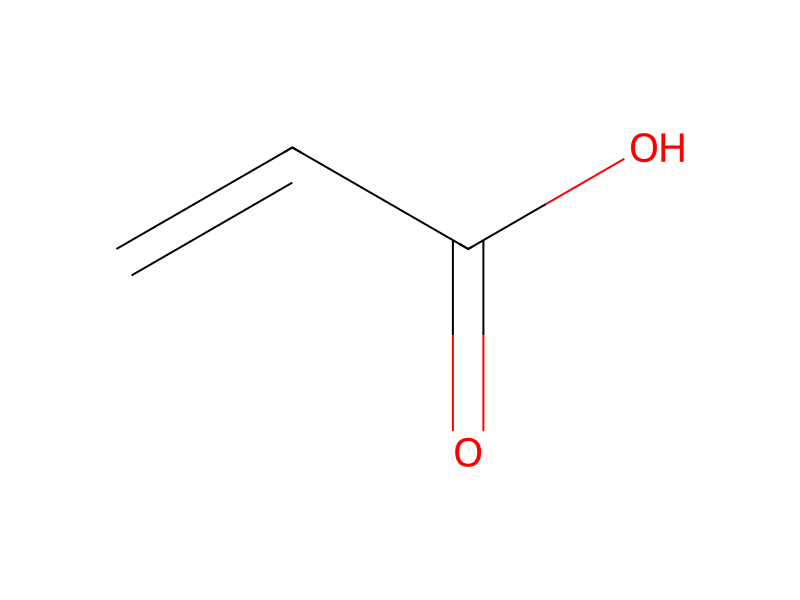


Conditions
- Temperature
- 60 °C
Procedure
Pentadecyl acrylate was prepared by esterification of acrylic acid with 1-pentadecanol under standard conditions. Crude monomer was recrystallized from three volumes of ethanol and dried in vacuo. Ten grams of pentadecyl acrylate was dissolved in 20 ml of oxygen free ethylacetate containing 0.10 grams of azobis-isobutylnitrile (hereinafter AIBN) and stirred in a sealed bottle maintained at 60° C. for 24 hours. The resulting polymer was isolated by precipitation into cold ethanol and dried in vacuo. Analysis of the polymer showed it to have a first order transition temperature of 29° C., a heat of fusion of 59 J/g and a molecular weight of about 175,000 in an uncured state.
Workup
- customCrude monomer was recrystallized from three volumes of ethanol
- customdried in vacuo
- dissolutionTen grams of pentadecyl acrylate was dissolved in 20 ml of oxygen free ethylacetate containing 0.10 grams of azobis-isobutylnitrile (hereinafter AIBN) and
- customThe resulting polymer was isolated by precipitation into cold ethanol
- customdried in vacuo
- customa first order transition temperature of 29° C.
- temperaturea heat of fusion of 59 J/g
Sources & evidence
- ORD record
- ord-9128c8cdad084cf79d7f13e225479d08
- Source dataset
- uspto-grants-1992_07
- Patent number
- US05129180
Reaction notes
Loading…