2-Bromo-N,N-dimethylaniline → Tert-butyl 4-[2-(dimethylamino)phenyl]piperazine-1-carboxylate
Reaction equation

CC(C)(C)OC(=O)N1CCNCC1.CN(C)c1ccccc1Br>CC(=O)O.CC(=O)O.CC(C)(C)[O-].CC(C)Oc1cccc(OC(C)C)c1-c1ccccc1P(C1CCCCC1)C1CCCCC1.Cc1ccccc1.[Na+].[Pd]>CN(C)c1ccccc1N1CCN(C(=O)OC(C)(C)C)CC1Participants
Reactant 2


Product 1

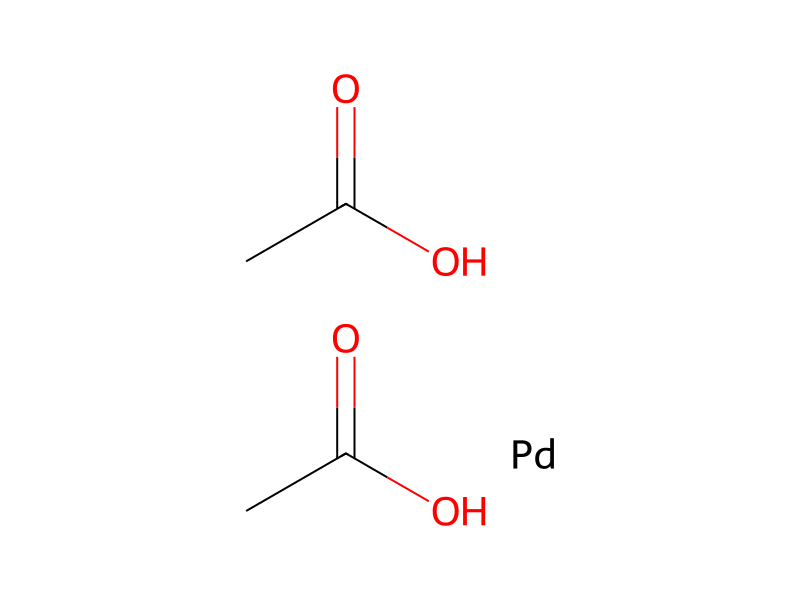
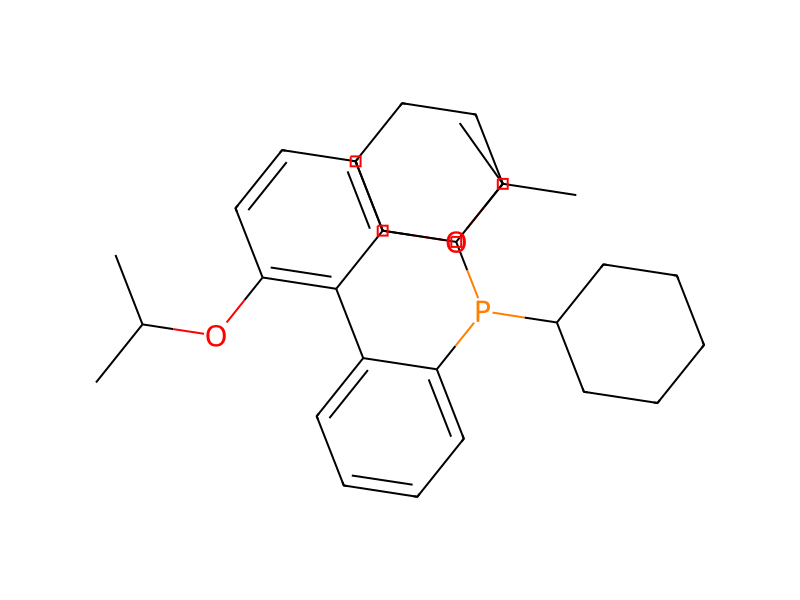
Reagents, catalysts & solvents 4


Conditions
- Temperature
- 100 °C
Procedure
Palladium (II) acetate (67.3 mg, 0.30 mmol) and 2-dicyclohexylphosphino-2',6'-di-i-propoxy-1,1'-biphenyl (280 mg, 0.60 mmol) were dissolved in toluene (7 mL) and purged with nitrogen. The mixture was warmed to 50°C for 15 mins. In a separate vessel, were mixed 2-bromo-N,N-dimethylaniline (600 mg, 3.00 mmol), tert-butyl piperazine-1-carboxylate (559 mg, 3.00 mmol) and sodium-t- butoxide (432 mg, 4.50 mmol) in toluene (8 mL). The mixture was degassed and purged with nitrogen. The catalyst solution was added and the resulting mixture heated at 100°C overnight. The reaction mixture was filtered through celite, washing with MeOH/EtOAc. The filtrate was concentrated and purified by flash silica chromatography, elution gradient 0 to 70% EtOAc in heptane. Pure fractions were evaporated to dryness to afford tert-butyl 4-(2-(dimethylamino)phenyl)piperazine-1-carboxylate (293 mg, 32.0 %) as a colourless gum. Difficult column; three spots with same Rf, but clearly different retention times. Product present, but purity low. Carry through and de-BOC. See if can purify at that stage.
Sources & evidence
- ORD record
- ord-3ee1bec4d5b244e8a0d82f023c1c6526
- Source dataset
- 750 AstraZeneca ELN dataset
- Original link
- View source
Reaction notes
Loading…