Benzene → 2,5-Diphenyloxazolo[5,4-b]pyridine
Reaction equation

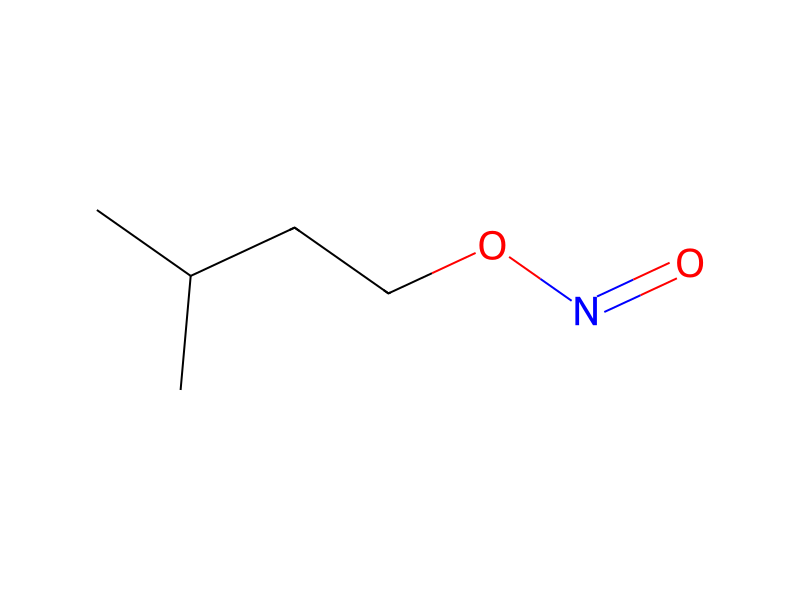
N[C:2]1[N:7]=[C:6]2[O:8][C:9]([C:11]3[CH:16]=[CH:15][CH:14]=[CH:13][CH:12]=3)=[N:10][C:5]2=[CH:4][CH:3]=1.N(OCCC(C)C)=O.[CH:25]1[CH:30]=[CH:29][CH:28]=[CH:27][CH:26]=1>>[C:11]1([C:9]2[O:8][C:6]3[C:5]([N:10]=2)=[CH:4][CH:3]=[C:2]([C:25]2[CH:30]=[CH:29][CH:28]=[CH:27][CH:26]=2)[N:7]=3)[CH:16]=[CH:15][CH:14]=[CH:13][CH:12]=1Participants
4



Procedure
A mixture of 180 mg. of 5-amino-2-phenyloxazolo[5,4-b]pyridine, 10 ml. of benzene and 0.2 ml. of isoamyl nitrite was refluxed for 11/2 hours. The hot solution was filtered and concentrated to dryness. The residue was extracted with ether and the extract was filtered through aluminum oxide and concentrated to dryness. The crystalline residue was recrystallized from ethyl acetate to give 2,5-diphenyloxazolo[5,4-b]pyridine, m.p. 151°-152° C.
Workup
- additionA mixture of 180 mg
- filtrationThe hot solution was filtered
- concentrationconcentrated to dryness
- extractionThe residue was extracted with ether
- filtrationthe extract was filtered through aluminum oxide
- concentrationconcentrated to dryness
- customThe crystalline residue was recrystallized from ethyl acetate
Sources & evidence
- ORD record
- ord-cf1c4c6860414ee0856bff9eb2556529
- Source dataset
- uspto-grants-1978_12
- Patent number
- US04131677
Reaction notes
Loading…