Phenylhydrazine → 2-amino-4-bromo-N'-phenylbenzohydrazide
Reaction equation

[NH2:1][C:2]1[CH:10]=[C:9]([Br:11])[CH:8]=[CH:7][C:3]=1[C:4]([OH:6])=O.N1(C(N2C=CN=C2)=O)C=CN=C1.C(N(C(C)C)C(C)C)C.[C:33]1([NH:39][NH2:40])[CH:38]=[CH:37][CH:36]=[CH:35][CH:34]=1>O1CCCC1>[NH2:1][C:2]1[CH:10]=[C:9]([Br:11])[CH:8]=[CH:7][C:3]=1[C:4]([NH:40][NH:39][C:33]1[CH:38]=[CH:37][CH:36]=[CH:35][CH:34]=1)=[O:6]Participants
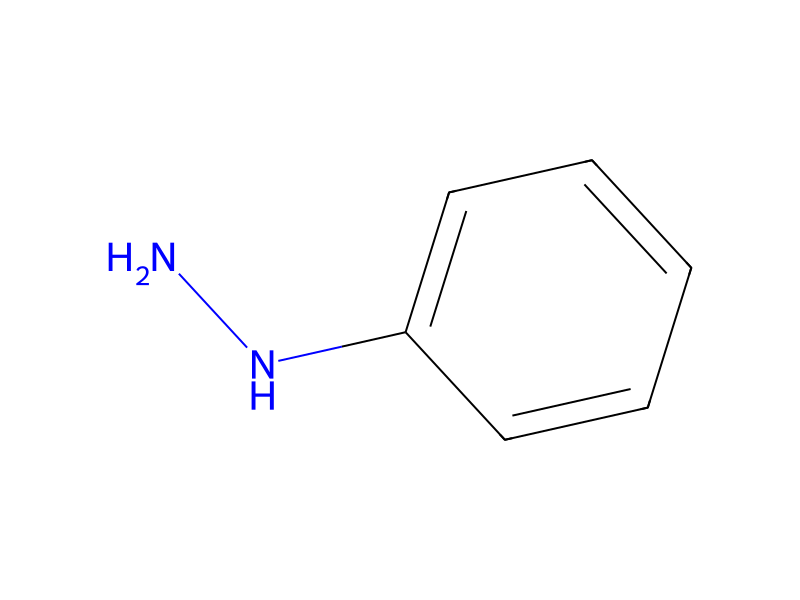

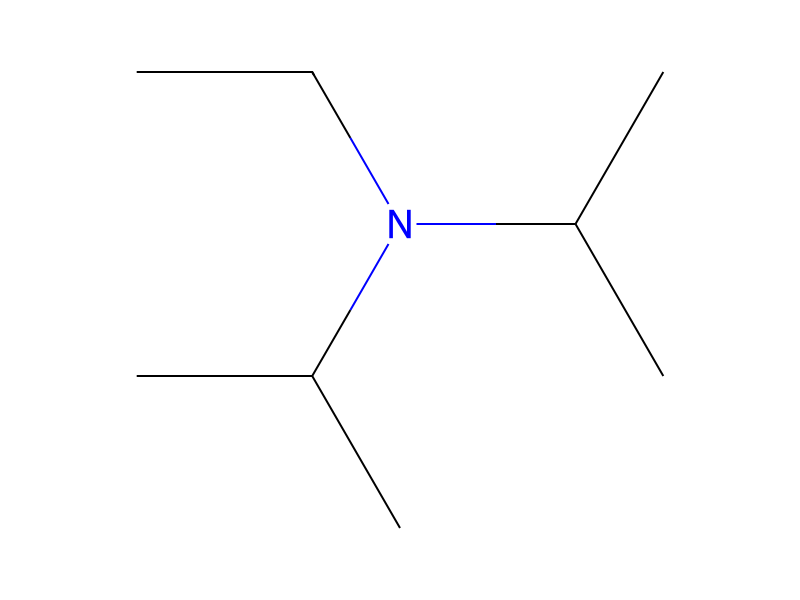


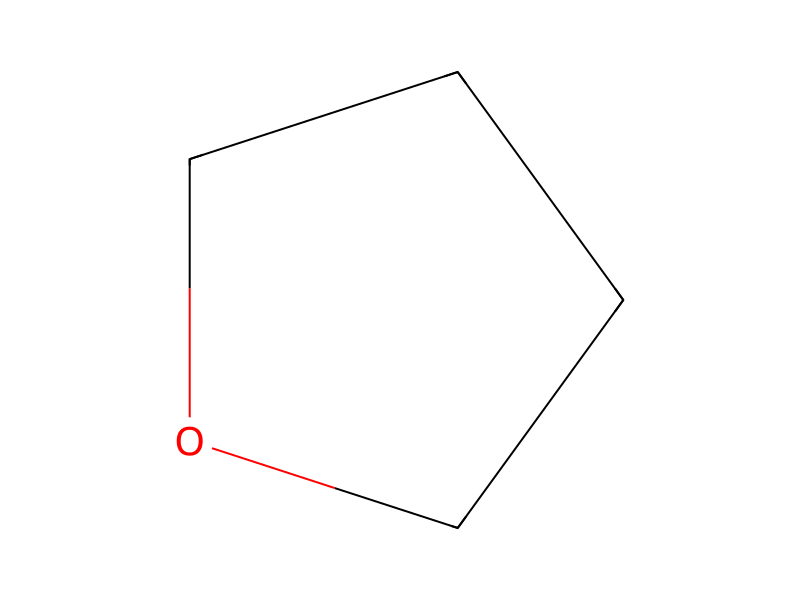
Conditions
- Temperature
- 20 °C
Procedure
Into a 500-mL 3-necked round-bottom flask purged and maintained with an inert atmosphere of nitrogen, was placed a solution of 2-amino-4-bromobenzoic acid (10 g, 46.30 mmol, 1.00 equiv) in tetrahydrofuran (300 mL). To the resulting mixture was then added di(1H-imidazol-1-yl)methanone (9 g, 55.56 mmol, 1.20 equiv) dropwise, with stirring at 0-5° C. The resulting mixture was warmed and stirred at 20° C. for 2 hours. To the resulting mixture was then added N-ethyl-N-isopropylpropan-2-amine (7.2 g, 55.81 mmol, 1.20 equiv) dropwise with stirring at room temperature. To the mixture was then added 1-phenylhydrazine (5 g, 46.30 mmol, 1.00 equiv) in several batches at room temperature. The resulting solution was stirred overnight at room temperature. The reaction was then quenched by the addition of 1N hydrogen chloride/H2O. The pH value of the solution was adjusted to about pH1 with 1N HCl. The resulting mixture was then neutralized to pH=7 with 50% NaOH. The resulting solution was extracted with ethyl acetate (2×250 mL) and the organic layers combined. The resulting mixture was washed with water (2×500 mL), sodium bicarbonate (2×500 mL) and saturated brine (2×500 mL). The resulting solution was concentrated under reduced pressure to yield 2-amino-4-bromo-N′-phenylbenzohydrazide as a red solid. MS: 306 (MH+)
Workup
- customInto a 500-mL 3-necked round-bottom flask purged
- temperaturemaintained with an inert atmosphere of nitrogen
- temperatureThe resulting mixture was warmed
- customat room temperature
- stirringThe resulting solution was stirred overnight at room temperature
- customThe reaction was then quenched by the addition of 1N hydrogen chloride/H2O
- extractionThe resulting solution was extracted with ethyl acetate (2×250 mL)
- washThe resulting mixture was washed with water (2×500 mL), sodium bicarbonate (2×500 mL) and saturated brine (2×500 mL)
- concentrationThe resulting solution was concentrated under reduced pressure
Sources & evidence
- ORD record
- ord-4883da3f20b04402aab3419fd007b9cb
- Source dataset
- uspto-grants-2014_09
- Patent number
- US08822447B2
Reaction notes
Loading…