4-Chloro-3-nitropyridine → 4-Cyclohexenyl-3-nitropyridine
Reaction equation

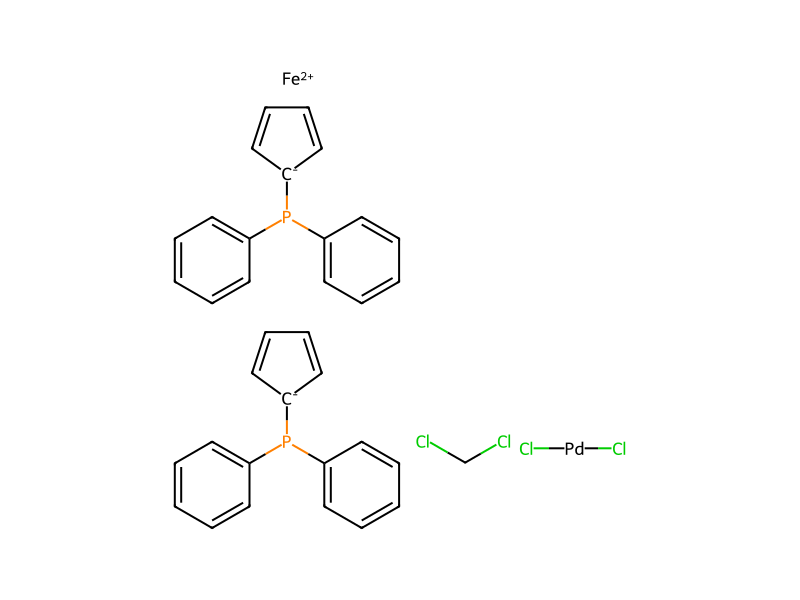
Cl[C:2]1[CH:7]=[CH:6][N:5]=[CH:4][C:3]=1[N+:8]([O-:10])=[O:9].[C:11]1(B(O)O)[CH2:16][CH2:15][CH2:14][CH2:13][CH:12]=1>C1C=CC(P(C2C=CC=CC=2)[C-]2C=CC=C2)=CC=1.C1C=CC(P(C2C=CC=CC=2)[C-]2C=CC=C2)=CC=1.Cl[Pd]Cl.[Fe+2].C(Cl)Cl.COCCOC>[C:11]1([C:2]2[CH:7]=[CH:6][N:5]=[CH:4][C:3]=2[N+:8]([O-:10])=[O:9])[CH2:16][CH2:15][CH2:14][CH2:13][CH:12]=1Participants
5



Procedure
A solution of 4-chloro-3-nitro pyridine (1 eq.), cyclohexenyl boronic acid (1.7 eq.), and Pd(dppf)Cl2—CH2Cl2 (0.05 eq) in 3:1 DME/2M Na2CO3, at a concentration of 0.1 M was heated at 95° C. for 16 hours. Upon cooling the reaction was partitioned between EtOAc and H2O, was washed with NaCl(sat.), dried over MgSO4, was filtered and the volatiles were removed in vacuo. The material was purified by SiO2 chromatography (20% EtOAc/hexanes eluant) to yield 4-cyclohexenyl-3-nitropyridine (82%). LCMS (m/z): 205.0 (MH+); LC Rt=3.84 min.
Workup
- temperatureUpon cooling the reaction
- customwas partitioned between EtOAc and H2O
- washwas washed with NaCl(sat.)
- dry with materialdried over MgSO4
- filtrationwas filtered
- customthe volatiles were removed in vacuo
- customThe material was purified by SiO2 chromatography (20% EtOAc/hexanes eluant)
Sources & evidence
- ORD record
- ord-e9a23e06244e4836baba6265ef0bfc7a
- Source dataset
- uspto-grants-2014_09
- Patent number
- US08822497B2
Reaction notes
Loading…