Ammonium Chloride → 4-Methyl-N-[2-(1-methyl-2-pyrrolidinyl)ethyl]pyridazino[4,5-b]indolizin-1-amine
Reaction equation

Cl[C:2]1[C:7]2[CH:8]=[C:9]3[N:14]([C:6]=2[C:5]([CH3:15])=[N:4][N:3]=1)[CH:13]=[CH:12][CH:11]=[CH:10]3.[CH3:16][N:17]1[CH2:21][CH2:20][CH2:19][CH:18]1[CH2:22][CH2:23][NH2:24].[Cl-].[NH4+]>>[CH3:15][C:5]1[N:4]=[N:3][C:2]([NH:24][CH2:23][CH2:22][CH:18]2[CH2:19][CH2:20][CH2:21][N:17]2[CH3:16])=[C:7]2[C:6]=1[N:14]1[C:9]([CH:10]=[CH:11][CH:12]=[CH:13]1)=[CH:8]2Participants
4

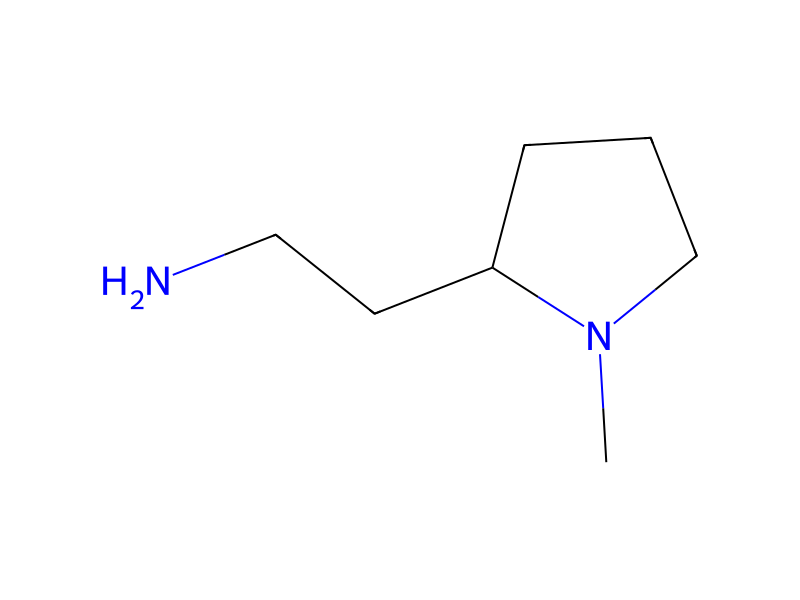


Procedure
Following the procedure of Example 1, reaction of one equivalent of 1-chloro-4-methylpyridazino[4,5-b]indolizine, ten equivalents of 2-(1-methyl-2-pyrrolidinyl)ethylamine and one equivalent of ammonium chloride under reflux in a nitrogen atmosphere for 3 to 4 hours gave the title compound as the free base after removal of excess amine in vacuo and treatment of the residue with boiling ethyl acetate. The solid collected upon filtration was converted to the hydrochloride salt (methanol/ethereal HCl/ether), mp 169° C.
Workup
- temperatureunder reflux in a nitrogen atmosphere for 3 to 4 hours
Sources & evidence
- ORD record
- ord-58b54f67740a41858f44b5cf6b921848
- Source dataset
- uspto-grants-1991_01
- Patent number
- US04985560
Reaction notes
Loading…