Water → 5-(4-Chlorophenyl)-2-(prop-2-yn-1-yl)-4-(3,3,3-trifluoro-2-hydroxypropyl)-2,4-dihydro-3H-1,2,4-triazol-3-one
Reaction equation

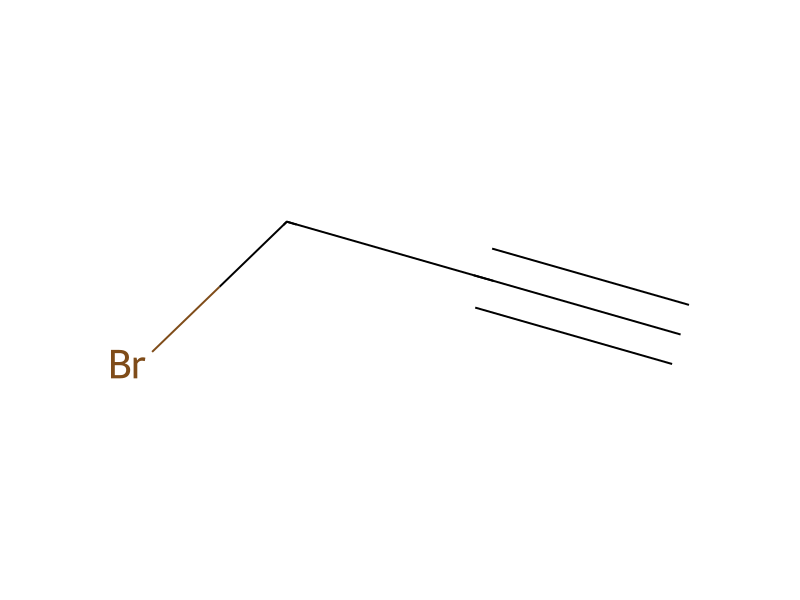
[Cl:1][C:2]1[CH:7]=[CH:6][C:5]([C:8]2[N:9]([CH2:14][CH:15]([OH:20])[C:16]([F:19])([F:18])[F:17])[C:10](=[O:13])[NH:11][N:12]=2)=[CH:4][CH:3]=1.Br[CH2:22][C:23]#[CH:24].C(=O)([O-])[O-].[K+].[K+].O>C(#N)C>[Cl:1][C:2]1[CH:7]=[CH:6][C:5]([C:8]2[N:9]([CH2:14][CH:15]([OH:20])[C:16]([F:18])([F:19])[F:17])[C:10](=[O:13])[N:11]([CH2:24][C:23]#[CH:22])[N:12]=2)=[CH:4][CH:3]=1Participants
6
Reactant 4



Product 1

Reagents, catalysts & solvents 1

Procedure
300 mg (0.98 mmol) of the compound from Example 4A were dissolved in 10 ml of acetonitrile, and 122 mg (1.02 mmol) of 3-bromo-1-propyne and 270 mg (1.95 mmol) of potassium carbonate were added. The mixture was heated at reflux for 1 h. For work-up, the reaction mixture was allowed to cool to RT and about 10 ml of water were added. The mixture was extracted twice with in each case 15 ml of ethyl acetate. The combined organic phases were dried over sodium sulfate, filtered and concentrated under reduced pressure. The crude product was purified chromatographically [Method 19]. This gave 166 mg (49% of theory) of the target compound.
Workup
- temperatureThe mixture was heated
- temperatureat reflux for 1 h
- extractionThe mixture was extracted twice with in each case 15 ml of ethyl acetate
- dry with materialThe combined organic phases were dried over sodium sulfate
- filtrationfiltered
- concentrationconcentrated under reduced pressure
- customThe crude product was purified chromatographically [Method 19]
Sources & evidence
- ORD record
- ord-11bf150362e44f40a8412120ba98db96
- Source dataset
- uspto-grants-2015_11
- Patent number
- US09187466B2
Reaction notes
Loading…