Diisopropylamine → 3-(4-Bromophenyl)-5-methyl-1(2h)-isoquinolinone
Reaction equation

C(NC(C)C)(C)C.[Li]CCCC.C([N:15]([CH2:26][CH3:27])[C:16](=[O:25])[C:17]1[CH:22]=[CH:21][CH:20]=[C:19]([CH3:23])[C:18]=1[CH3:24])C.[Br:28][C:29]1[CH:36]=[CH:35]C(C#N)=[CH:31][CH:30]=1>C1COCC1>[Br:28][C:29]1[CH:36]=[CH:35][C:27]([C:26]2[NH:15][C:16](=[O:25])[C:17]3[C:18]([CH:24]=2)=[C:19]([CH3:23])[CH:20]=[CH:21][CH:22]=3)=[CH:31][CH:30]=1Participants





Procedure
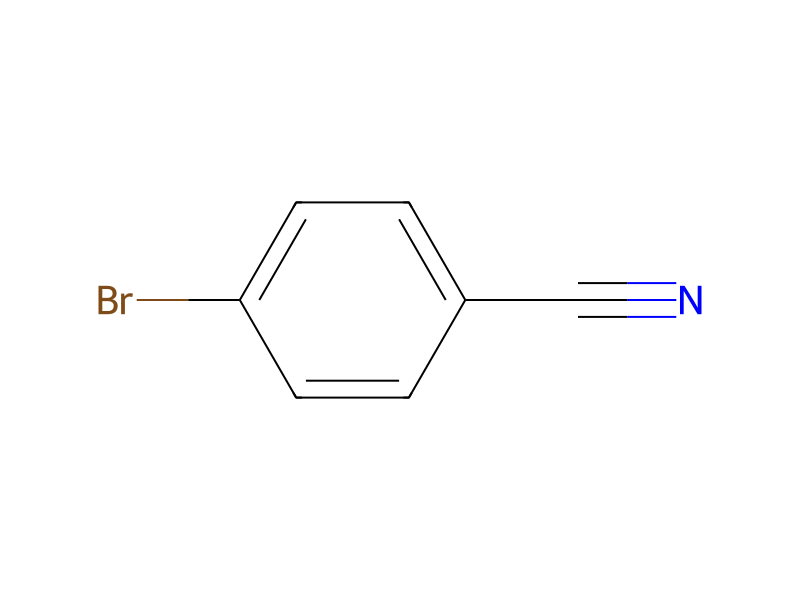
To N,N-diisopropylamine (2.54 mL, 18 mmol) in anhydrous THF (15 mL), under N2 at −78° C. was added n-BuLi dropwise (2.5M in n-hexanes, 7.2 mL, 18 mmol) and the reaction mixture maintained at this temperature for 30 minutes. A solution of N,N-diethyl-2,3-dimethyl-benzamide (1.23 g, 6 mmol) in anhydrous THF (15 mL) was added dropwise to give a deep red solution. After 20 minutes at −78° C., 4-bromobenzonitrile (1.09 g, 6 mmol) in anhydrous THF (15 mL) was added dropwise and the reaction mixture allowed to stir at this temperature for 2.5 h. The reaction mixture was quenched by adding dropwise onto ice, upon which a pale yellow solid precipitated out. The solid was triturated with iso-hexane/EtOAc (2:1), filtered and dried in vacuo to afford 3-(4-bromo-phenyl)-5-methyl-2H-isoquinolin-1-one as a pale yellow solid (1.1 g, 58%).
Workup
- temperaturethe reaction mixture maintained at this temperature for 30 minutes
- customto give a deep red solution
- customThe reaction mixture was quenched
- additionby adding dropwise onto ice, upon which a pale yellow solid
- customprecipitated out
- customThe solid was triturated with iso-hexane/EtOAc (2:1)
- filtrationfiltered
- customdried in vacuo
Sources & evidence
- ORD record
- ord-83fe2691a5fc457cb75bccd3a2e300b5
- Source dataset
- uspto-grants-2015_11
- Patent number
- US09193689B2
Reaction notes
Loading…