3-Bromoquinoline → HCID 10081720, compound
Reaction equation

Br[C:2]1[CH:3]=[N:4][C:5]2[C:10]([CH:11]=1)=[CH:9][CH:8]=[CH:7][CH:6]=2.P([O-])([O-])([O-])=O.[K+].[K+].[K+].B(O)(O)[C:21]1[CH:26]=[CH:25][N:24]=[CH:23][CH:22]=1>CN(C=O)C.O.O.C1C=CC([P]([Pd]([P](C2C=CC=CC=2)(C2C=CC=CC=2)C2C=CC=CC=2)([P](C2C=CC=CC=2)(C2C=CC=CC=2)C2C=CC=CC=2)[P](C2C=CC=CC=2)(C2C=CC=CC=2)C2C=CC=CC=2)(C2C=CC=CC=2)C2C=CC=CC=2)=CC=1>[N:24]1[CH:25]=[CH:26][C:21]([C:2]2[CH:3]=[N:4][C:5]3[C:10]([CH:11]=2)=[CH:9][CH:8]=[CH:7][CH:6]=3)=[CH:22][CH:23]=1Participants
Reactant 3



Product 1

Reagents, catalysts & solvents 3


Conditions
- Temperature
- 80 °C
Procedure
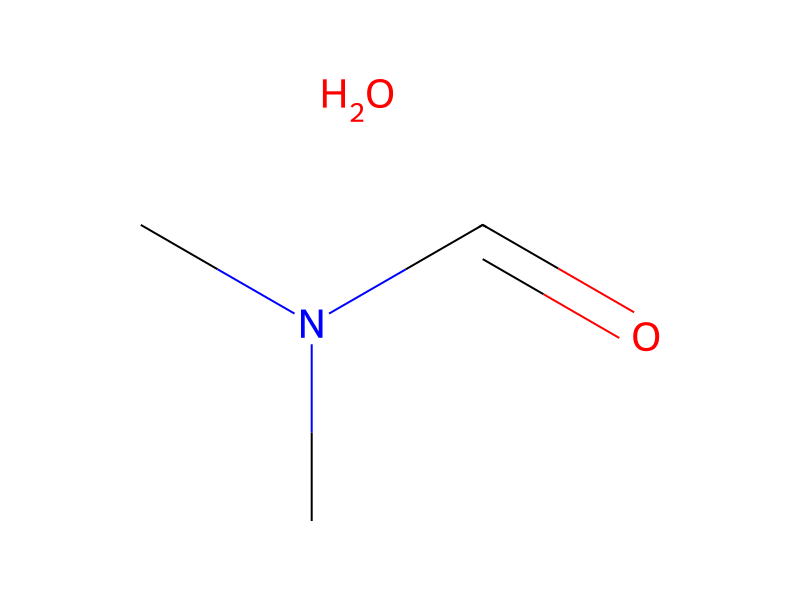
3-Bromo quinoline (0.2 g, 0.00096 mol) was dissolved in DMF:water (3:1, 4 mL). To this was added potassium phosphate (0.611 g, 0.00288 mol) and pyridyl-4-boronic acid (0.141 g, 0.00115 mol) at RT. The reaction mixture was degassed for 5 min, and to this was added Pd(PPh3)4 (0.055 g, 0.000048 mol). The reaction mixture was heated by microwave at 80° C. for 1.5 h. After completion of reaction (monitored by TLC), the mixture was diluted with water (20 mL) and extracted with EtOAc (3×50 mL). The organic layer was dried over anhydrous sodium sulfate and concentrated under vacuum, and the residue purified by column chromatography (45% ethylacetate:hexane in silica 100-200 mesh, diameter of column—5.0 cm, height of silica—approx. 5 inch) to provide the desired compound (0.13 g, 63% yield).
Workup
- customThe reaction mixture was degassed for 5 min
- customAfter completion of reaction (monitored by TLC)
- extractionextracted with EtOAc (3×50 mL)
- dry with materialThe organic layer was dried over anhydrous sodium sulfate
- concentrationconcentrated under vacuum
- customthe residue purified by column chromatography (45% ethylacetate:hexane in silica 100-200 mesh, diameter of column—5.0 cm, height of silica—approx. 5 inch)
Sources & evidence
- ORD record
- ord-5dcf9b1d8be24738a8df3bdcc0a7fe02
- Source dataset
- uspto-grants-2015_11
- Patent number
- US09193728B2
Reaction notes
Loading…