Hydrochloric Acid → Ethyl (3S)-4-chloro-3-hydroxybutanoate
Reaction equation

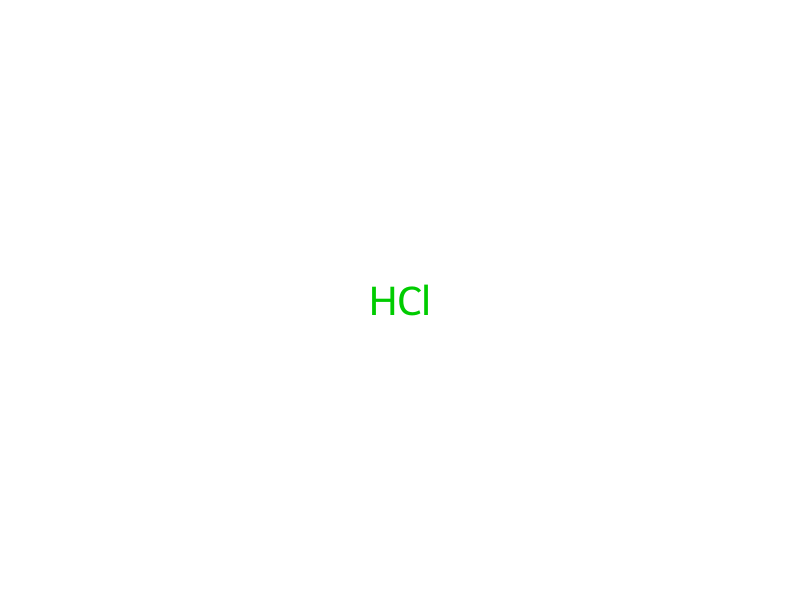
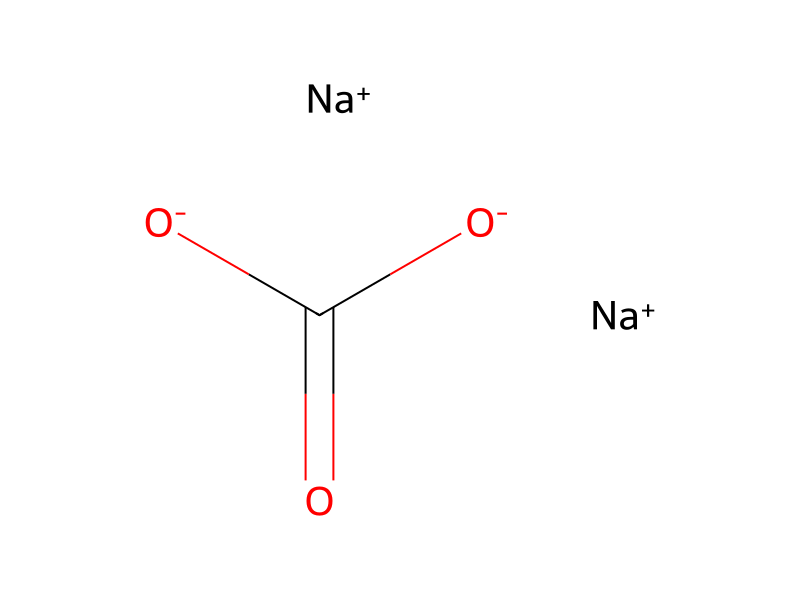
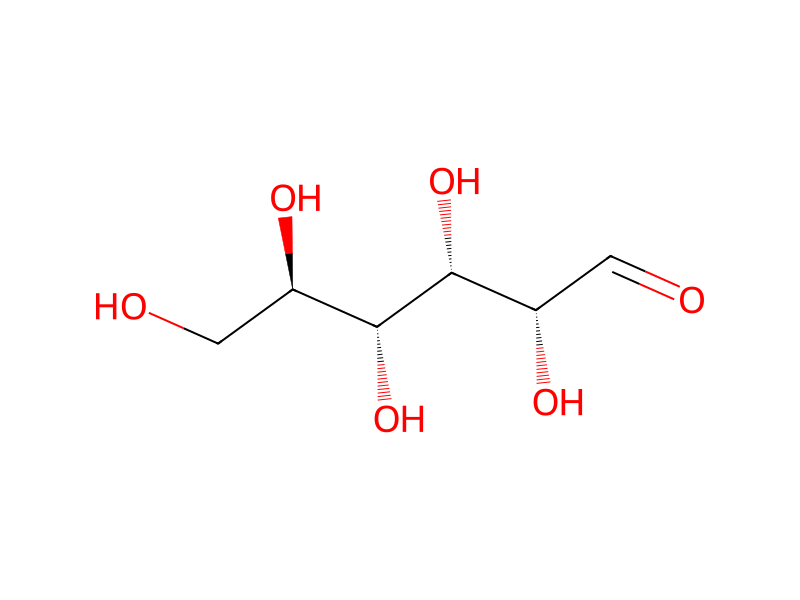
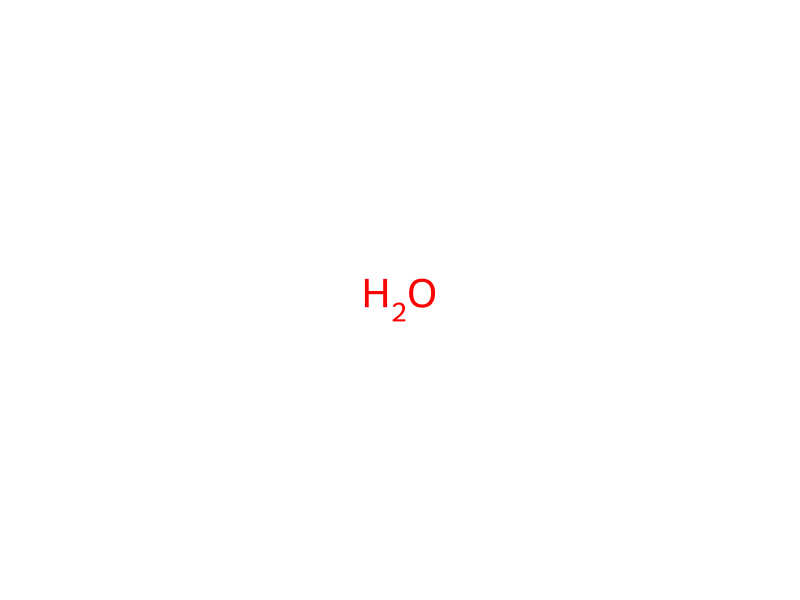
N(CCO)(CCO)CCO.Cl.O=C[C@@H]([C@H]([C@@H]([C@@H](CO)O)O)O)O.[Cl:24][CH2:25][C:26](=[O:33])[CH2:27][C:28]([O:30][CH2:31][CH3:32])=[O:29].C([O-])([O-])=O.[Na+].[Na+]>O=C[C@@H]([C@H]([C@@H]([C@@H](CO)O)O)O)O.C1C=[N+]([C@@H]2O[C@H](COP(OP(OC[C@H]3O[C@@H](N4C5N=CN=C(N)C=5N=C4)[C@H](O)[C@@H]3O)(O)=O)([O-])=O)[C@@H](O)[C@H]2O)C=C(C(N)=O)C=1.C(OCCCC)(=O)C.O>[Cl:24][CH2:25][C@@H:26]([OH:33])[CH2:27][C:28]([O:30][CH2:31][CH3:32])=[O:29]Participants
Reactant 5


Product 1

Reagents, catalysts & solvents 4


Procedure
To a 3-necked jacketed 3 L flask equipped with a mechanical stirrer and connected to an automatic titrater by a pH electrode and a feeding tube for addition of base, was charged triethanolamine (6.6 mL) and H2O (492 mL) to make 100 mM triethanolamine solution. The pH was adjusted to 7 with 37% HCl. Then, D-Glucose (125 g) was added. The water circulating to the flask jacket was set to 30° C. After 10 minutes, ketoreductase SEQ ID NO: 2 (5.7 g) and glucose dehydrogenase S06 SEQ ID NO: 10 (3.1 g) powder were added. After 10 minutes, β-NAD (125 mg) was added and the resulting mixture was allowed to stir for 5 minutes. Then, butyl acetate (250 mL) was charged. Using an addition funnel, 2.4 M ethyl 4-chloroacetoacetate (250 mL, 100 g in 167 mL of butyl acetate) was slowly added over 3 hrs. The pH was maintained at 7 by the automatic titrater by the addition of 2 M Na2CO3 (152 mL) over 15 hrs. Subsequently, gas chromatography of a reaction sample showed complete conversion to product. Celite (16 g) was added and the reaction mixture was allowed to stir for 10 minutes. The solution was filtered through a celite pad and the organic layer was separated. The aqueous layer was extracted with butyl acetate (2×200 mL). The organic layers were combined and the solvent removed under vacuum by rotary evaporation to obtain 87 g of the ethyl (S) 4-chloro-3-hydroxybutyrate. The enantiomeric excess was >99%, as determined after its conversion to ethyl (R)-4-cyano-3-hydroxybutyrate in Example 8.
Workup
- customTo a 3-necked jacketed 3 L flask equipped with a mechanical stirrer
- additionconnected to an automatic titrater by a pH electrode and a feeding tube for addition of base
- customwas set to 30° C
- waitAfter 10 minutes
- additionCelite (16 g) was added
- stirringto stir for 10 minutes
- filtrationThe solution was filtered through a celite pad
- customthe organic layer was separated
- extractionThe aqueous layer was extracted with butyl acetate (2×200 mL)
- customthe solvent removed under vacuum by rotary evaporation
Sources & evidence
- ORD record
- ord-e79135c10a2c48038521d092d9536023
- Source dataset
- uspto-grants-2006_11
- Patent number
- US07132267B2
Reaction notes
Loading…