Benzene, 1-fluoro-4-(trifluoromethyl)- → 1-(4-(Trifluoromethyl)phenyl)cyclopentanecarbonitrile
Reaction equation

F[C:2]1[CH:7]=[CH:6][C:5]([C:8]([F:11])([F:10])[F:9])=[CH:4][CH:3]=1.[CH:12]1([C:17]#[N:18])[CH2:16][CH2:15][CH2:14][CH2:13]1.C[Si]([N-][Si](C)(C)C)(C)C.[K+]>C1(C)C=CC=CC=1>[F:9][C:8]([F:11])([F:10])[C:5]1[CH:6]=[CH:7][C:2]([C:12]2([C:17]#[N:18])[CH2:16][CH2:15][CH2:14][CH2:13]2)=[CH:3][CH:4]=1Participants
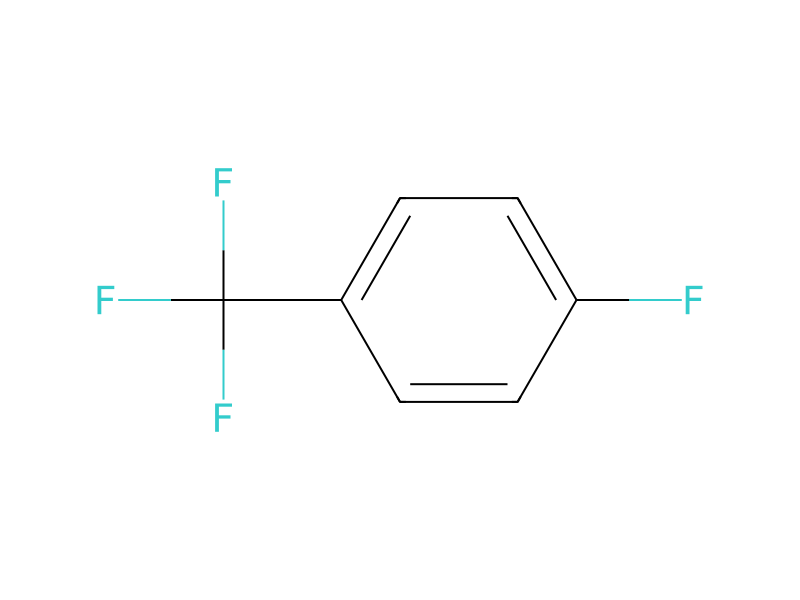

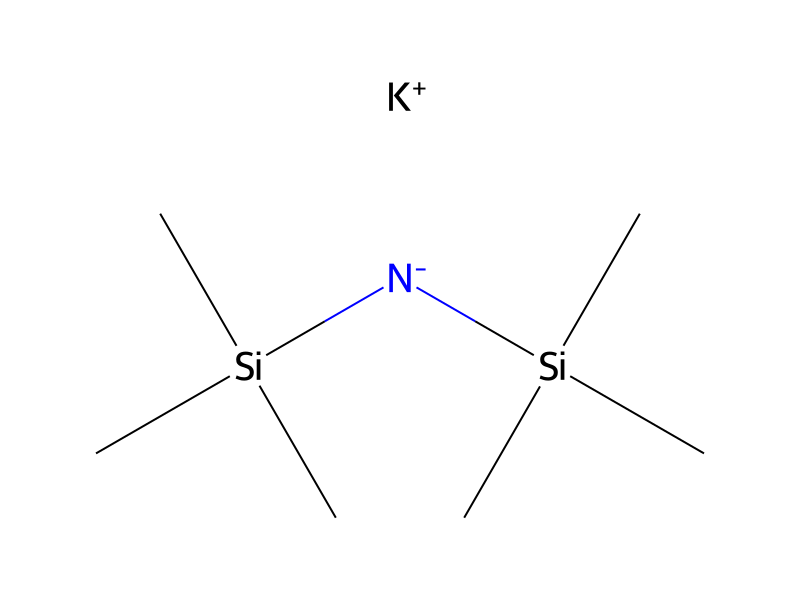


Conditions
- Temperature
- 70 °C
Procedure
To a stirred solution of 4-fluorobenzotrifluoride (5.0 g, 30.47 mmol) in toluene (40 mL) was added cyclopentanecarbonitrile (10.5 mL, 100.55 mmol) followed by a solution of 0.5 M KHMDS in toluene (92 mL, 45.71 mmol). The reaction mixture was heated to 70° C. and stirred for 14 hours. After cooling to RT, the reaction mixture was quenched with 1 M HCl until pH<7. The layers were separated and the organic layer was washed with saturated NaHCO3, water, brine, dried over MgSO4, filtered, and concentrated in vacuo. Purification via silica gel chromatography (6:1 hexanes:EtOAc) afforded 7.53 g of a mixture of compound A and residual cyclopentanecarbonitrile. Because these two compounds were not easily separable by chromatography, this mixture was carried directly to the next step.
Workup
- temperatureAfter cooling to RT
- customthe reaction mixture was quenched with 1 M HCl until pH<7
- customThe layers were separated
- washthe organic layer was washed with saturated NaHCO3, water, brine
- dry with materialdried over MgSO4
- filtrationfiltered
- concentrationconcentrated in vacuo
- customPurification via silica gel chromatography (6:1 hexanes:EtOAc)
Sources & evidence
- ORD record
- ord-abb08ea1e0a547d09b41411d6d1b90bb
- Source dataset
- uspto-grants-2006_11
- Patent number
- US07132443B2
Reaction notes
Loading…