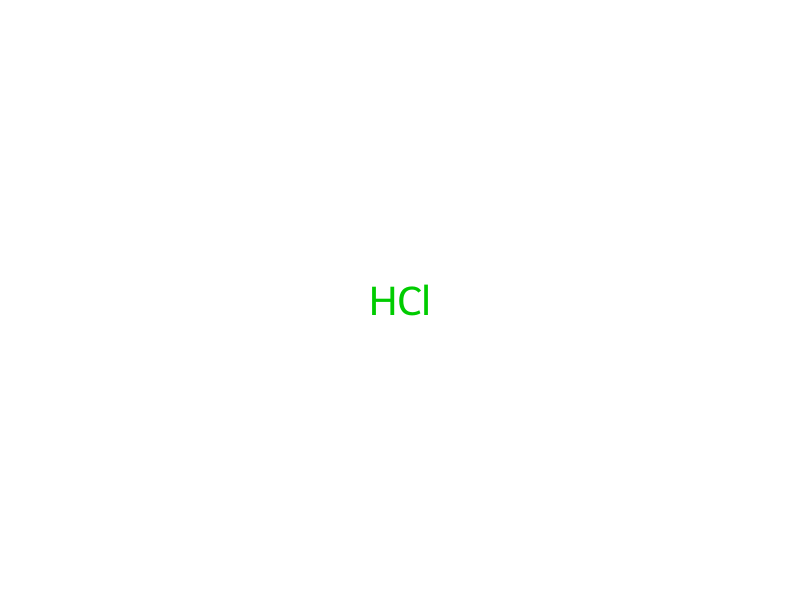
Hydrochloric Acid → N-(5-acetylpyrazin-2-yl)-2,2-dimethylpropanamide
Reaction equation

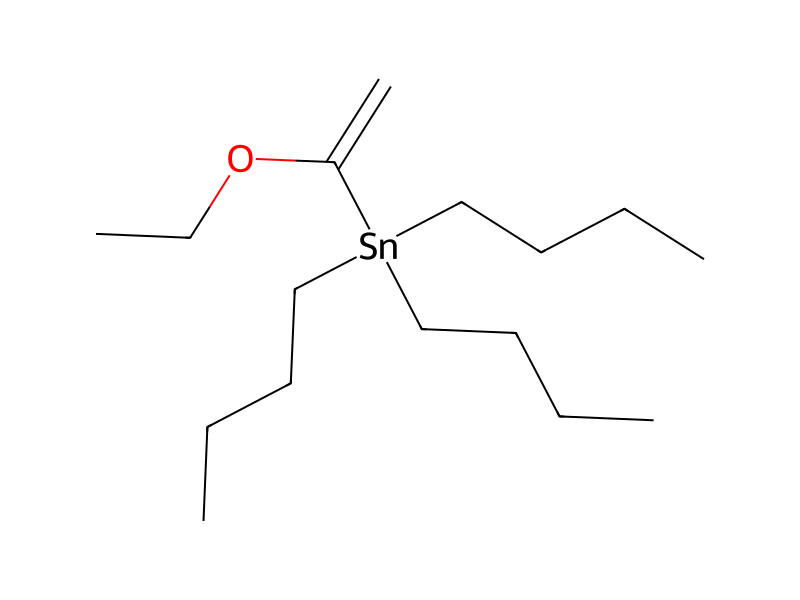
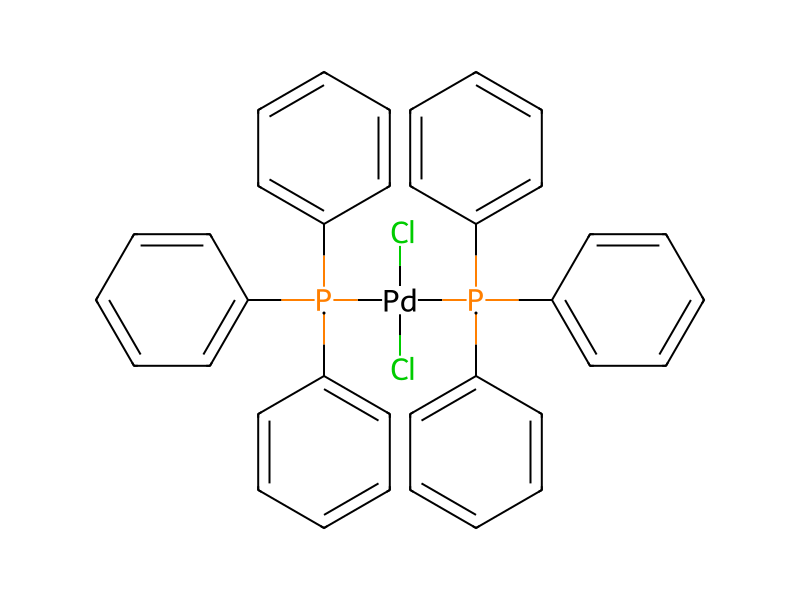
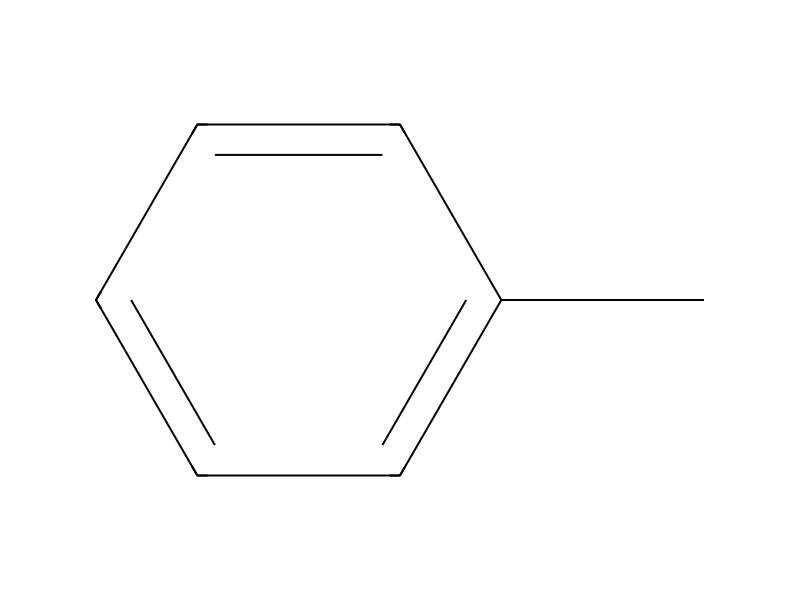
Br[C:2]1[N:3]=[CH:4][C:5]([NH:8][C:9](=[O:14])[C:10]([CH3:13])([CH3:12])[CH3:11])=[N:6][CH:7]=1.C([Sn](CCCC)(CCCC)[C:20]([O:22]CC)=[CH2:21])CCC.Cl>C1(C)C=CC=CC=1.Cl[Pd](Cl)([P](C1C=CC=CC=1)(C1C=CC=CC=1)C1C=CC=CC=1)[P](C1C=CC=CC=1)(C1C=CC=CC=1)C1C=CC=CC=1>[C:20]([C:2]1[N:3]=[CH:4][C:5]([NH:8][C:9](=[O:14])[C:10]([CH3:13])([CH3:12])[CH3:11])=[N:6][CH:7]=1)(=[O:22])[CH3:21]Participants
Reactant 3

Product 1

Reagents, catalysts & solvents 2
Conditions
- Temperature
- 25 °C
Procedure
A slurry of N-(5-bromo-pyrazin-2-yl)-2,2-dimethyl-propionamide (1.30 g, 5.04 mmol) and dichlorobis(triphenylphosphine)palladium(II) (35.3 mg, 0.05 mmol) in toluene (10 mL) was treated with tributyl(1-ethoxyvinyl)tin (2.00 g, 5.54 mmol). The reaction slurry was then heated under reflux, resulting in a homogeneous yellow solution. After heating under reflux for 15 h, the resulting black reaction mixture was allowed to cool to 25° C. and then was cooled to 0° C. with an ice-water bath. The cooled reaction mixture was treated slowly with a 5% aqueous hydrochloric acid solution (8.4 mL). The reaction mixture was stirred at 0° C. for 30 min and then allowed to warm to 25° C. where it was stirred for 24 h. The resulting two layers were separated, and the organic layer was further diluted with ethyl acetate (100 mL). The organic layer was then diluted with a 10% aqueous ammonium fluoride solution (100 mL), and the resulting mixture was stirred at 25° C. for 5 h. The solids were then filtered, and the filtrate layers were separated. The organic layer was washed with a saturated aqueous sodium chloride solution (1×100 mL), dried over sodium sulfate, filtered, and concentrated in vacuo. Biotage chromatography (FLASH 40M, Silica, 15% ethyl acetate/hexanes) afforded N-(5-acetyl-pyrazin-2-yl)-2,2-dimethyl-propionamide (1.07 g, 96%) as a white solid: mp 173–174° C.; (ES)+-HRMS m/e calcd for C11H15N3O2 (M+H)+ 222.1237, found 222.1240.
Workup
- temperatureThe reaction slurry was then heated
- temperatureunder reflux
- customresulting in a homogeneous yellow solution
- temperatureAfter heating
- temperatureunder reflux for 15 h
- temperaturewas cooled to 0° C. with an ice-water bath
- customThe cooled reaction mixture
- temperatureto warm to 25° C. where it
- stirringwas stirred for 24 h
- customThe resulting two layers were separated
- additionthe organic layer was further diluted with ethyl acetate (100 mL)
- additionThe organic layer was then diluted with a 10% aqueous ammonium fluoride solution (100 mL)
- stirringthe resulting mixture was stirred at 25° C. for 5 h
- filtrationThe solids were then filtered
- customthe filtrate layers were separated
- washThe organic layer was washed with a saturated aqueous sodium chloride solution (1×100 mL)
- dry with materialdried over sodium sulfate
- filtrationfiltered
- concentrationconcentrated in vacuo
Sources & evidence
- ORD record
- ord-7af350399d7f46e08e8ae849ab604ced
- Source dataset
- uspto-grants-2006_11
- Patent number
- US07132425B2
Reaction notes
Loading…