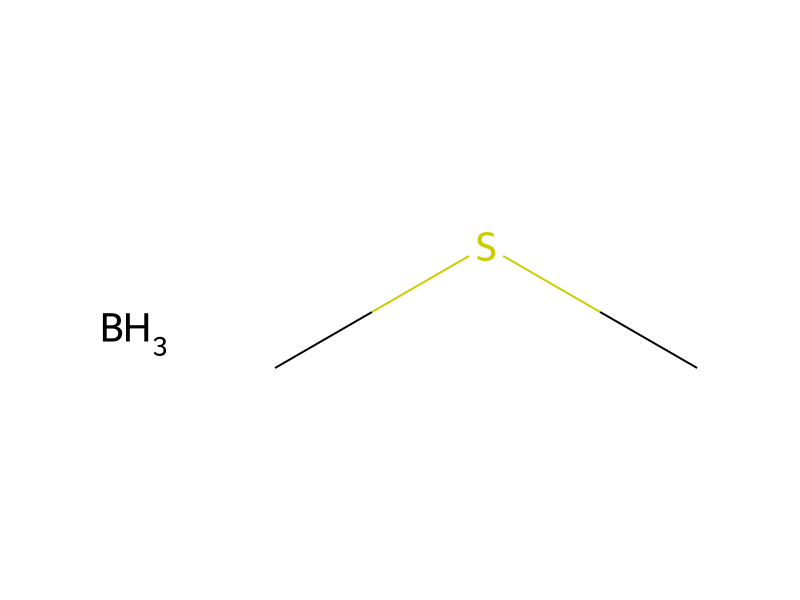
(Dimethyl sulfide)trihydroboron → 2-Chloro-1-[1-(2-methoxy-phenyl)-cyclobutyl]-ethanol
Reaction equation

BrCC(C1(C2C=CC(Cl)=CC=2)CCC1)=O.[Cl:16][CH2:17][C:18]([C:20]1([C:24]2[CH:29]=[CH:28][CH:27]=[CH:26][C:25]=2[O:30][CH3:31])[CH2:23][CH2:22][CH2:21]1)=[O:19].B.CSC.O1CCBN1>>[Cl:16][CH2:17][CH:18]([C:20]1([C:24]2[CH:29]=[CH:28][CH:27]=[CH:26][C:25]=2[O:30][CH3:31])[CH2:21][CH2:22][CH2:23]1)[OH:19]Participants


Procedure
Following the same procedures used for the asymmetric reduction of 2-Bromo-1-[1-(4-chloro-phenyl)-cyclobutyl]-ethanone (See Example 127), 500 mg samples of 2-Chloro-1-[1-(2-methoxy-phenyl)-cyclobutyl]-ethanone were reduced to the enantiomerically enriched alcohols with borane-methyl sulfide in the presence of S-2-methyl CBS-oxazaborolidine or R-2-methyl CBS-oxazaborolidine. Each isomer of 2-Chloro-1-[1-(2-methoxy-phenyl)-cyclobutyl]-ethanol was obtained in approximately 70% yield and ca. 90% e.e. based on chiral HPLC analysis. 240 mg of each chloroalcohol was converted to the corresponding epoxide using 1.1 equivalents of cesium carbonate in 5 mL of THF at 50° C. for 3 hours. Dilution with 20 mL of water, addition of 30 mL ether, and extractive workup gave in each instance, after concentration of the organic layers in vacuo and chromatography on silica gel, each of the desired epoxides (176 mg and 184 mg, 86% and 90% yield).
Sources & evidence
- ORD record
- ord-6bd8755e42d741df932cacdef68396ff
- Source dataset
- uspto-grants-2006_11
- Patent number
- US07132551B2
Reaction notes
Loading…