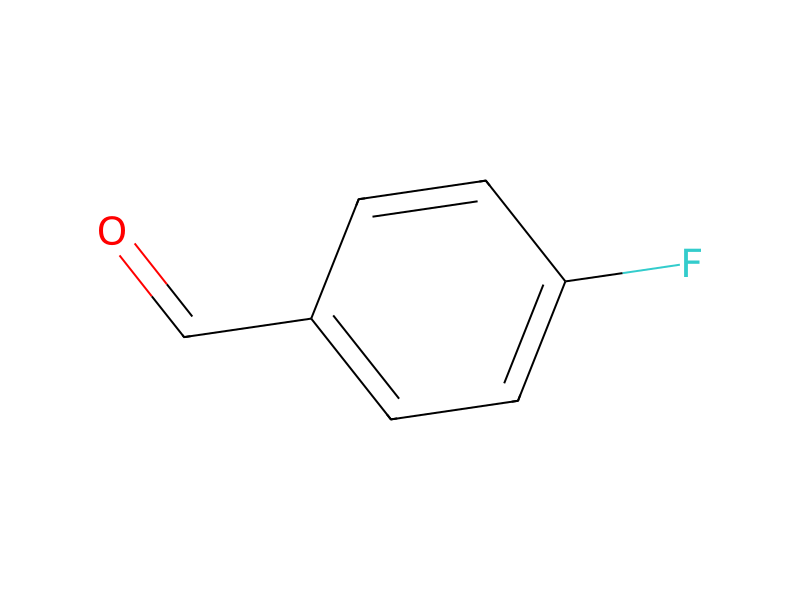
4-Fluorobenzaldehyde → HCID 66617577, compound
Reaction equation

[NH2:1][C:2]1[CH:7]=[CH:6][C:5]([C:8]2[CH:12]=[C:11]([CH2:13][O:14][C:15](=[O:17])[NH2:16])[O:10][N:9]=2)=[CH:4][CH:3]=1.[F:18][C:19]1[CH:26]=[CH:25][C:22]([CH:23]=O)=[CH:21][CH:20]=1>>[F:18][C:19]1[CH:26]=[CH:25][C:22]([CH2:23][NH:1][C:2]2[CH:3]=[CH:4][C:5]([C:8]3[CH:12]=[C:11]([CH2:13][O:14][C:15](=[O:17])[NH2:16])[O:10][N:9]=3)=[CH:6][CH:7]=2)=[CH:21][CH:20]=1Participants
3


Procedure
An experiment was performed using the above-obtained carbamic acid 3-(4-amino-phenyl)-isoxazol-5-ylmethyl ester (150 mg, 0.64 mmol) as a starting material and 4-fluorobenzaldehyde (82 μl, 0.77 mmol) in the same manner as in Example 74.4 to obtain carbamic acid 3-[4-(4-fluoro-benzylamino)-phenyl]-isoxazol-5-ylmethyl ester.
Sources & evidence
- ORD record
- ord-e1deae0793f84d49b9b6e3a2f20f4de9
- Source dataset
- uspto-grants-2014_09
- Patent number
- US08828992B2
Reaction notes
Loading…