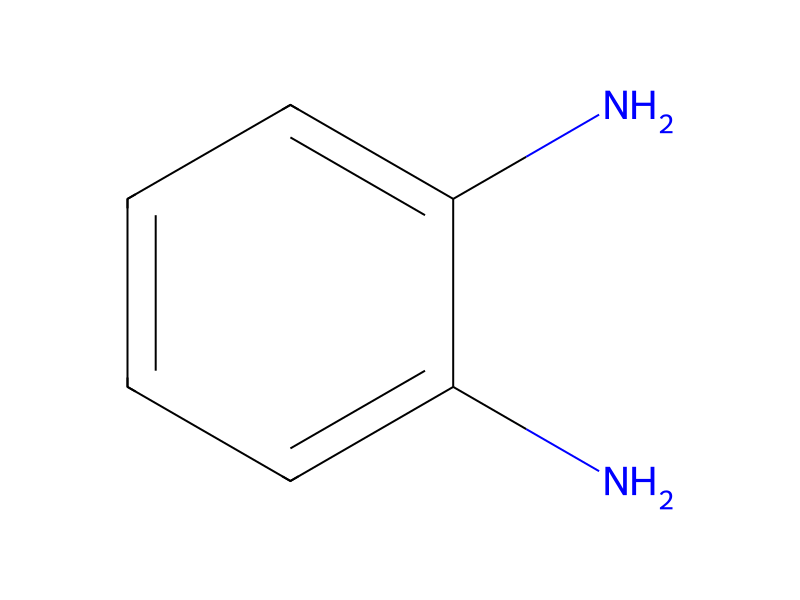
O-Phenylenediamine → HCID 21459115, compound
Reaction equation

[CH3:1][O:2][C:3]1[CH:4]=[C:5]([CH:14]([OH:20])[C:15](=[NH:19])OCC)[CH:6]=[C:7]([N+:11]([O-:13])=[O:12])[C:8]=1[O:9][CH3:10].[C:21]1(N)[CH:26]=[CH:25][CH:24]=[CH:23][C:22]=1[NH2:27]>C(O)C>[CH3:1][O:2][C:3]1[CH:4]=[C:5]([CH:14]([C:15]2[NH:19][C:21]3[CH:26]=[CH:25][CH:24]=[CH:23][C:22]=3[N:27]=2)[OH:20])[CH:6]=[C:7]([N+:11]([O-:13])=[O:12])[C:8]=1[O:9][CH3:10]Participants
Reactant 2

Product 1

Reagents, catalysts & solvents 1

Procedure
19.7 g of ethyl (3,4-dimethoxy-5-nitrophenyl)hydroxyacetimidate are dissolved in 500 ml of ethanol, 6.73 g of o-phenylenediamine are added, the mixture is stirred at room temperature for 2 hours and subsequently held at the reflux temperature overnight. After distillation of the solvent, the residue is treated with 50 ml of water, made alkaline with sodium carbonate solution and extracted twice with 250 ml of methylene chloride each time. The organic phase is washed with water, dried over sodium sulfate and evaporated. The orange residue obtained is chromatographed on 400 g of silica gel with methylene chloride/ethyl acetate (1:1). From ether/hexane there is obtained α-(3,4-dimethoxy-5-nitrophenyl)-2-benzimidazolemethanol in the form of yellowish crystals of m.p. 50° (dec.).
Workup
- customsubsequently held at the reflux temperature overnight
- distillationAfter distillation of the solvent
- additionthe residue is treated with 50 ml of water
- extractionextracted twice with 250 ml of methylene chloride each time
- washThe organic phase is washed with water
- dry with materialdried over sodium sulfate
- customevaporated
- customThe orange residue obtained
- customis chromatographed on 400 g of silica gel with methylene chloride/ethyl acetate (1:1)
Sources & evidence
- ORD record
- ord-1fd800bc6ec34f60ae6fb2a591265afa
- Source dataset
- uspto-grants-1998_01
- Patent number
- US05705703
Reaction notes
Loading…