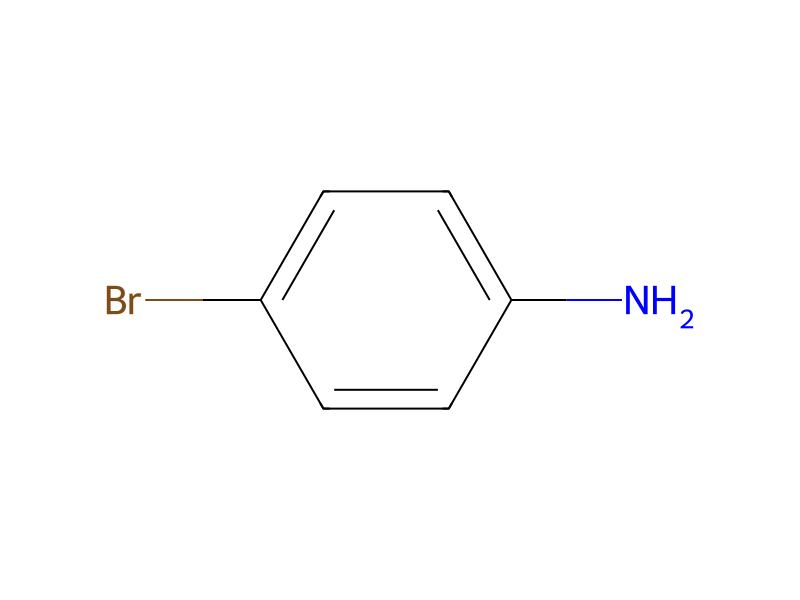
4-Bromoaniline → HCID 19611610, compound
Reaction equation

Cl[C:2]1[CH:11]=[N:10][C:9]2[C:4](=[CH:5][C:6]([CH3:13])=[C:7]([CH3:12])[CH:8]=2)[N:3]=1.[Br:14][C:15]1[CH:21]=[CH:20][C:18]([NH2:19])=[CH:17][CH:16]=1>>[Br:14][C:15]1[CH:21]=[CH:20][C:18]([NH:19][C:2]2[CH:11]=[N:10][C:9]3[C:4](=[CH:5][C:6]([CH3:13])=[C:7]([CH3:12])[CH:8]=3)[N:3]=2)=[CH:17][CH:16]=1Participants
3


Procedure
A preferred method of synthesis of 2-(4-bromophenylamino)-6,7-quinoxaline (Compound 30) is as follows: 200 mg of 2-chloro-6,7-dimethyl quinoxaline (synthesized according to the protocol at Section 5.13, step 2) and 0.8 g of p-bromoaniline were heated at 100° for 3.5 hours. Chromatography gave 25 mg (37% yield) of a light yellow solid, having a melting point of 235° C.
Workup
- temperaturewere heated at 100° for 3.5 hours
Sources & evidence
- ORD record
- ord-6ad68fa7d76f47f0b91fba515d1c6d38
- Source dataset
- uspto-grants-1998_01
- Patent number
- US05712395
Reaction notes
Loading…