Ammonia → 2-Chloro-6-fluoro-3-nitrobenzaldehyde
Reaction equation

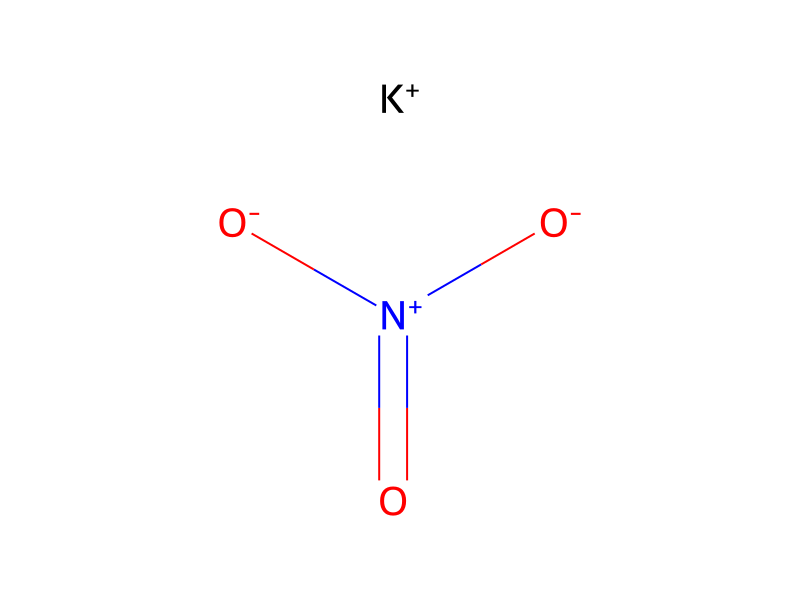
[N+:1]([O-:4])([O-])=[O:2].[K+].[Cl:6][C:7]1[CH:14]=[CH:13][CH:12]=[C:11]([F:15])[C:8]=1[CH:9]=[O:10].N>S(=O)(=O)(O)O>[Cl:6][C:7]1[C:14]([N+:1]([O-:4])=[O:2])=[CH:13][CH:12]=[C:11]([F:15])[C:8]=1[CH:9]=[O:10]Participants
5
Reactant 3


Product 1

Reagents, catalysts & solvents 1

Procedure
Potassium nitrate (638 mg, 6.31 mmol) was dissolved in concentrated sulfuric acid (4.5 mL) and added dropwise to a stirred solution of 2-chloro-6-fluorobenzaldehyde (1.0 g, 6.31 mmol) at room temperature. The mixture was stirred 1 hour at room temperature and then poured into icewater (100 mL) under stirring. The resulting aqueous phase was basified to pH 10 by addition of 25% aqueous ammonia and subsequently extracted with dichloromethane (2×100 mL). The combined organic phases were dried over sodium sulphate, filtered and evaporated to give 2-chloro-6-fluoro-3-nitrobenzaldehyde (196MBT28-A, 1.16 g, 91%). Regioselectivity was confirmed by 13C-NMR.
Workup
- additionpoured into icewater (100 mL)
- stirringunder stirring
- extractionsubsequently extracted with dichloromethane (2×100 mL)
- dry with materialThe combined organic phases were dried over sodium sulphate
- filtrationfiltered
- customevaporated
Sources & evidence
- ORD record
- ord-90c0ed6e5b92435d88570ed432f39b65
- Source dataset
- uspto-grants-2009_09
- Patent number
- US07585877B2
Reaction notes
Loading…