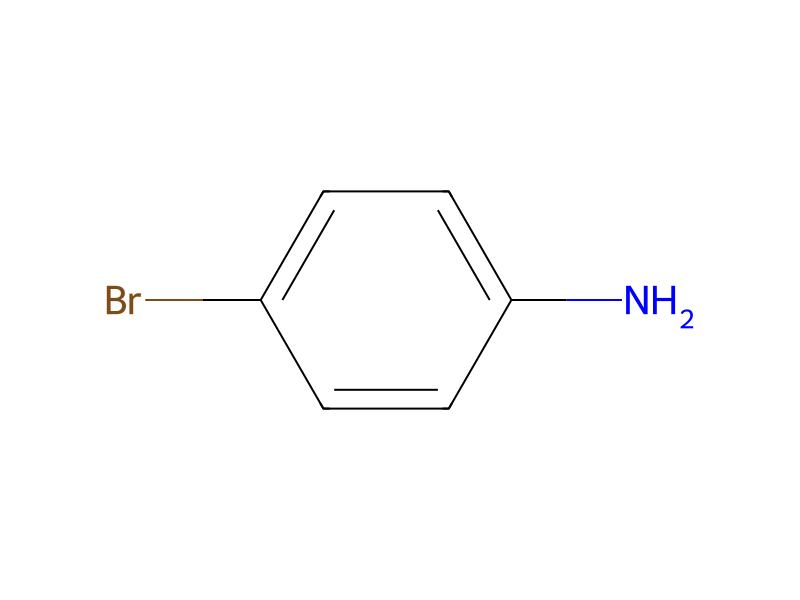
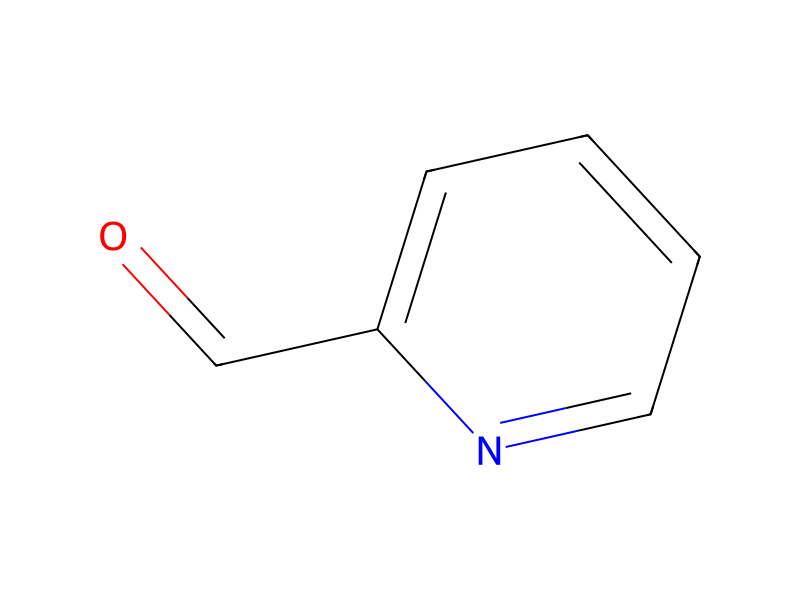
4-Bromoaniline → 2-[2-(4-bromophenyl)-2H-tetrazol-5-yl]pyridine
Reaction equation

CN1CCN([C:7]2[CH:12]=[CH:11][CH:10]=[C:9]([N:13]3[N:17]=[N:16][C:15]([C:18]4[CH:23]=[CH:22][CH:21]=[CH:20][N:19]=4)=[N:14]3)[CH:8]=2)C1=O.[Br:25]C1C=CC(N)=CC=1.N1C=CC=CC=1C=O>>[Br:25][C:12]1[CH:11]=[CH:10][C:9]([N:13]2[N:17]=[N:16][C:15]([C:18]3[CH:23]=[CH:22][CH:21]=[CH:20][N:19]=3)=[N:14]2)=[CH:8][CH:7]=1Participants
4


Procedure
Following the procedure described in EXAMPLE 1 for the synthesis of 1-methyl-3-[3-(5-pyridin-2-yl-2H-tetrazol- 2-yl)phenyl]imidazolidin-2-one, but using 4-bromoaniline (17.2 g, 100 mmol) and pyridine-2-carboxaldehyde (10.7 g, 100 mmol), 2-[2-(4-bromophenyl)-2H-tetrazol-5-yl]pyridine was obtained as an orange solid. 1H-NMR (CDCl3, 300 MHz) δ 8.83 (d, 1H), 8.33 (d, 1H), 8.15 (d, 2H), 7.96-7.87 (m, 1H), 7.70 (d, 2H), 7.44 (dd, 1H).
Sources & evidence
- ORD record
- ord-be004b7fef3043fbbb1366d015a04f03
- Source dataset
- uspto-grants-2009_09
- Patent number
- US07592337B2
Reaction notes
Loading…