Hydrochloric Acid → 6-(4-Fluorophenyl)-2-naphthol
Reaction equation

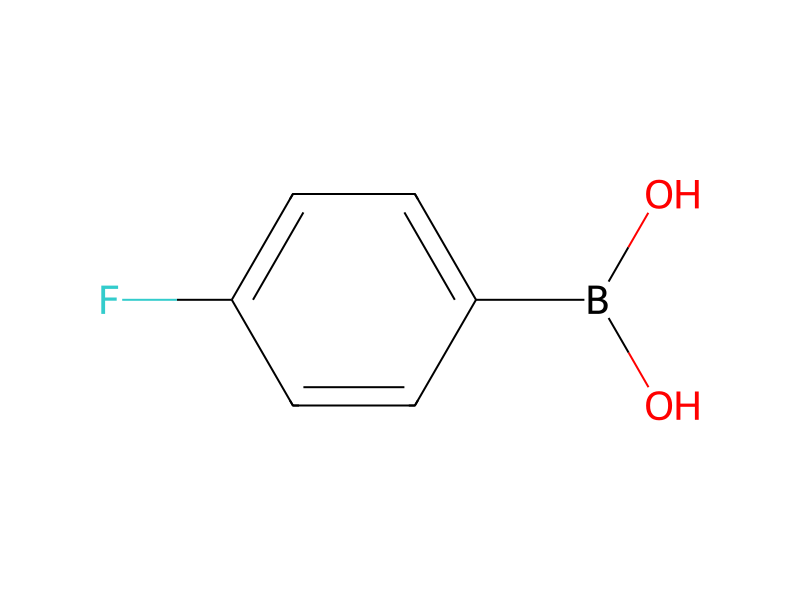
C(=O)([O-])[O-].[Na+].[Na+].Br[C:8]1[CH:9]=[C:10]2[C:15](=[CH:16][CH:17]=1)[CH:14]=[C:13]([OH:18])[CH:12]=[CH:11]2.[F:19][C:20]1[CH:25]=[CH:24][C:23](B(O)O)=[CH:22][CH:21]=1.Cl>C1C=CC([P]([Pd]([P](C2C=CC=CC=2)(C2C=CC=CC=2)C2C=CC=CC=2)([P](C2C=CC=CC=2)(C2C=CC=CC=2)C2C=CC=CC=2)[P](C2C=CC=CC=2)(C2C=CC=CC=2)C2C=CC=CC=2)(C2C=CC=CC=2)C2C=CC=CC=2)=CC=1.O1CCOCC1>[F:19][C:20]1[CH:25]=[CH:24][C:23]([C:8]2[CH:9]=[C:10]3[C:15](=[CH:16][CH:17]=2)[CH:14]=[C:13]([OH:18])[CH:12]=[CH:11]3)=[CH:22][CH:21]=1Participants






Conditions
- Temperature
- 80 °C
Procedure
Dioxane (100 mL) and 2M sodium carbonate solution (15 mL) were added to a mixture of 6-bromo-2-naphthol (2.3 g, 10 mmol), 4-fluorobenzeneboronic acid (2.2 g, 15 mmol) and tetrakis(triphenylphosphine)palladium(0) (0.6 g). The reaction was heated to 80° C. under nitrogen for 5 hours. The cooled reaction mixture was poured into dilute hydrochloric acid (200 mL) and extracted with ethyl acetate (x3). The combined organic layers were washed with water (x2) and brine, dried over MgSO4 and evaporated in vacuo. The residue was purified by flash column chromatography on silica, eluting with 10-20% ethyl acetate/isohexane, to give 6-(4-fluorophenyl)-2-naphthol as a white solid (1.75 g, 74%). 1H NMR (500 MHz, CDCl3) δ 7.91 (1H, s), 7.80 (1H, d, J=8.8 Hz), 7.75 (1H, d, J=8.5 Hz), 7.65-7.63 (3H, m), 7.18-7.12 (4H, m), 4.97 (1H, s).
Workup
- customThe cooled reaction mixture
- extractionextracted with ethyl acetate (x3)
- washThe combined organic layers were washed with water (x2) and brine
- dry with materialdried over MgSO4
- customevaporated in vacuo
- customThe residue was purified by flash column chromatography on silica
- washeluting with 10-20% ethyl acetate/isohexane
Sources & evidence
- ORD record
- ord-4e374cd588e34be8a92e3da82abb7a4c
- Source dataset
- uspto-grants-2009_09
- Patent number
- US07592456B2
Reaction notes
Loading…