Butanal → n-Butyraldehyde Diethylene Glycol
Reaction equation

[CH:1](=[O:5])[CH2:2][CH2:3][CH3:4].[CH2:6]([OH:12])[CH2:7][O:8][CH2:9][CH2:10][OH:11]>[Pd]>[CH:1](=[O:5])[CH2:2][CH2:3][CH3:4].[CH2:6]([OH:12])[CH2:7][O:8][CH2:9][CH2:10][OH:11]Participants
4
Reactant 2
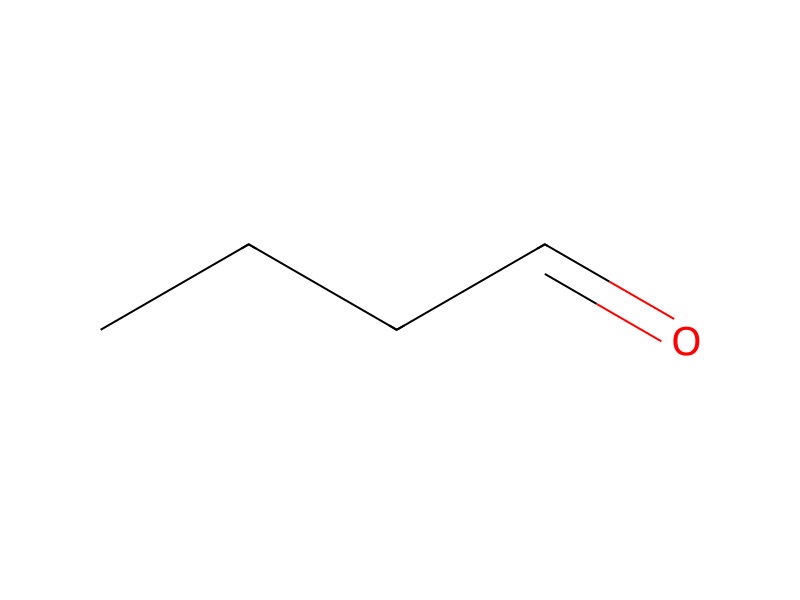

Product 1

Reagents, catalysts & solvents 1

Conditions
- Temperature
- 200 °C
Procedure
n-Butyraldehyde (3.6 g, 4.5 ml; 0.05 mol), diethylene glycol (106.1 g, 55.8 ml; 1 mol), and 0.18 g of 10% Pd/C are charged to a 150 ml Parr reactor. The system is purged with nitrogen three times. Then 500 psi of hydrogen is charged, the reactor is heated to 200° C., and set 1000 psi of hydrogen. After 2 hrs at 200° C. and 1000 psi, GC analysis shows complete consumption of n-butyraldehyde and formation of 3,6-dioxa-1-decanol (n-butyl carbitol) (94.5%), n-butanol (3.4%) and 2,2′-dibutoxy ethyl ether (2.1%).
Workup
- customThe system is purged with nitrogen three times
- additionThen 500 psi of hydrogen is charged
- customconsumption of n-butyraldehyde and formation of 3,6-dioxa-1-decanol (n-butyl carbitol) (94.5%), n-butanol (3.4%) and 2,2′-dibutoxy ethyl ether (2.1%)
Sources & evidence
- ORD record
- ord-e4f07f75213649e5b9dc07ffc3a1c2b5
- Source dataset
- uspto-grants-2014_09
- Patent number
- US08829229B2
Reaction notes
Loading…