Ammonia → 5-(Benzimidazol-2-yl)-2-methyl-1-phenylbenzimidazole
Reaction equation

[CH3:1][C:2]1[N:6]([C:7]2[CH:12]=[CH:11][CH:10]=[CH:9][CH:8]=2)[C:5]2[CH:13]=[CH:14][C:15]([C:17](O)=O)=[CH:16][C:4]=2[N:3]=1.[NH2:20][C:21]1[CH:26]=[CH:25][CH:24]=[CH:23][C:22]=1[NH2:27].N>>[N:20]1[C:21]2[CH:26]=[CH:25][CH:24]=[CH:23][C:22]=2[NH:27][C:17]=1[C:15]1[CH:14]=[CH:13][C:5]2[N:6]([C:7]3[CH:12]=[CH:11][CH:10]=[CH:9][CH:8]=3)[C:2]([CH3:1])=[N:3][C:4]=2[CH:16]=1Participants
4

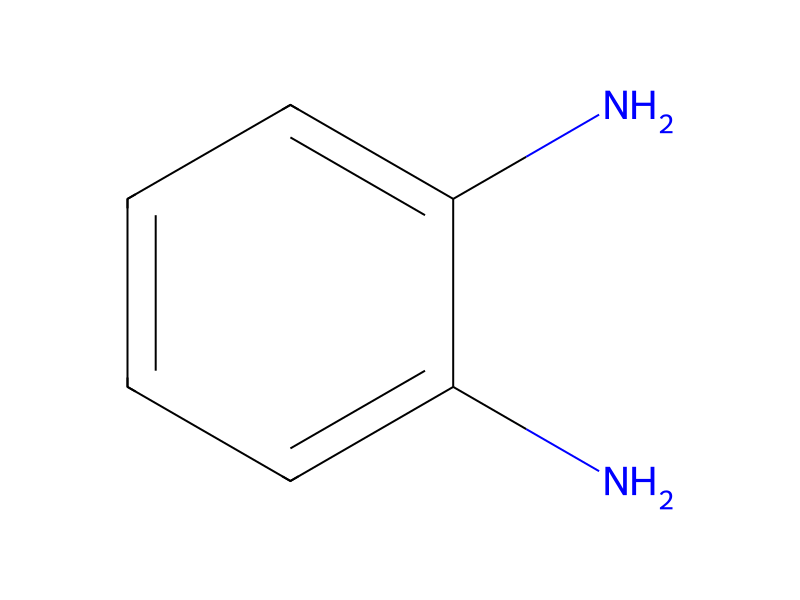


Conditions
- Temperature
- 120 °C
Procedure
A 2-neck flask (20 mL) equipped with reflux condenser was charged with 2-methyl-1-phenylbenzimidazole-5-carboxylic acid (see Synthesis Example 1-3) (0.15 g, 0.59 mmol) and polyphosphoric acid (approx. 2 g), and this was heated to 120° C. To this was added 1,2-diaminobenzene (0.09 g, 0.83 mmol), and this was heated to 160° C. and stirred under those conditions for 20 hours. After being allowed to cool to room temperature, ice was added and concentrated aqueous ammonia (28%) was added to the liquid to give approx. pH 9. The precipitated crystals were filtered off, these were washed with distilled water (approx. 3 mL, 2 times), and then dried to yield the title compound (0.25 g, quant.) as greenish pale yellow crystals.
Workup
- customA 2-neck flask (20 mL) equipped
- temperaturewith reflux condenser
- temperaturethis was heated to 160° C.
- temperatureto cool to room temperature
- additionice was added
- customto give approx. pH 9
- filtrationThe precipitated crystals were filtered off
- washthese were washed with distilled water (approx. 3 mL, 2 times)
- customdried
Sources & evidence
- ORD record
- ord-156a8ef85bdc4f06aee96f30263e6918
- Source dataset
- uspto-grants-2014_09
- Patent number
- US08829035B2
Reaction notes
Loading…