Sodium Chloride → 4-(Trifluoromethylthio)benzylidenemalononitrile
Reaction equation

[F:1][C:2]([F:13])([F:12])[S:3][C:4]1[CH:11]=[CH:10][C:7]([CH:8]=O)=[CH:6][CH:5]=1.[C:14](#[N:18])[CH2:15][C:16]#[N:17].[Cl-].[Na+]>C(O)C.[OH-].C([N+](C)(C)C)C1C=CC=CC=1>[F:1][C:2]([F:13])([F:12])[S:3][C:4]1[CH:11]=[CH:10][C:7]([CH:8]=[C:15]([C:14]#[N:18])[C:16]#[N:17])=[CH:6][CH:5]=1Participants
6




Procedure
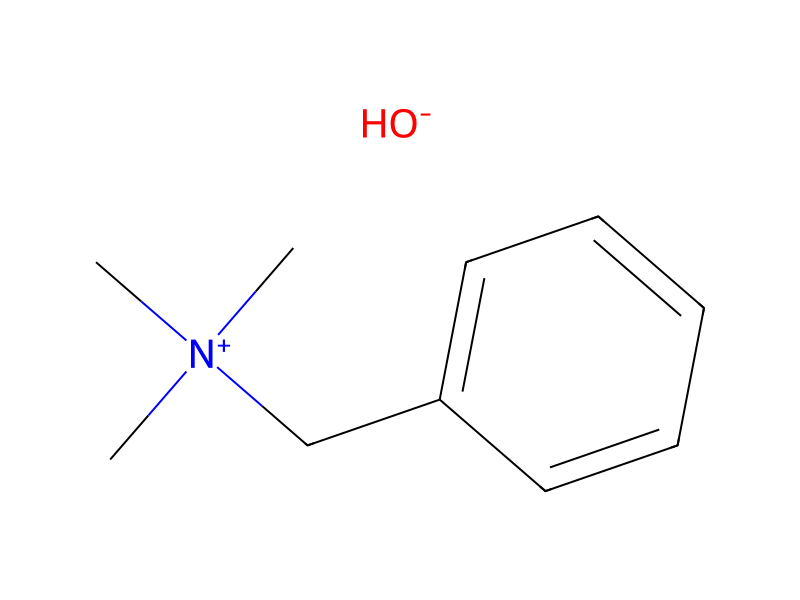
First, 10.0 g of 4-(trifluoromethylthio)benzaldehyde and 2.92 g of malononitrile were dissolved in 50 ml of 70% (w/w) aqueous ethanol, to which a catalytic amount of benzyltrimethylammonium hydroxide was added, and the mixture was stirred at room temperature overnight. Then, a saturated aqueous sodium chloride solution was added to the reaction mixture, which was extracted with ethyl acetate. The organic layer was washed with a saturated aqueous sodium chloride solution, dried over anhydrous magnesium sulfate, and then concentrated under reduced pressure. The residue was recrystallized with a solvent system consisting of t-butyl methyl ether and hexane to give 10.5 g of (4-(trifluoromethylthio)benzylidene)malononitrile.
Workup
- additionwas added
- extractionwas extracted with ethyl acetate
- washThe organic layer was washed with a saturated aqueous sodium chloride solution
- dry with materialdried over anhydrous magnesium sulfate
- concentrationconcentrated under reduced pressure
- customThe residue was recrystallized with a solvent system
Sources & evidence
- ORD record
- ord-87e2f05878ee4209af1c0bb1c5c4eacb
- Source dataset
- uspto-grants-2008_07
- Patent number
- US07402691B2
Reaction notes
Loading…