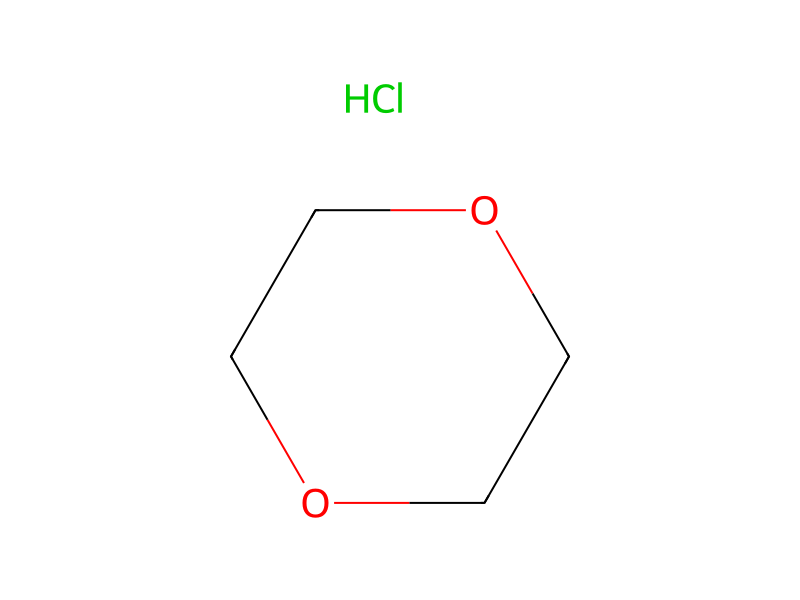
1,4-Dioxane hydrochloride → HCID 44818809, compound
Reaction equation

C[O:2][C:3](=[O:27])[CH2:4][CH2:5][N:6]1[CH2:10][CH2:9][CH2:8][C@@H:7]1[CH2:11][O:12][C:13]1[CH:18]=[CH:17][C:16]([O:19][C:20]2[CH:25]=[CH:24][C:23]([Cl:26])=[CH:22][CH:21]=2)=[CH:15][CH:14]=1.Cl.O1CCOCC1>>[ClH:26].[Cl:26][C:23]1[CH:24]=[CH:25][C:20]([O:19][C:16]2[CH:15]=[CH:14][C:13]([O:12][CH2:11][C@H:7]3[CH2:8][CH2:9][CH2:10][N:6]3[CH2:5][CH2:4][C:3]([OH:27])=[O:2])=[CH:18][CH:17]=2)=[CH:21][CH:22]=1Participants
3


Procedure
Following the general procedure for Example 18, the product from step 1 (0.62 g, 1.59 mmol) was treated with a 1:1 mixture of concentrated HCl/dioxane (28 mL) to afford the title compound (0.40 g, 68%) as a white solid.
Sources & evidence
- ORD record
- ord-f8ee8235116f4483aea52be42d703449
- Source dataset
- uspto-grants-2008_07
- Patent number
- US07402684B2
Reaction notes
Loading…