Pyridine → 3-(2-Oxo-pyrrolidin-1-ylimino)-3-pyridin-2-yl-propionic acid ethyl ester
Reaction equation

Cl.[NH2:2][N:3]1[CH2:7][CH2:6][CH2:5][C:4]1=[O:8].[CH2:9]([O:11][C:12](=[O:22])[CH2:13][C:14](=O)[C:15]1[CH:20]=[CH:19][CH:18]=[CH:17][N:16]=1)[CH3:10].N1C=CC=CC=1>O>[CH2:9]([O:11][C:12](=[O:22])[CH2:13][C:14](=[N:2][N:3]1[CH2:7][CH2:6][CH2:5][C:4]1=[O:8])[C:15]1[CH:20]=[CH:19][CH:18]=[CH:17][N:16]=1)[CH3:10]Participants
5




Procedure
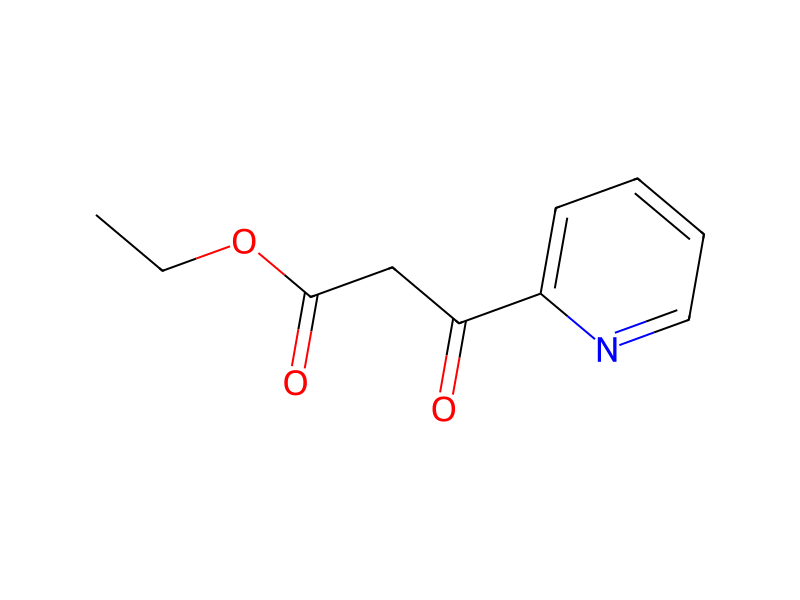
Place 1-aminopyrrolidin-2-one hydrochloride (Zubek, A. Z. Chem., 1969, 9(2), 58; 155.6 g, 1.14 mol) in a 3 L flask equipped with mechanical stirrer and nitrogen inlet. Add 3-oxo-3-pyridin-2-yl-propionic acid ethyl ester (200 g, 1.04 mol) then pyridine (400 mL). Stir the reaction mixture at room temperature for 20 h. Dilute the mixture with water (500 mL), and extract with toluene (2×500 mL). Combine the organic layers, dry (sodium sulfate), filter and concentrate in vacuo to yield the subtitled compound as a dark oil (280 g, 98%). MS ES+ m/e 276 (M+1).
Workup
- custom155.6 g, 1.14 mol) in a 3 L flask equipped with mechanical stirrer and nitrogen inlet
- extractionextract with toluene (2×500 mL)
- dry with materialCombine the organic layers, dry (sodium sulfate)
- filtrationfilter
- concentrationconcentrate in vacuo
Sources & evidence
- ORD record
- ord-8a3daa83c0ab486baf0bf8b1a75c611f
- Source dataset
- uspto-grants-2008_07
- Patent number
- US07405299B2
Reaction notes
Loading…