Ethyl bromopyruvate → ethyl 1-(4-chlorophenyl)-2-propyl-1H-imidazole-4-carboxylate
Reaction equation

[Cl:1][C:2]1[CH:7]=[CH:6][C:5]([NH:8][C:9](=[NH:13])[CH2:10][CH2:11][CH3:12])=[CH:4][CH:3]=1.Br[CH2:15][C:16](=O)[C:17]([O:19][CH2:20][CH3:21])=[O:18]>>[Cl:1][C:2]1[CH:3]=[CH:4][C:5]([N:8]2[CH:15]=[C:16]([C:17]([O:19][CH2:20][CH3:21])=[O:18])[N:13]=[C:9]2[CH2:10][CH2:11][CH3:12])=[CH:6][CH:7]=1Participants
3
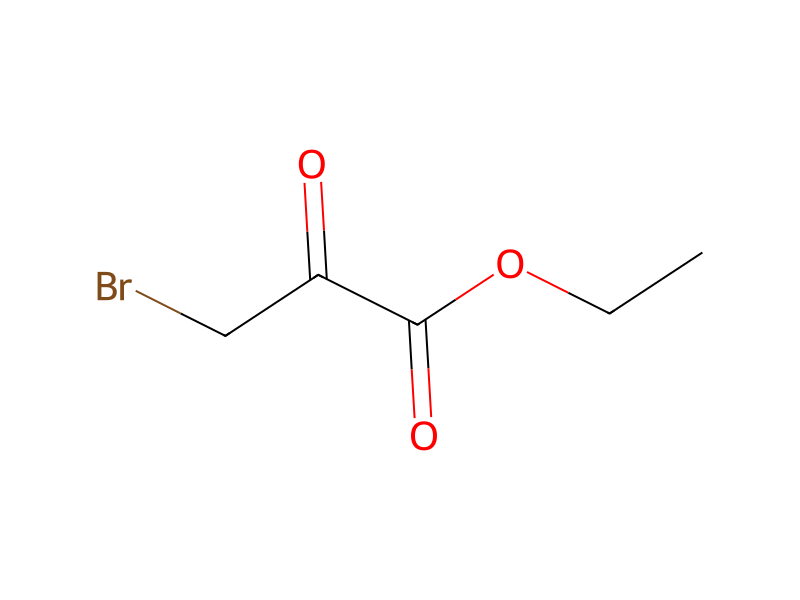


Procedure
The imidazole derivative (6) is prepared by a conventional method [Bayer Pharmaceuticals, WO 03/040107, 2003], for example, by subjecting a nitrile (2) to a reaction with an aniline derivative (1) using aluminum chloride to produce N-(4-chloro phenyl)-butyrimidamide (3). Subsequent reaction of the resulting compound (3) with ethyl 3-bromo-2-oxopropanoate (4) provides an intermediate ethyl 1-(4-chlorophenyl)-2-propyl-1H-imidazole-4-carboxylate (5). An acid form (6) is prepared from the ester (5) using lithium hydroxide, followed by acidification, as shown in Reaction Scheme 1.
Sources & evidence
- ORD record
- ord-63d157cece7d4f419b99c0a100d52281
- Source dataset
- uspto-grants-2014_09
- Patent number
- US08835436B2
Reaction notes
Loading…